
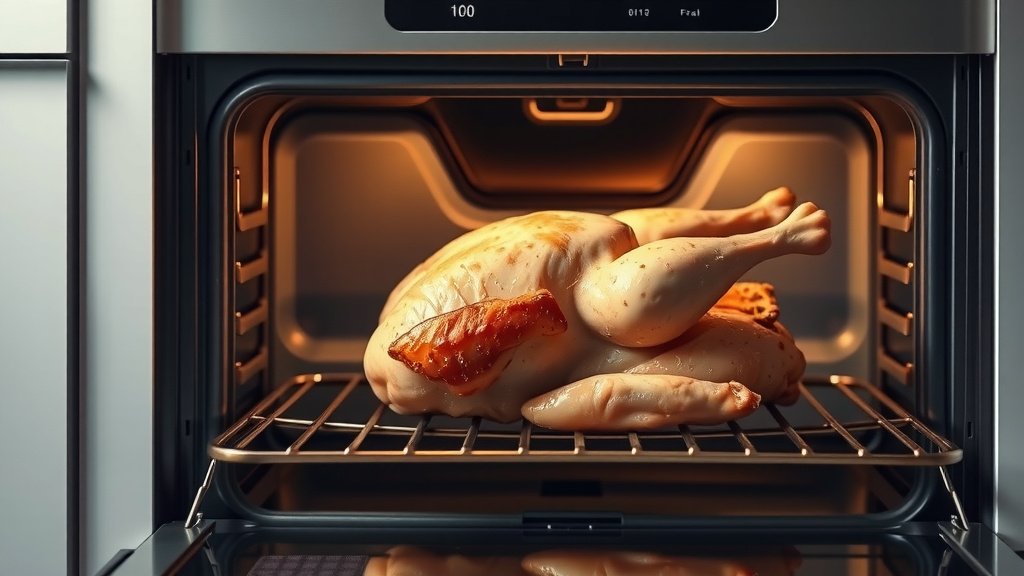
To cook bone-in chicken in a gas oven, preheat your oven to 400°F (200°C) and roast the chicken for 45-60 minutes, or until the internal temperature reaches 165°F (74°C) with a meat thermometer.
Always ensure the chicken is cooked through, with juices running clear, to safely cook bone-in chicken in a gas oven.
- Preheat your gas oven to 400°F (200°C) for best results.
- Always pat your chicken dry for crispy skin and even cooking.
- Season generously for incredible flavor before placing it in the oven.
- Use a meat thermometer to confirm the internal temperature reaches 165°F (74°C).
- Let your cooked chicken rest for 10-15 minutes to keep it juicy.
How To Cook Bone In Chicken In Gas Oven?
Cooking bone-in chicken in a gas oven involves consistent heat and careful temperature monitoring to achieve juicy meat and crispy skin.
You want a perfect meal every time, right?
Why Choose a Gas Oven for Bone-In Chicken?
Gas ovens often provide a moist heat environment. This can be fantastic for bone-in chicken.
We found that this moisture helps keep the chicken from drying out, even during longer cooking times.
It creates a lovely balance, giving you tender meat and still allowing for delicious, golden-brown skin.
The Science of Even Heat
Gas ovens can have hot spots, but they also distribute heat quite well through convection. This means air moves around your food.
Understanding your oven’s quirks helps you position the chicken correctly for the best results.
Many experts say rotating your pan halfway through can help with even cooking.
Essential Tools for Oven Roasting
Having the right tools makes all the difference. Think of it like a builder needing the right hammer.
You will need a sturdy roasting pan, a wire rack, and parchment paper if you want easier cleanup.
These simple items help you cook your chicken like a pro.
The Mighty Meat Thermometer
This is your best friend when cooking chicken. It removes all the guesswork.
Many guidelines point to a meat thermometer as a good first step for food safety (USDA).
You absolutely need to ensure the chicken reaches a safe internal temperature.
Preparing Your Chicken: The First Steps
Proper preparation sets the stage for a delicious meal. Think of it as warming up before a big race.
Always start with thawed chicken. Frozen chicken cooks unevenly.
You want to remove it from the fridge about 20-30 minutes before cooking to bring it closer to room temperature.
Pat Dry for Crispy Skin
This step is small but mighty! Take paper towels and thoroughly pat down your chicken pieces.
Removing surface moisture is the secret to achieving that perfectly crispy skin you crave.
Wet skin steams; dry skin crisps. Which one would you prefer?
Seasoning for Flavor
Don’t be shy with your seasonings. This is where you build incredible flavor layers.
A simple blend of salt, black pepper, garlic powder, and paprika works wonders.
Rub it all over the chicken, getting into every crevice, for a tasty coating.
Setting Your Gas Oven: The Right Temperature
Preheating is non-negotiable. Don’t put your chicken in a cold oven.
We found that a temperature of 400°F (200°C) is ideal for bone-in chicken. It cooks it through while browning the outside.
Allow your oven at least 15-20 minutes to reach and hold the set temperature reliably.
Roasting Your Bone-In Chicken: Step-by-Step
Place your seasoned chicken on a wire rack in your roasting pan. This lets air circulate around the chicken.
Put the pan in the preheated oven. Now, let the magic happen!
Roast for about 45-60 minutes, depending on the size of your chicken pieces.
Flipping and Basting (Optional)
Some people like to flip their chicken pieces halfway through cooking. This helps ensure even browning.
Basting with pan juices or melted butter can also add flavor and moisture, though it might soften the skin a bit.
It’s your call, based on what you value more: ultimate crispiness or added richness.
Knowing When Your Chicken is Done
This is where your meat thermometer shines brightest. There’s no guessing game here.
Insert the thermometer into the thickest part of the chicken, avoiding the bone.
The goal is a safe internal temperature of 165°F (74°C).
Checking Internal Temperature
Here’s a quick guide to internal temperatures for different cuts:
| Chicken Cut | Target Internal Temperature |
|---|---|
| Breast (bone-in) | 165°F (74°C) |
| Thigh/Drumstick | 165°F (74°C) |
| Whole Chicken | 165°F (74°C) |
Once it hits 165°F, it’s safe to eat (FDA).
Resting the Chicken: A Must-Do Step
After taking the chicken out of the oven, do not cut into it immediately. This is crucial.
Let it rest on a cutting board, loosely tented with foil, for 10-15 minutes.
This resting period allows the juices to redistribute throughout the meat, making it incredibly tender and moist.
Common Pitfalls to Avoid
Cooking chicken is straightforward, but a few missteps can happen. Let’s avoid them together!
- Not preheating the oven fully.
- Not patting the chicken dry enough.
- Overcrowding the roasting pan.
- Not using a meat thermometer.
- Cutting into the chicken too soon after cooking.
Flavor Boosts and Marinades
Want to take your chicken to the next level? Consider a simple marinade.
Lemon, garlic, rosemary, and olive oil create a vibrant flavor profile.
A good rule of thumb is to marinate for at least 30 minutes, or up to 4 hours, for bone-in pieces.
You can also stuff the cavity of a whole chicken with aromatics like onion, lemon, and fresh herbs.
Conclusion
Cooking bone-in chicken in a gas oven is a rewarding experience. It provides a delicious meal for you and your family.
By following these steps—from proper preparation and seasoning to precise temperature control and resting—you ensure juicy, flavorful chicken every time.
So, go ahead, try these tips in your kitchen, and enjoy the amazing results you create!
Can I cook bone-in chicken from frozen in a gas oven?
While technically possible, it’s not recommended. Cooking bone-in chicken from frozen often leads to uneven cooking, where the outside cooks too quickly while the inside remains undercooked. Always thaw your chicken thoroughly first for safe and delicious results.
How do I prevent bone-in chicken from drying out in a gas oven?
To prevent dryness, use a meat thermometer to avoid overcooking. Aim for 165°F (74°C) in the thickest part. You can also brine the chicken beforehand, or baste it with pan juices during the last 15-20 minutes of cooking. The natural moisture in gas ovens also helps.
What’s the difference in cooking time for bone-in versus boneless chicken?
Bone-in chicken generally takes longer to cook than boneless chicken because the bone itself needs to heat up. A good estimate is 45-60 minutes for bone-in pieces at 400°F (200°C), compared to 20-30 minutes for boneless, skinless pieces.
My gas oven has hot spots. How can I ensure even cooking?
If your gas oven has hot spots, try rotating your roasting pan halfway through the cooking time. You can also place the chicken on a wire rack inside the pan. This allows for better air circulation around the entire piece of chicken.
Can I use an air fryer or convection setting on my gas oven for bone-in chicken?
Many gas ovens now come with a convection setting, which circulates hot air. This can significantly reduce cooking time and enhance crispiness. If using convection, we found that you might want to lower the temperature by 25°F (about 15°C) and check for doneness sooner, around 35-45 minutes.
