
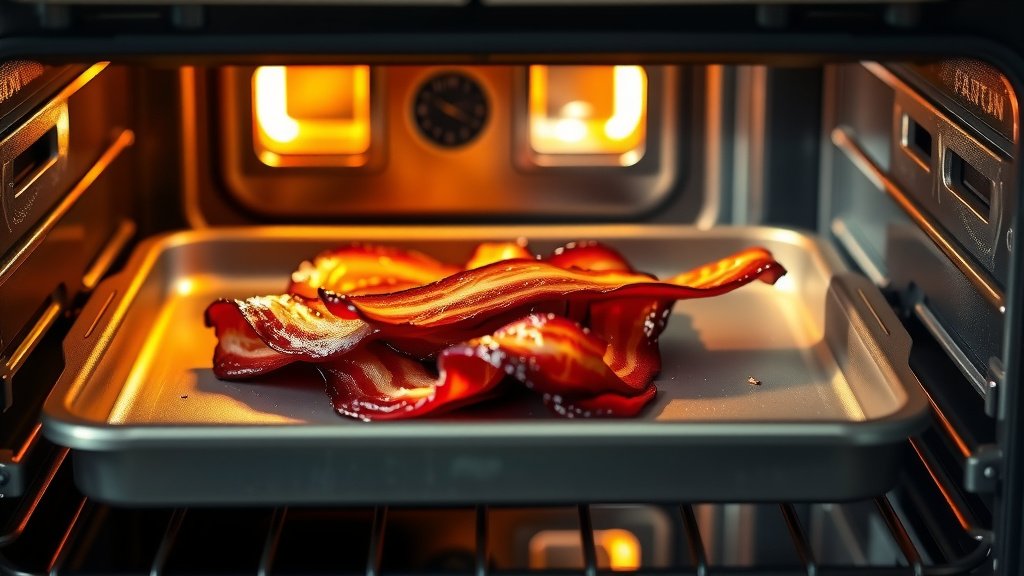
To cook bacon in an electric oven, preheat your oven to 400°F (200°C), arrange bacon strips in a single layer on a foil-lined baking sheet, and bake for 15-20 minutes, or until desired crispness.
Baking bacon offers an easier, less messy way to achieve perfectly crispy results, allowing for even cooking without constant flipping or stovetop splatters.
For those short on time, here’s the quick scoop on oven-cooked bacon:
- Preheat your electric oven to 400°F (200°C) for best results.
- Line a baking sheet with foil or parchment paper for easy cleanup.
- Arrange bacon in a single layer, ensuring no overlap for even crisping.
- Bake for about 15-20 minutes, adjusting for your bacon’s thickness and preferred crispness.
- Carefully drain excess fat and let it cool briefly before serving.
How To Cook Bacon In An Electric Oven?
Cooking bacon in an electric oven is a fantastic way to get consistently crispy strips with minimal mess. You simply need a baking sheet, some foil, and your desired bacon.
Why Bake Bacon in the Oven?
Have you ever struggled with unevenly cooked bacon on the stovetop? Baking bacon in your electric oven offers a hands-off approach that many home cooks appreciate. It cooks more evenly and creates less splatter, keeping your kitchen cleaner.
We found that this method is especially convenient when you’re preparing a big breakfast. You can set it and forget it, focusing on other dishes while the oven does its work. It’s a real time-saver!
Gathering Your Supplies
Before you start, gather a few essential items. You will need a good quality baking sheet, ideally with raised edges to catch the fat. Parchment paper or aluminum foil is also key for easy cleanup.
A wire cooling rack, placed inside the baking sheet, is optional but highly recommended. It helps the bacon cook more evenly by allowing air to circulate all around the strips. Don’t forget tongs for handling the hot bacon!
Choosing the Right Bacon
The type of bacon you choose will influence your cooking time and final texture. Regular-cut bacon cooks faster and gets crispy quickly. Thick-cut bacon takes a bit longer but often yields a chewier, more substantial bite.
Consider what you’re making. For sandwiches, a thinner, crispier bacon might be perfect. If you’re serving it alongside eggs, a thicker slice could be more satisfying. It’s all about your personal preference.
Preheat Your Oven Correctly
Proper preheating is a non-negotiable step for great oven bacon. Many experts say that preheating your electric oven to 400°F (200°C) ensures the bacon starts cooking immediately and consistently. This helps achieve that desired crisp texture.
Avoid putting bacon into a cold oven. We found that starting with a hot oven helps to render the fat more efficiently, leading to crispier results. Think of it like searing a steak; initial heat is important.
Preparing Your Baking Sheet
Lining your baking sheet is crucial for a quick and painless cleanup. You can use either aluminum foil or parchment paper. Aluminum foil works well and makes for easy fat disposal later.
Parchment paper is another excellent option, especially if you want to avoid any potential sticking. Whichever you choose, ensure it covers the entire surface of the baking sheet. This protects your pan from sticky residue.
Arranging the Bacon
For uniform crispiness, arrange your bacon strips in a single layer on the prepared baking sheet. Make sure they aren’t overlapping. Overlapping strips will steam rather than crisp, leading to chewy, inconsistent bacon.
Give each strip a little breathing room. If you’re cooking a large batch, it’s often better to use two baking sheets rather than crowding one. Patience here leads to superior bacon.
The Cooking Process: Time and Temperature
The beauty of oven bacon is its simplicity. Once arranged, slide the baking sheet into your preheated 400°F (200°C) electric oven. The cooking time will vary based on bacon thickness and your oven.
Regular-cut bacon often takes around 15-18 minutes. For thick-cut bacon, you might need 20-25 minutes, or even a bit longer. Keep an eye on it, as ovens can vary. Many guidelines point to visual cues as your best guide (USDA).
| Bacon Type | Oven Temperature | Approximate Cook Time | Desired Result |
|---|---|---|---|
| Regular-Cut | 400°F (200°C) | 15-18 minutes | Crispy, slightly chewy |
| Thick-Cut | 400°F (200°C) | 20-25 minutes | Very crispy, substantial bite |
| Extra Crispy | 400°F (200°C) | 25+ minutes | Brittle, deeply browned |
When is it Done?
Your bacon is done when it reaches your preferred level of crispness and color. It should be a rich, golden brown, with the fat rendered and crispy. Remember, it will crisp up a bit more as it cools.
If you prefer softer bacon, pull it out a little earlier. For very crispy bacon, let it go a few minutes longer. Just avoid burning it! A tiny bit of char on the edges can be delicious, but black is too far.
Post-Baking Steps
Once your bacon is perfectly cooked, carefully remove the baking sheet from the oven. Using tongs, transfer the bacon to a plate lined with paper towels. This helps to drain off any excess fat, making it even crispier.
Allow the bacon to rest on the paper towels for a few minutes. This cooling period helps it firm up and reach its ultimate crispiness. Resist the urge to eat it all immediately!
Safe Bacon Fat Disposal
Dealing with bacon fat properly is important for plumbing and the environment. After it cools on the baking sheet, the liquid fat will solidify. We found that you can pour the still-liquid fat into an old can or jar before it hardens.
Once solidified, you can scrape it into the trash. Never pour hot bacon fat down your drain, as it can solidify in your pipes and cause blockages. This small step protects your home and wastewater systems.
Tips for Extra Crispy Bacon
Want bacon that shatters with every bite? Many chefs recommend starting bacon in a cold oven. Place the bacon on the baking sheet, then put it into a cold oven, and then preheat to 400°F (200°C). This allows the fat to render slowly and evenly.
Another trick some people suggest is to add a tablespoon or two of water to the baking sheet before cooking. The water helps render the fat slowly at first, then evaporates, leaving extra crispy bacon. Others prefer just the dry heat; it’s worth experimenting!
Troubleshooting Common Oven Bacon Issues
Sometimes, bacon might not turn out exactly as planned. If your bacon is too chewy, it likely didn’t cook long enough, or the oven wasn’t hot enough. Try extending the cooking time by a few minutes or ensuring your oven is fully preheated.
If your bacon is burnt, it was probably in the oven for too long, or your oven runs hot. Every oven is unique, so adjusting the cooking time or temperature slightly for your specific appliance can help. Keep a closer watch next time.
Your Oven’s Hot Spots
Electric ovens often have hot spots, meaning certain areas of the oven cook food faster than others. If you notice some bacon strips cooking faster, try rotating your baking sheet halfway through the cooking time. This helps ensure all the bacon cooks evenly.
It’s like a sunny spot in your garden; some areas just get more heat! Regularly checking and rotating can prevent unevenly cooked bacon and give you a more consistent batch.
Healthier Oven Bacon Options
While bacon is a treat, you can make it a little lighter. Using a wire rack placed inside your baking sheet is an excellent way to elevate the bacon. This allows the rendered fat to drip away, preventing the bacon from sitting in grease.
Another simple step is to blot the cooked bacon with paper towels after it comes out of the oven. This removes additional surface fat. Research often connects these methods with reducing overall fat content (Cleveland Clinic).
Here’s a quick checklist to get your oven bacon just right:
- Preheat oven to 400°F (200°C).
- Line sheet with foil or parchment.
- Arrange bacon in a single layer.
- Cook for 15-25 minutes, watching closely.
- Drain on paper towels after cooking.
- Properly dispose of bacon grease.
Conclusion
Cooking bacon in an electric oven truly simplifies your breakfast routine. It’s a method that delivers consistently crispy, delicious bacon with less mess and effort than the stovetop. By following these straightforward steps—from proper preheating to thoughtful fat disposal—you can master oven-baked bacon every time. Enjoy your perfectly cooked bacon, knowing you’ve used an efficient and effective technique!
How do I prevent bacon from curling in the oven?
To prevent bacon from curling, lay the strips flat and ensure they don’t overlap on the baking sheet. Some people gently stretch the bacon before placing it down. Additionally, using a wire rack can help keep it flat as it cooks.
Can I cook bacon in an electric oven without a rack?
Yes, you can absolutely cook bacon directly on a foil-lined baking sheet without a rack. The rack helps drain fat and promote crispness, but flat on the sheet still yields great results. Just be prepared to blot more fat.
What’s the best temperature for crispy oven bacon?
Many cooks find that 400°F (200°C) is the ideal temperature for crispy oven bacon. This heat setting allows the fat to render effectively and the meat to brown without drying out too quickly.
How long does it take to cook thick-cut bacon in an electric oven?
Thick-cut bacon typically takes longer than regular bacon. At 400°F (200°C), expect it to cook for approximately 20-25 minutes, or potentially a few minutes more, depending on your desired crispness and oven variations.
Should I flip bacon when cooking it in an electric oven?
No, there’s generally no need to flip bacon when cooking it in an electric oven. Baking allows for even heat distribution from all sides, so flipping isn’t necessary for uniform cooking or crispness.
