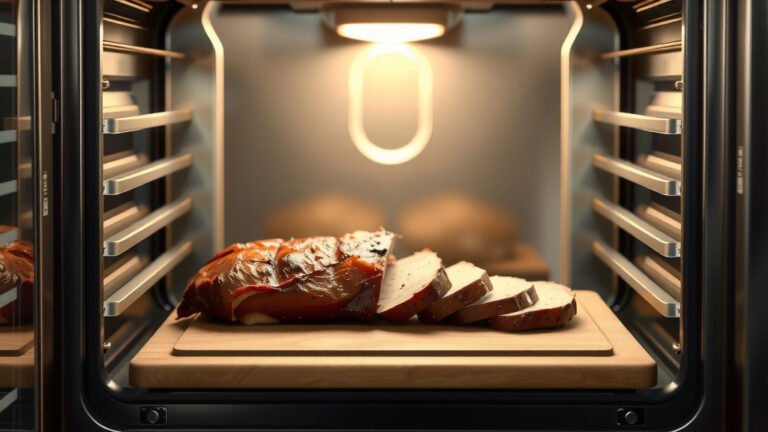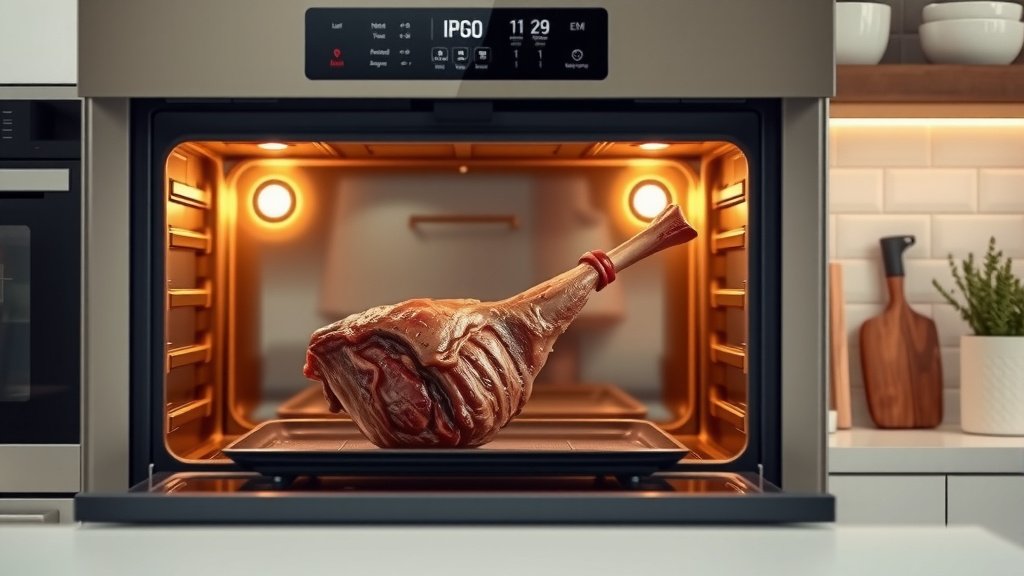
To cook a lamb leg in a single wall oven, preheat your oven to 450°F (230°C) for an initial sear, then reduce to 325°F (160°C) for most of the cooking.
Aim for an internal temperature of 135-140°F (57-60°C) for medium-rare, allowing about 15-20 minutes per pound, and always let it rest before carving.
Here’s a quick overview of how to cook your lamb leg perfectly:
- Bring your lamb to room temperature before roasting.
- Season generously and consider a flavorful rub or marinade.
- Start with a high oven temperature for searing, then reduce it.
- Use a meat thermometer to track the internal temperature precisely.
- Rest the lamb for at least 15-20 minutes after cooking for juicy results.
How To Cook Lamb Leg In Single Wall Oven?
Cooking lamb leg in a single wall oven requires careful temperature control and a good meat thermometer for a tender, juicy result.
You’ll start with high heat to create a beautiful crust, then reduce it for even cooking throughout.
Preparing Your Lamb Leg for Roasting
The secret to a delicious lamb leg begins long before it even touches the oven.
Think of it like getting ready for a big event—preparation makes all the difference.
Choosing the Right Cut
When selecting a lamb leg, you usually have a choice between bone-in or boneless. We found that bone-in lamb often provides more flavor, as the bone helps to insulate the meat and distribute heat.
Boneless lamb cooks slightly faster and is easier to carve, making it a convenient option.
Bringing Lamb to Room Temperature
This step is often overlooked but is incredibly important. Take your lamb leg out of the refrigerator at least one to two hours before you plan to cook it.
A room-temperature roast cooks more evenly, preventing the outside from drying out while the inside remains undercooked.
Scoring and Seasoning Your Lamb
To maximize flavor and achieve a crispy skin, score the fatty side of the lamb leg. Make shallow, crosshatch cuts about half an inch deep.
Rub generously with salt, black pepper, garlic, fresh rosemary, and thyme. Many experts say a good rub gets deep into the meat.
Setting Up Your Single Wall Oven
Your single wall oven might be compact, but it’s a powerful tool for roasting. Let’s make sure it’s ready for prime time.
Understanding its quirks can make your lamb leg even better.
Preheating is Non-Negotiable
Always preheat your oven for at least 20-30 minutes before placing the lamb inside. This ensures the oven reaches and maintains the correct temperature from the start.
Skipping this can lead to uneven cooking and a less impressive crust.
Using a Roasting Rack
A sturdy roasting rack is your best friend here. It lifts the lamb leg off the bottom of the pan, allowing hot air to circulate all around it.
This means a more even roast and a beautiful, all-around golden-brown crust. It also helps drippings collect for gravy!
The Roasting Process: Temperature and Time
This is where the magic happens! We’re aiming for a perfectly cooked lamb—tender, juicy, and full of flavor.
Don’t be afraid; it’s simpler than you might think.
The Initial High-Heat Sear
Start your lamb leg in a hot oven, preheated to 450°F (230°C). Roast it at this temperature for 15-20 minutes.
This high heat creates a beautiful, caramelized crust on the outside, locking in those precious juices.
Lowering the Temperature for Even Cooking
After the initial sear, reduce your oven temperature to 325°F (160°C). Do NOT open the oven door immediately after turning the temperature down.
Continue roasting until your desired internal temperature is reached. This lower temperature ensures the lamb cooks gently and evenly through the center.
Monitoring Internal Temperature (A Must!)
A reliable meat thermometer is your most important tool. Insert it into the thickest part of the lamb, avoiding the bone.
Research often connects precise temperature monitoring with superior roasting results (USDA food safety guidelines).
| Doneness Level | Internal Temperature | Resting Temperature (approx.) |
|---|---|---|
| Rare | 125-130°F (52-54°C) | 130-135°F (54-57°C) |
| Medium-Rare | 135-140°F (57-60°C) | 140-145°F (60-63°C) |
| Medium | 140-145°F (60-63°C) | 145-150°F (63-66°C) |
| Medium-Well | 145-150°F (63-66°C) | 150-155°F (66-68°C) |
Cooking time will vary based on the lamb’s size and whether it’s bone-in or boneless. Expect approximately 15-20 minutes per pound for bone-in and 12-15 minutes per pound for boneless.
The All-Important Resting Period
You’ve roasted your lamb to perfection. Now, resist the urge to carve it right away!
This waiting game is crucial for juicy lamb.
Why Resting Matters So Much
Once you remove the lamb from the oven, its internal temperature will continue to rise a few degrees. This is called carryover cooking.
More importantly, resting allows the meat fibers to relax and redistribute the juices throughout the roast. If you cut it too soon, those juices will simply run out.
How Long to Rest and Carving Tips
Cover the lamb loosely with foil and let it rest for at least 15-20 minutes, or even up to 30 minutes for a larger roast.
Carve against the grain with a sharp knife for the most tender slices. Many guidelines point to carving against the grain as a good technique for all roasted meats.
Your Lamb Leg Roasting Checklist
Before you get started, here’s a quick checklist to ensure a smooth cooking experience:
- Thaw lamb completely and bring to room temperature.
- Prepare a flavorful rub or marinade.
- Preheat oven to 450°F (230°C) with a roasting rack.
- Sear lamb, then reduce temperature to 325°F (160°C).
- Use a meat thermometer for precise internal temperature.
- Rest the lamb for at least 15-20 minutes before carving.
Tips for Single Wall Oven Success
Working with a single wall oven is often very straightforward, but a few specific considerations can help.
Let’s make sure you get the best out of your appliance.
- Rotate Your Pan: If your oven has hot spots, consider rotating the roasting pan halfway through cooking for more even browning.
- Keep the Door Closed: Every time you open the oven door, the temperature drops significantly. Avoid peeking too often!
- Clean Oven: A clean oven heats more efficiently and prevents smoke or off-flavors from accumulating.
- Use Oven Light: Rely on your oven light to check on the lamb without opening the door. It’s there for a reason!
Conclusion
Cooking a lamb leg in your single wall oven is a rewarding experience that brings incredible flavor to your table.
With precise temperatures, proper resting, and a little patience, you can achieve a roast that’s both tender and juicy.
Remember these simple steps, and you’ll be carving up a delicious meal everyone will love. Enjoy your culinary creation!
What kind of lamb leg should I buy?
You can choose between a bone-in or boneless lamb leg. Bone-in often provides more flavor and takes longer to cook, while boneless is easier to carve. Both work well in a single wall oven.
How do I prevent my lamb leg from drying out?
To keep your lamb leg moist, avoid overcooking it by using a reliable meat thermometer. Basting with pan juices every 30-45 minutes can also help, as can a flavorful marinade.
Can I add vegetables to roast with the lamb?
Absolutely! Root vegetables like potatoes, carrots, and onions are excellent choices. Add them to the roasting pan about 60-90 minutes before the lamb is done, ensuring they are cut into similar-sized pieces for even cooking.
What if my lamb leg is larger than average?
For a larger lamb leg, expect longer cooking times. Always rely on the internal temperature rather than solely on minutes per pound. A good rule of thumb is to add an extra 5-10 minutes per pound for very large cuts.
How long can cooked lamb leg be stored in the fridge?
Cooked lamb leg, when properly stored in an airtight container, can be safely refrigerated for 3 to 4 days. For longer storage, you can freeze it for up to 2-3 months without a significant loss of quality (USDA food safety guidelines).