
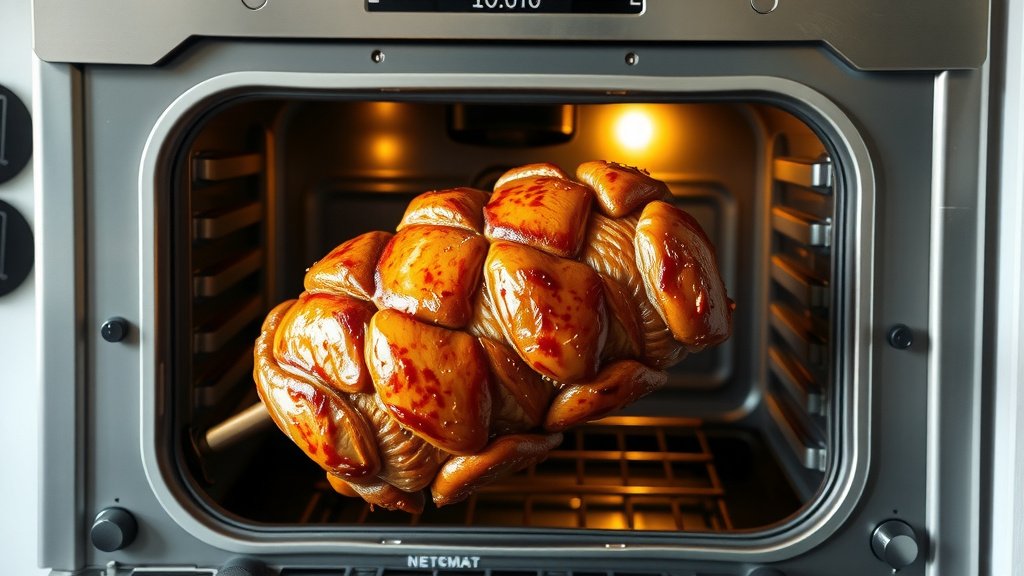
To cook pork loin in a rotisserie oven, thread the prepared and seasoned pork onto the rotisserie spit, securing it tightly. Then, roast it at a consistent temperature of 325-350°F until the internal temperature reaches 145°F in the thickest part.
This method ensures even cooking and a delicious, all-around browned exterior while keeping the pork loin juicy and tender on the inside.
TL;DR: Cooking pork loin on a rotisserie is a fantastic way to achieve a perfect roast. Here’s the quick rundown:
- Choose a well-trimmed pork loin, ideally 3-5 pounds, for best results.
- Season generously and tie the loin with kitchen twine for even cooking.
- Securely attach it to your rotisserie spit, ensuring it’s balanced.
- Cook at 325-350°F until it reaches 145°F internal temperature.
- Rest the pork for 10-15 minutes before slicing to lock in the juices.
How To Cook Pork Loin In A Rotisserie Oven?
Cooking pork loin in a rotisserie oven involves careful preparation, consistent rotation, and monitoring internal temperature. This process ensures an evenly cooked, flavorful roast with a crispy crust.
You’ll find that this method brings out the best in pork loin, making it a showstopper for any meal. Let’s walk through each step together.
Choosing the Right Pork Loin
The journey to a perfect rotisserie pork loin starts at the butcher’s counter. You want a piece that’s relatively uniform in thickness. This helps it cook evenly as it spins.
A pork loin typically weighs between 2 to 5 pounds. For rotisserie cooking, a smaller to medium-sized loin is often easier to manage and fits most home ovens well.
Trimming Your Pork Loin
Before seasoning, take a moment to inspect your pork loin. Sometimes, there’s a thin layer of silver skin on one side. This tough membrane won’t render or melt, so it’s best to remove it.
Simply slide a sharp knife under one end of the silver skin and carefully run the knife along the loin, pulling the silver skin away as you go. You also want to trim any excessively large pieces of fat, leaving a thin layer for flavor.
Seasoning for Success
This is where you infuse your pork loin with incredible flavor. Don’t be shy here! A good rub will create a flavorful crust as it cooks.
We found that a simple blend of salt, black pepper, garlic powder, onion powder, and smoked paprika works wonders. You could also add dried herbs like rosemary or thyme.
Applying the Rub
Pat your pork loin dry with paper towels first; this helps the seasoning stick better. Then, generously coat all sides of the pork loin with your chosen spice rub.
Gently press the rub into the meat. Some people like to apply a thin layer of olive oil or mustard first to act as a binder for the spices. It’s a matter of personal preference!
Trussing Your Pork Loin
This step is often overlooked but is incredibly important for rotisserie cooking. Trussing means tying the pork loin with kitchen twine.
Why bother? It helps the loin keep a uniform shape as it rotates, ensuring even cooking. It also prevents any thinner sections from cooking faster and drying out.
How to Truss
Lay your pork loin on a cutting board. Start by making a loop at one end and tightening it. Then, make loops every 1-2 inches down the length of the loin, pulling each tight.
This creates a compact, cylinder shape. It doesn’t need to be perfect, just neat enough to spin smoothly on the spit.
Securing It On The Rotisserie Spit
Now, for the main event! Carefully thread the pork loin onto your rotisserie spit. You want it centered and snug.
Use the rotisserie forks to secure the loin firmly on both ends. Make sure the forks dig into the meat well. It shouldn’t wiggle or spin independently of the spit itself.
Balancing the Spit
A well-balanced spit is key to smooth, even cooking. Hold the spit horizontally between your hands. If one side sags, adjust the position of the pork loin or the forks until it feels relatively balanced.
This prevents your rotisserie motor from straining and ensures constant rotation, leading to that beautiful, all-around brown crust.
Setting Up Your Rotisserie Oven
Most rotisserie ovens are straightforward to use. Ensure your drip pan is in place underneath where the pork will spin.
This pan will catch all the flavorful juices and rendered fat, making cleanup easier and potentially providing material for a pan sauce.
The Ideal Cooking Temperature
For pork loin, we found that a temperature range of 325-350°F works best in a rotisserie oven. This allows the exterior to brown nicely without burning while the interior cooks through gently.
Preheat your oven to your chosen temperature before you put the pork in. A consistent starting temperature is always a good idea.
How Long Does It Take?
Cooking times can vary based on your oven, the starting temperature of the pork, and its exact thickness. However, here’s a general guideline:
| Pork Loin Weight | Approximate Cooking Time (at 325-350°F) | Internal Temperature Goal |
|---|---|---|
| 2-3 lbs | 45-60 minutes | 145°F |
| 4-5 lbs | 60-90 minutes | 145°F |
| 6-7 lbs | 90-120 minutes | 145°F |
Remember, these are estimates. The only way to truly know when your pork is done is by checking its internal temperature.
Monitoring Internal Temperature
This step is non-negotiable for both food safety and perfect doneness. Use a reliable meat thermometer to check the internal temperature.
The USDA recommends cooking pork to a minimum internal temperature of 145°F. Insert the thermometer into the thickest part of the loin, avoiding the spit bone.
The Importance of Resting
Once your pork loin reaches 145°F, remove it from the oven and carefully take it off the spit. Place it on a cutting board and tent it loosely with foil.
Let it rest for at least 10-15 minutes. This resting period allows the juices to redistribute throughout the meat, resulting in a much more tender and moist roast. Skipping this step often leads to dry pork!
Carving Your Rotisserie Pork Loin
After resting, remove the kitchen twine. Using a sharp carving knife, slice the pork loin against the grain. This means cutting across the muscle fibers.
Slicing against the grain makes each piece more tender and easier to chew. Serve immediately and enjoy your perfectly cooked rotisserie pork loin!
Troubleshooting Common Issues
Even seasoned cooks face small challenges. If your pork seems to be browning too quickly, you might lower the oven temperature slightly. If it’s not browning enough, a quick blast at a slightly higher temperature for the last 10 minutes can help, but watch it closely.
Uneven cooking usually points to improper trussing or balancing of the spit. Don’t worry, practice makes perfect!
Safety Tips for Rotisserie Cooking
Working with hot ovens and rotating spits requires a little caution. Keep these points in mind:
- Always use oven mitts when handling the hot spit.
- Ensure the oven door is fully open when inserting or removing the spit.
- Keep children and pets away from the hot oven.
- Clean your rotisserie accessories thoroughly after each use.
- Never leave the oven unattended while the rotisserie is operating.
- Double-check that the spit and forks are securely locked in place before starting.
Conclusion
Cooking pork loin in a rotisserie oven is a rewarding experience that produces incredibly flavorful and tender results. By following these steps—from proper preparation and seasoning to careful temperature monitoring and resting—you’re set for success.
You’ll impress your family and friends with a perfectly roasted pork loin that boasts a crispy, delicious exterior and a juicy, succulent interior every time. So, go ahead, give your rotisserie oven a spin!
How do I prevent my pork loin from drying out on the rotisserie?
To prevent your pork loin from drying out, ensure you don’t overcook it. Use a meat thermometer to pull it from the oven precisely when it reaches 145°F internal temperature. Also, generously season it and allow it to rest for 10-15 minutes after cooking to redistribute the juices.
Can I use a bone-in pork loin on a rotisserie?
While possible, a boneless pork loin is generally recommended for rotisserie cooking. A bone-in loin can be harder to truss evenly and secure properly on the spit, potentially leading to unbalanced rotation and uneven cooking. If you use bone-in, ensure it’s well-balanced.
What are some good marinades for rotisserie pork loin?
Marinades that add moisture and flavor work well. Consider options with olive oil, herbs (rosemary, thyme, oregano), garlic, citrus (lemon or orange juice), soy sauce, or a touch of honey or brown sugar. Marinate for at least 2-4 hours, or overnight, for best results.
Do I need to baste the pork loin while it’s cooking?
Basting is generally not necessary when cooking pork loin on a rotisserie. The continuous rotation helps the natural fats and juices self-baste the meat, keeping it moist. The seasoning rub will also form a delicious crust.
How do I clean my rotisserie spit after cooking pork loin?
After the spit has cooled, remove any larger food particles. Soak the spit and forks in hot, soapy water for 15-30 minutes to loosen any stuck-on grease or bits. Then, scrub with a brush or sponge and rinse thoroughly. Some parts might be dishwasher safe, but always check your manufacturer’s instructions.
