
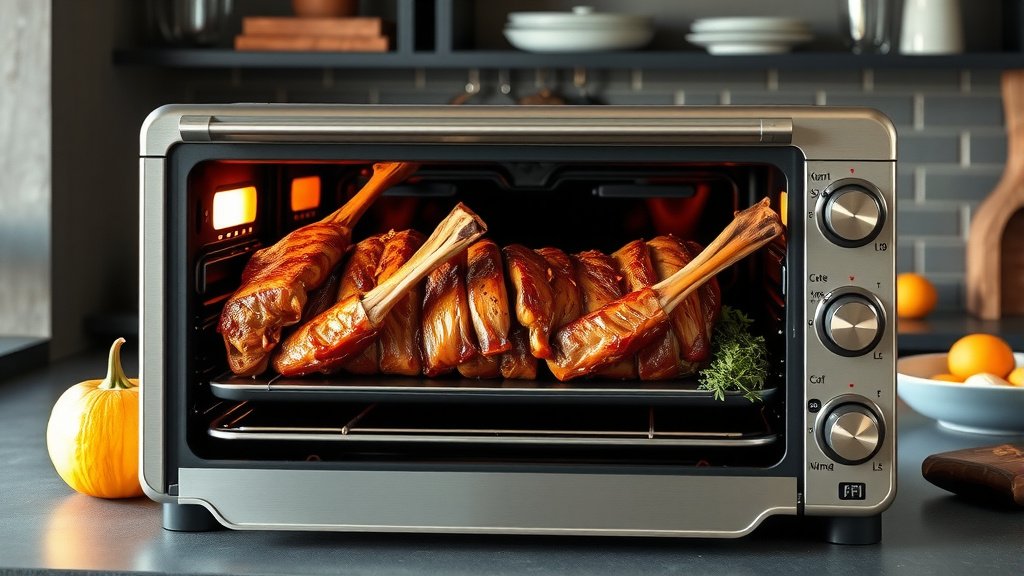
To cook ribs in a rotisserie oven, preheat to 300-325°F (150-163°C), secure seasoned ribs on the spit, and cook for 2-3 hours until tender.
You’ll want to baste them regularly for moisture, then rest them wrapped in foil to finish that perfect, fall-off-the-bone texture.
Here’s the quick rundown for delicious rotisserie ribs:
- Choose your favorite ribs, remove the membrane, and apply a good rub.
- Secure them tightly on the rotisserie spit and balance them well.
- Cook at a moderate temperature, around 300-325°F, for a few hours.
- Baste often to keep the ribs moist and flavorful as they spin.
- Rest the cooked ribs in foil for ultimate tenderness before serving.
How To Cook Ribs In A Rotisserie Oven?
Cooking ribs in a rotisserie oven involves careful preparation, consistent rotation, and monitoring to achieve a tender, evenly cooked result.
You’ll secure seasoned ribs onto a spit, letting the constant motion and radiant heat deliver a fantastic smoky bark and moist interior.
Why Consider Rotisserie Ribs?
Have you ever watched a whole chicken spin on a rotisserie, cooking to golden perfection?
Ribs benefit from this same method. The constant rotation ensures even cooking from all sides, preventing one part from drying out while another is still cooking.
We found that this technique can also help render fat slowly, leading to incredibly juicy and flavorful ribs (Food Network Kitchen).
Picking the Perfect Ribs for Your Rotisserie
The type of ribs you choose matters a lot. Baby Back ribs are smaller and leaner, while St. Louis-style or spare ribs offer more meat and fat.
Many experts suggest selecting racks that are uniform in thickness. This helps them cook evenly on the rotisserie spit.
Thicker, meatier ribs might need a longer cooking time, so keep that in mind when planning your meal.
Essential Gear for Rotisserie Ribs
Before you start, gather your tools. You’ll need your rotisserie oven, of course.
Make sure you have the rotisserie spit and forks that came with your unit. A drip pan is also essential to catch juices and prevent flare-ups.
Don’t forget some heat-resistant gloves and meat claws for handling those hot, tender ribs later.
Preparing Your Ribs for the Spin
Preparation is key to great rotisserie ribs. Taking a few extra steps now pays off big time in the end result.
Don’t skip these initial stages; they truly make a difference in flavor and texture.
Removing the Membrane – A Must-Do
The membrane on the back of the ribs, called the silverskin, can be tough and chewy.
Many experts agree that removing the membrane helps seasonings penetrate better and leads to a more tender bite (Cleveland Clinic).
Just slide a knife under one corner, grab it with a paper towel for grip, and pull it right off.
Seasoning for Success
This is where flavor truly begins. You can use a dry rub, a marinade, or a combination.
Apply your chosen seasoning generously, making sure to coat every surface of the ribs. We found that letting the ribs sit with the rub for at least an hour, or even overnight, deepens the flavor.
Some people like a smoky paprika rub, while others prefer a sweet and spicy blend. What’s your go-to flavor?
Tying Up Loose Ends (Literally!)
Ribs can be a bit floppy when cooking on a rotisserie. Tying them with kitchen twine helps them keep their shape.
It also ensures they spin evenly on the spit, preventing any parts from dragging or cooking inconsistently.
Wrap the twine around the rack a few times, securing any loose ends or thinner sections of meat.
Setting Up Your Rotisserie
Once your ribs are prepped, it’s time to get them onto the rotisserie spit.
This step requires a little patience, but it’s straightforward once you get the hang of it.
Securing Ribs to the Spit
Carefully thread the rotisserie spit through the ribs. Try to go through the thickest parts of the meat.
Then, use the rotisserie forks to secure the ribs tightly on both ends. You want them to be snug and stable.
Any wobbling could lead to uneven cooking or even the ribs falling off during rotation.
Balancing the Load for Evenness
This is a crucial step. A balanced spit spins smoothly, allowing for even heat distribution.
If your ribs are heavier on one side, they will cook unevenly. Test the balance by holding the spit horizontally.
Adjust the rib placement or fork positions until the spit remains steady without tilting.
Ideal Cooking Temperature and Time
Low and slow is generally the way to go for tender ribs, even on a rotisserie.
We found that a temperature range of 300-325°F (150-163°C) works well for rotisserie ribs, allowing them to cook through without drying out.
| Rib Type | Approximate Cooking Time (300-325°F) | Target Internal Temperature |
|---|---|---|
| Baby Back Ribs | 2 – 2.5 hours | 190-203°F (88-95°C) |
| St. Louis-Style Ribs | 2.5 – 3 hours | 190-203°F (88-95°C) |
| Spare Ribs | 3 – 3.5 hours | 190-203°F (88-95°C) |
These times are estimates, so always use a meat thermometer for accuracy.
The Rotisserie Cooking Process
Once your ribs are spinning, the magic starts. But you’re not quite done yet.
A little attention during cooking helps guarantee a fantastic outcome. Think of it like a conductor guiding an orchestra.
Basting for Moisture and Flavor
Basting helps keep your ribs moist and adds layers of flavor. You can use apple cider vinegar, beer, broth, or even a thinned-out BBQ sauce.
We found that basting every 30-45 minutes helps create a beautiful bark and keeps the meat from drying.
Just be quick when opening the oven door to avoid losing too much heat.
Knowing When Your Ribs Are Done
How do you tell when they’re ready? The “bend test” is a popular method. Pick up a rack of ribs with tongs in the middle.
If the ribs are done, they should bend significantly and almost break in half without falling apart. You can also use an instant-read thermometer.
Research often connects an internal temperature of 190-203°F (88-95°C) with fall-off-the-bone tenderness for ribs (USDA).
The Secret to Juicy, Fall-Off-The-Bone Ribs
Many people overlook the resting period, but it’s vital for maximizing juiciness.
Once your ribs reach the desired tenderness, remove them from the rotisserie.
Wrap them tightly in foil and let them rest for 15-20 minutes. This allows the juices to redistribute, leading to incredibly moist ribs.
Some people even add a splash of apple juice inside the foil for extra moisture.
Overcoming Common Rotisserie Rib Challenges
Even seasoned cooks face small issues sometimes. What if your ribs aren’t cooking evenly?
This often points to an unbalanced spit. Re-balance it before your next cook.
If ribs are drying out, try basting more frequently or lowering the temperature slightly.
A small pan of water in the oven can also add humidity and help keep moisture in the meat.
Here’s your rotisserie ribs checklist:
- Choose meaty ribs, uniform in size.
- Always remove the tough membrane.
- Apply a generous, flavorful dry rub.
- Tie ribs securely to the spit with twine.
- Ensure the spit is perfectly balanced.
- Baste frequently during cooking.
- Rest the ribs wrapped in foil after cooking.
Conclusion
Cooking ribs in a rotisserie oven is a rewarding experience. It takes a little preparation and attention, but the results are truly worth it.
You get that beautiful, even bark, incredible tenderness, and juicy flavor that only constant rotation can deliver.
So, go ahead, fire up that rotisserie, and get ready to impress everyone with your perfectly spun ribs. Happy cooking!
What kind of ribs are best for a rotisserie oven?
Baby Back ribs or St. Louis-style ribs are generally best. They are manageable in size for most rotisserie ovens and cook beautifully with their balance of meat and fat. Ensure they are uniform for even cooking.
Do I need to par-boil ribs before putting them on a rotisserie?
No, you typically do not need to par-boil ribs for a rotisserie. The low and slow cooking process in a rotisserie oven is designed to tenderize the ribs naturally while keeping all the flavor. Par-boiling can sometimes wash away flavor.
How do I prevent my rotisserie ribs from drying out?
To prevent ribs from drying, baste them regularly (every 30-45 minutes) with a liquid like apple cider vinegar or broth. Also, ensure you don’t overcook them and always let them rest wrapped in foil after cooking.
Can I use BBQ sauce on my rotisserie ribs during cooking?
You can use BBQ sauce, but many experts suggest applying it during the last 30 minutes of cooking. Sugary sauces can burn if applied too early. Baste with a thinner liquid initially, then finish with your favorite sauce.
What’s the best way to check for doneness without cutting into the ribs?
The “bend test” is a great indicator: pick up the rack in the middle with tongs; if it bends significantly and almost breaks, it’s ready. You can also probe between the bones with an instant-read thermometer; it should register 190-203°F (88-95°C) and feel tender.
