
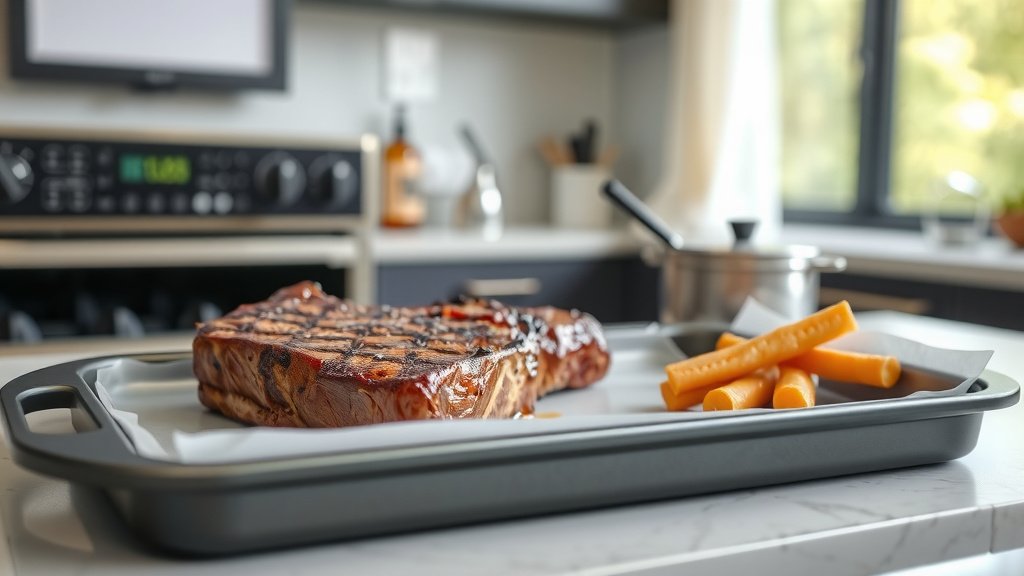
To cook steak in a countertop oven, you typically start with a hot sear in a cast-iron pan, then transfer the pan with the steak directly into the preheated oven to finish cooking.
This two-stage method ensures a crispy, flavorful crust and a perfectly juicy interior, giving you steakhouse-quality results right from your counter.
Here’s the quick scoop on making steak in your countertop oven:
- Achieve a beautiful sear by preheating your oven and a cast-iron pan to a high temperature.
- Sear the steak for just a couple of minutes on each side to build a delicious crust.
- Finish cooking the steak in the preheated countertop oven until it reaches your desired doneness.
- Always let your steak rest for 5-10 minutes to redistribute juices before slicing.
- You’ll get a tender, juicy steak that might surprise you, all from your kitchen counter.
How To Cook Steak In A Countertop Oven?
You can cook a delicious steak in a countertop oven by combining high-heat searing with a controlled oven finish. This method helps lock in juices for a flavorful result.
Why Use a Countertop Oven for Steak?
Have you ever thought about making a fantastic steak without firing up your big oven? Countertop ovens are perfect for this. They often preheat faster and use less energy than a full-sized oven.
They bring their own special charm to the kitchen. Plus, they usually have precise temperature controls, which is a real bonus for steak cooking. Many people appreciate the convenience.
Picking the Perfect Steak Cut
The right steak cut makes a world of difference. For countertop oven cooking, you want something that cooks evenly. We found that cuts like ribeye, New York strip, and sirloin work wonderfully.
These cuts have good marbling, which means little streaks of fat. This marbling melts as it cooks, keeping your steak moist and flavorful. You want fat for flavor, right?
Understanding Steak Thickness
Thickness is also important. A steak that’s about 1 to 1.5 inches thick is often ideal for this method. Thicker steaks give you more room to get that perfect medium-rare center without burning the outside.
If your steak is too thin, it might overcook very quickly. Thicker means juicier, many chefs agree.
Essential Tools for Steak Success
You don’t need a fancy kitchen to cook a great steak. Here’s what you’ll want to have on hand:
- A heavy cast-iron skillet (or an oven-safe stainless steel pan).
- A reliable meat thermometer. This is your best friend for accurate doneness.
- Tongs for easy flipping.
- A cutting board with a juice groove.
Having these tools ready makes the cooking process smooth and enjoyable. It prevents any last-minute searching.
Prepping Your Steak: The Crucial First Steps
Good prep sets the stage for a great meal. Taking a few moments here pays off with big flavor. It’s like stretching before a workout – essential.
Pat Dry, Season Well
First, always pat your steak completely dry with paper towels. This step is often overlooked but it’s critically important for searing. Moisture creates steam, and steam prevents a good crust from forming.
Then, season generously with salt and black pepper. Don’t be shy! Some chefs even recommend seasoning a few hours beforehand and letting it sit in the fridge uncovered. This allows the salt to penetrate deeply (research shows).
The Art of the Sear: Achieving That Golden Crust
The sear is where the magic starts. It’s what gives your steak that appealing, caramelized exterior. Think of it as painting the first layer of flavor.
Preheat your countertop oven to its highest setting, usually around 450-500°F (230-260°C). Place your cast-iron skillet inside as the oven preheats. You want that pan screaming hot!
Once the oven and pan are hot, carefully remove the pan and place it on your stovetop burner over high heat. Add a high smoke point oil, like grapeseed or avocado oil. Wait until it just begins to smoke lightly.
Gently place your dry, seasoned steak into the hot pan. Sear for 1-2 minutes per side. You’re looking for a beautiful, deep brown crust. Don’t move it around too much during this stage.
Finishing in the Oven: Getting the Right Doneness
After searing, the steak goes into the oven to finish cooking. This creates an even heat environment. It’s how you get that perfect pink center.
Carefully transfer the entire hot pan with the steak back into the preheated countertop oven. This is where your oven’s precise temperature control shines. Cook for 3-8 minutes, depending on thickness and desired doneness.
Use your meat thermometer to check the internal temperature. This is the most accurate way to ensure your steak is cooked just right. Every oven is a little different, so trust the thermometer, not the clock.
Target Internal Temperatures (USDA Guidelines)
Here’s a quick guide for what to aim for:
- Rare: 125-130°F (52-54°C)
- Medium-Rare: 130-135°F (54-57°C)
- Medium: 135-140°F (57-60°C)
- Medium-Well: 140-145°F (60-63°C)
- Well-Done: 150°F+ (66°C+)
Remember, the steak’s temperature will rise a few degrees after you take it out of the oven. So, pull it a little early.
The Golden Rule: Rest Your Steak
Once your steak reaches its target temperature, remove it from the oven and transfer it to a cutting board. Let it rest for at least 5-10 minutes. Why rest?
When meat cooks, the muscle fibers contract, pushing juices to the center. Resting allows these juices to redistribute throughout the steak. If you cut it too soon, all those delicious juices will spill out onto your board, leaving you with a drier steak. Patience is a virtue here!
Troubleshooting Common Steak Hiccups
Sometimes things don’t go perfectly, and that’s okay. We’ve all been there. Is your steak not getting a good crust? Maybe the pan wasn’t hot enough, or the steak wasn’t dry enough. Always ensure those steps are right.
Is it overcooked or undercooked? Your meat thermometer is your best defense. Many experts agree that relying on visual cues can be misleading. Practice makes perfect, right?
Countertop vs. Conventional Oven: A Quick Look
While both can cook a great steak, there are some differences. Here’s a brief comparison:
| Feature | Countertop Oven | Conventional Oven |
|---|---|---|
| Preheat Time | Often Faster | Can be Slower |
| Energy Use | Generally Lower | Higher |
| Space Required | Minimal Counter Space | Fixed Kitchen Space |
| Heat Distribution | Good for Smaller Items | Excellent for Large Items |
| Max Temperature | Varies, often 450-500°F | Typically 500-550°F+ |
For a single steak or two, a countertop oven often wins for efficiency. It’s perfect for smaller tasks.
Quick Checklist for a Perfect Steak
Keep these points in mind for consistent results:
- Pat steak dry completely.
- Season generously with salt and pepper.
- Preheat both oven and cast-iron pan to high heat.
- Sear steak quickly for 1-2 minutes per side.
- Finish in the preheated oven, checking with a thermometer.
- Rest the cooked steak for 5-10 minutes before slicing.
Conclusion
Cooking steak in a countertop oven is surprisingly simple and incredibly rewarding. By following these steps – from choosing the right cut and proper seasoning to the crucial sear and resting period – you’re well on your way to a perfectly cooked, juicy steak. It’s a convenient method that delivers big flavor without much fuss. So go ahead, give it a try tonight!
Can I use any type of steak in a countertop oven?
While most cuts can work, we found that thicker cuts with good marbling, like ribeye, New York strip, or sirloin, yield the best results. Leaner cuts might dry out more easily.
How long should I rest my steak after cooking?
It’s generally recommended to rest your steak for at least 5 to 10 minutes. For very thick cuts, you might even extend that to 15 minutes. This allows the juices to redistribute, making your steak more tender and flavorful.
What’s the ideal thickness for steak cooked in a countertop oven?
A steak that is 1 to 1.5 inches thick is often perfect for this method. This thickness allows for a good sear on the outside while giving you enough time to achieve your desired doneness in the center without overcooking.
Can I add flavorings like garlic and herbs while cooking?
Yes, absolutely! Many people love to add aromatics like crushed garlic cloves, sprigs of rosemary, or thyme to the pan during the last minute of searing, or during the oven finish. This infuses your steak with wonderful extra flavor.
Is it possible to cook a frozen steak in a countertop oven?
While you can technically cook a frozen steak, it’s not the ideal method for getting a great crust and even doneness. Research suggests that thawing your steak completely first allows for a much better sear and more predictable cooking results. Plan ahead for the best outcome!
