
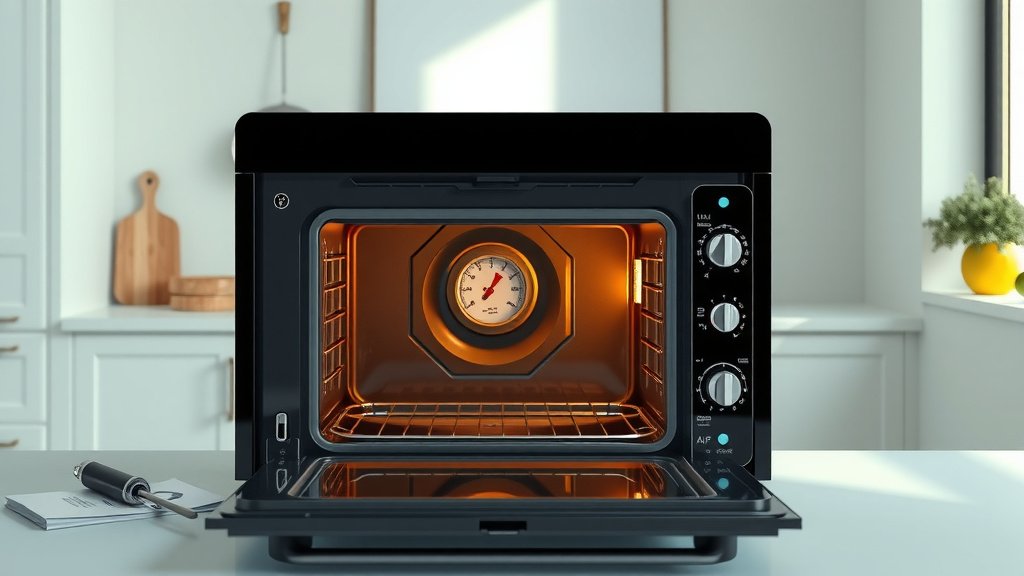
If your electric oven isn’t reaching the desired temperature, the most common culprits are a faulty temperature sensor, a burned-out heating element, or a malfunctioning thermostat.
To fix an electric oven not reaching temperature, start by visually inspecting the heating elements and the oven door seal, then test the temperature sensor for proper resistance readings.
Here’s a quick rundown of what you’ll find in this guide, helping you pinpoint the problem and get your oven back to baking perfection:
- Discover the top three reasons your electric oven isn’t heating properly.
- Learn how to safely check your oven’s heating elements and temperature sensor.
- Understand the role of the thermostat and control board in oven temperature regulation.
- Find practical steps to troubleshoot and potentially resolve common heating issues.
- Get tips on when it’s best to call a professional for more complex repairs.
How To Fix Electric Oven Not Reaching Temperature?
When your electric oven isn’t hitting its target temperature, it can certainly throw a wrench into your cooking plans. Many issues can cause this, from simple fixes to more complex component failures.
Understanding Why Your Oven Isn’t Heating Correctly
Imagine setting your oven for a delicious meal, only to find it’s barely warm inside. What gives? We’ve found that several key components work together to maintain your oven’s heat, and when one falters, the whole system can go awry.
The Temperature Sensor: Your Oven’s Thermometer
Every electric oven has a temperature sensor, typically a small probe inside the oven cavity. It tells the control board the current temperature. If this sensor is faulty, your oven won’t know how hot it actually is.
To check it, you’ll need a multimeter. Unplug your oven first, always. Many experts say a good sensor should show a resistance of about 1080 to 1100 ohms at room temperature (around 70 degrees Fahrenheit). (Appliance Repair Handbook).
Inspect the Heating Elements: Bake and Broil
Your oven usually has two main heating elements: one at the bottom (bake) and one at the top (broil). If either one is visibly damaged, cracked, or not glowing red, it’s likely burned out. We found this is a very common cause of heating problems.
You can sometimes see a break in the element itself. Unplug your oven and carefully examine both elements. If one looks broken, it needs replacement.
Is Your Oven Door Sealing Properly?
Think about a leaky bucket; it can’t hold water, right? The same goes for your oven door seal, or gasket. If heat escapes, your oven struggles to reach and maintain temperature.
Feel around the edges of your oven door when it’s warm. Is there air escaping? A damaged or worn-out gasket is a relatively easy fix that can make a huge difference.
Calibrating Your Oven for Accuracy
Sometimes, your oven just needs a little adjustment. It might be heating, but inaccurately. Many oven models allow you to recalibrate the temperature setting directly through the control panel.
Check your oven’s manual for specific instructions. This helps synchronize the displayed temperature with the actual temperature inside your oven.
When the Oven Thermostat Acts Up
The thermostat works hand-in-hand with the temperature sensor, regulating the heat inside. A faulty thermostat might send incorrect signals, causing the oven to cycle on and off improperly, or not heat up enough.
Diagnosing a thermostat can be trickier than elements or sensors. Often, if you’ve ruled out other issues, the thermostat could be the next component to consider.
Understanding the Oven Control Board
Consider the control board the brain of your oven. It processes information from the sensor and thermostat, then tells the heating elements what to do. If the board is faulty, it might not send the correct voltage to the elements.
Issues with the control board are less common but can cause intermittent heating or complete failure. This is typically a job for a professional, as it involves complex electronics.
Power Supply and Wiring Checks
Before you dive into oven components, always check the basics. Is the oven fully plugged in? Is the circuit breaker tripped? A loose connection or insufficient power supply can prevent proper heating.
Always exercise caution when checking electrical connections. If you’re unsure, it’s best to contact a qualified electrician.
Common Oven Heating Problems and Solutions
Let’s look at a quick overview of what often goes wrong and what you can do about it.
| Problem Symptom | Most Likely Cause | Suggested Action |
|---|---|---|
| Oven not heating at all | Burned-out heating element, no power | Check elements, circuit breaker, plug |
| Oven heats slowly or unevenly | Faulty temperature sensor, door seal, calibration | Test sensor, inspect seal, recalibrate |
| Oven gets too hot or cycles erratically | Temperature sensor, thermostat, control board | Test sensor, consider professional diagnosis |
| Element not glowing red | Burned-out element, faulty wiring | Replace element, check wiring connections |
Safety First: Essential Tips Before You Start
Working with appliances requires care. We found that safety precautions are paramount when troubleshooting your oven. Always remember to:
- Unplug the Oven: Before any inspection or repair, disconnect power from the wall outlet or flip the circuit breaker.
- Wear Gloves: Oven interiors can have sharp edges, and gloves protect your hands.
- Use the Right Tools: A multimeter for testing, screwdrivers for disassembly.
- Consult Your Manual: Your oven’s manual often has specific troubleshooting steps.
- Don’t Force Anything: If a part resists, double-check your method.
Your Oven Troubleshooting Checklist
Ready to tackle the problem? Here’s a simple checklist to guide your efforts:
- Did you check the circuit breaker for your oven?
- Are both the bake and broil elements intact and glowing?
- Is the oven door gasket sealing tightly all around?
- Have you tested the temperature sensor with a multimeter?
- Did you try recalibrating your oven’s temperature settings?
Conclusion
When your electric oven isn’t reaching temperature, it’s often a fixable issue. By systematically checking the temperature sensor, heating elements, door seal, and other key components, you can often diagnose the problem yourself. Many experts agree that starting with the simplest checks, like power and visual inspections, can save you time and money.
Remember, safety is key. If you’re uncomfortable with electrical work or suspect a complex issue with the control board or thermostat, we recommend reaching out to a certified appliance repair technician. Getting your oven back to optimal performance means more delicious meals for you!
What are the signs of a faulty oven temperature sensor?
A faulty oven temperature sensor might cause your oven to overheat, underheat, or display inaccurate temperature readings. You might notice inconsistent cooking results, with food either burning or taking much longer to cook than usual.
How do I know if my oven’s heating element is bad?
You can often tell if a heating element is bad by a visual inspection. Look for breaks, cracks, or blisters on the element. If it’s not glowing red when the oven is on (and set to heat), it’s a strong indicator that the element has burned out and needs replacement.
Can a dirty oven affect its heating ability?
While a very dirty oven might slightly affect efficiency by absorbing some heat, it’s generally not the primary reason an oven fails to reach temperature. Excessive grease buildup can block vents or interfere with sensors, but component failure is usually the main culprit.
Is it safe to replace an oven heating element myself?
Replacing an oven heating element is generally safe for DIYers, provided you take proper precautions. Always unplug the oven from its power source before you begin. The process usually involves removing a few screws and disconnecting wires, but always refer to your specific oven model’s manual.
When should I call a professional for oven repair?
You should call a professional if you’ve performed basic checks (elements, sensor, door seal, power) and the oven still isn’t working, or if you suspect a problem with the control board or main thermostat. Issues involving complex wiring or internal electrical components are best handled by certified technicians for safety and accuracy.
