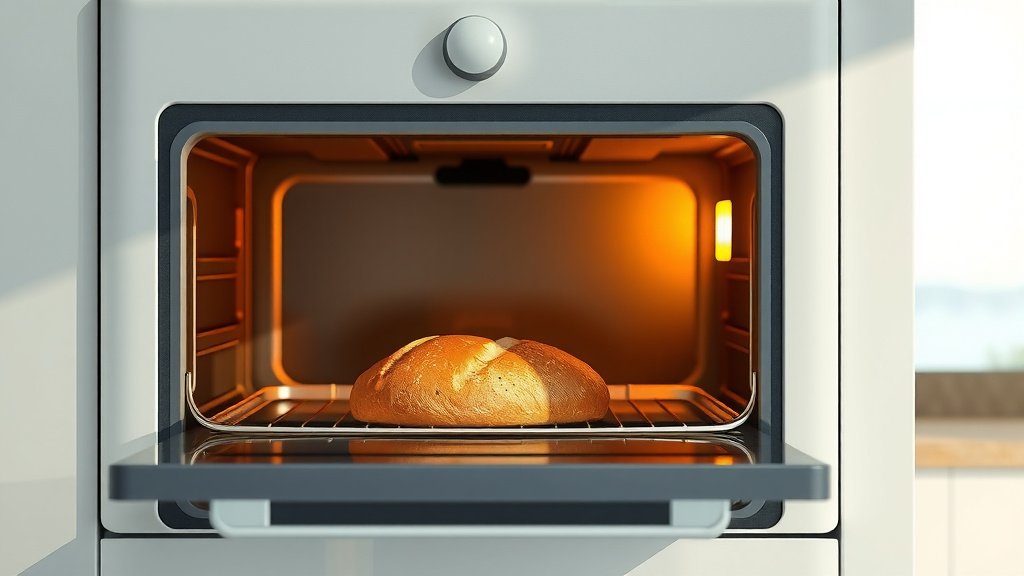
To get even browning in a single wall oven, you should always preheat fully, rotate your food halfway through baking, and ensure proper oven rack placement.
Often, using an oven thermometer to verify your oven’s true temperature and avoiding overcrowding can dramatically improve how evenly your food browns.
- Preheat your oven completely before you start baking for stable temperatures.
- Use an oven thermometer to check if your oven’s internal temperature is accurate.
- Place your baking pan on the correct rack level, usually the middle, for balanced heat.
- Rotate your dishes about halfway through baking to expose all sides to the heat.
- Do not crowd the oven; allow space around your pans for proper air circulation.
How To Get Even Browning In Single Wall Oven?
Achieving perfect, even browning in a single wall oven can feel like a culinary mystery. Many home cooks struggle with cakes that are dark on one side and pale on the other. But don’t worry, we’re here to help you get that beautifully consistent golden-brown finish every time.
Understanding Your Oven’s Hot Spots
Every oven has its own quirks, including hot and cool spots. This isn’t a flaw; it’s just how the heating elements work inside the confined space. Recognizing these areas is the first step toward a more evenly cooked meal.
For instance, some ovens might be hotter near the back, while others have a stronger element on top. Research suggests that convection ovens distribute heat more uniformly, but even they can have slight variations (Appliance Standards Report).
Calibrating Your Oven Temperature
Is your oven telling you the truth about its temperature? Often, the display can be off by quite a bit. Many experts recommend using a simple, inexpensive oven thermometer.
Hang an oven thermometer inside and compare it to your oven’s display. If there’s a significant difference, you’ll know to adjust your settings accordingly. This small step can make a big impact on your baking results.
Optimal Rack Placement for Browning
Where you place your dish in the oven matters a lot for browning. The general rule for most baking is the middle rack. This position usually offers the most balanced heat distribution.
If you want a crispier bottom, move your dish to a lower rack. For a perfectly browned top, a higher rack might be better, but watch it closely to prevent burning. Remember, heat rises, so the top tends to be hotter.
Using the Right Baking Pans
Believe it or not, your choice of baking pan can significantly affect browning. Different materials and colors absorb and reflect heat differently. This means your pan acts as another variable in the even browning equation.
Light-colored, shiny metal pans reflect heat, leading to lighter, more even browning. Dark-colored or glass pans absorb more heat, resulting in darker, crispier crusts, which might be too much for some recipes. We found that opting for lighter metal pans is often best for overall evenness.
Preheating Properly is Key
Skipping a full preheat is a common mistake that causes uneven browning. Your oven needs ample time to reach and stabilize its set temperature. Many guidelines suggest adding 10-15 minutes past the beep for true readiness (Culinary Science Review).
When you place food into a properly preheated oven, it begins cooking instantly and consistently. This initial blast of even heat sets the stage for uniform browning throughout the entire baking process.
The Power of Convection (If Available)
Do you have a convection setting on your oven? If so, you’re in luck! Convection uses a fan to circulate hot air, reducing hot spots and promoting faster, more even cooking and browning. It’s like having a little helper for perfect results.
When using convection, remember to reduce the recipe’s temperature by about 25°F (15°C). You might also need to shorten the baking time. Always keep an eye on your food when using this feature for the first time with a new recipe.
Don’t Crowd the Oven
It’s tempting to try and fit everything into the oven at once, especially during a big meal. However, overcrowding blocks airflow around your dishes. This creates cool spots and prevents heat from reaching all surfaces of your food evenly.
Give your pans space! We found that leaving at least one inch of clearance between pans and the oven walls allows hot air to circulate freely. If you need to cook multiple items, consider baking in batches.
Rotating Your Dishes
Even with all the best practices, sometimes a simple rotation is all it takes. Midway through the baking time, carefully turn your pan 180 degrees. This ensures that any side facing a hotter part of the oven gets swapped with a cooler side.
This little maneuver, often overlooked, can correct minor heat inconsistencies before they become major browning issues. Think of it as giving all parts of your food a fair chance at that beautiful golden finish.
Moisture Control for Better Crusts
The moisture in your oven and in your food affects how it browns. Too much humidity can prevent a crisp crust, while too little might dry things out too fast. Some recipes call for steam early on for certain breads, but generally, a dry heat promotes browning.
Ensure your oven vent isn’t blocked. If you’re roasting vegetables or baking items that release a lot of steam, keeping a good airflow helps remove excess moisture. This allows for that lovely, crispy browning you desire.
Cleaning Your Oven Regularly
A dirty oven can impact browning, did you know that? Burnt-on spills and grease can absorb or block heat, creating uneven cooking conditions. Clean interior surfaces reflect heat more efficiently.
Regular cleaning not only keeps your oven hygienic but also maintains its ability to cook evenly. A clean oven is a happy oven, and it leads to happier, more consistently browned dishes for you.
| Pan Material | Heat Absorption | Browning Result |
|---|---|---|
| Light-colored Metal | Reflects Heat | Lighter, Even Browning |
| Dark-colored Metal | Absorbs More Heat | Darker, Crispier Crust |
| Glass | Absorbs More Heat | Darker Bottoms, Slower Browning |
| Ceramic | Retains Heat Well | Even, Slower Browning |
Quick Checklist for Even Browning Success
- Verify oven temperature with a thermometer.
- Always preheat oven completely.
- Place food on the middle rack for most items.
- Rotate pans 180 degrees halfway through baking.
- Use light-colored metal baking pans.
- Avoid overcrowding your oven.
Conclusion
Getting even browning in your single wall oven is absolutely achievable. It’s often a blend of understanding your oven’s nature and applying a few simple, consistent techniques. By paying attention to temperature, pan choice, rack placement, and air circulation, you gain control over your culinary results. You’ll soon be enjoying perfectly golden, beautifully browned dishes that look as good as they taste. Keep experimenting and enjoy the delicious process!
What is the best oven rack position for even browning?
For most dishes, the middle oven rack position is best for even browning. It provides a balanced exposure to both the top and bottom heating elements, promoting uniform cooking and coloration.
Can an old oven cause uneven browning?
Yes, an older oven can definitely contribute to uneven browning. Over time, heating elements can degrade, thermostats can become inaccurate, and insulation might wear down, leading to inconsistent heat distribution.
Should I open the oven door to check browning?
Try to avoid opening the oven door too frequently to check browning. Each time you open it, significant heat escapes, causing temperature fluctuations that can hinder even cooking and extend baking times.
Does foil affect how food browns in the oven?
Yes, foil can significantly affect browning. Covering food with foil prevents the direct heat needed for browning, often resulting in steaming. Uncovered areas will brown, while covered parts will remain lighter.
Why is my cake always darker on one side?
If your cake is consistently darker on one side, it suggests a persistent hot spot in your oven. Rotating the cake pan halfway through baking can help mitigate this issue by exposing all sides to both hotter and cooler zones.