
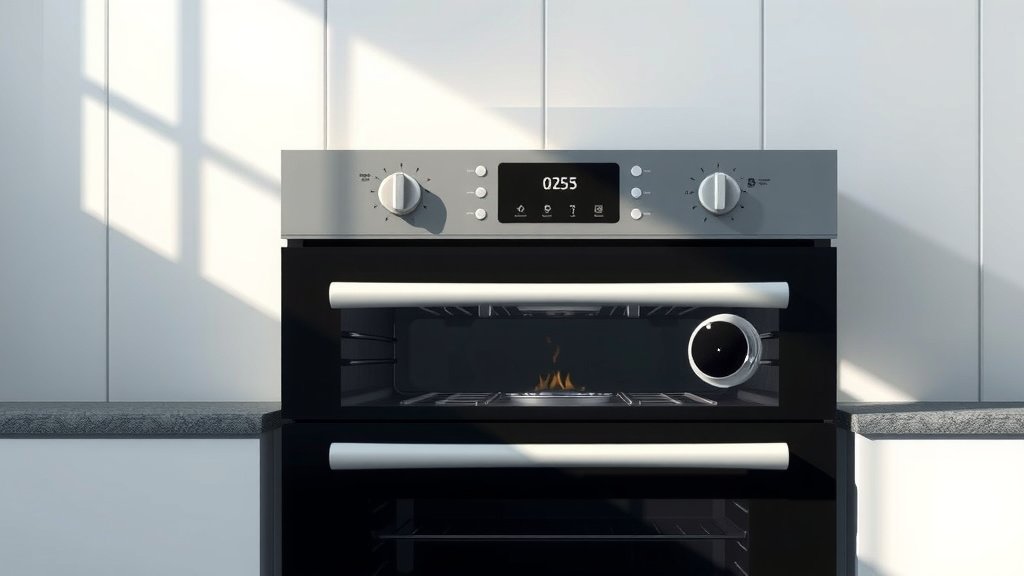
To keep a gas oven at a low temperature, you can often **prop the oven door slightly ajar** to release excess heat, making sure to use a reliable oven thermometer to monitor the actual internal temperature.
Many gas ovens have a lowest setting around 170°F (77°C), but for lower temperatures, you may need to **cycle the oven on and off** or use a baking stone to stabilize heat.
Here’s a quick guide to managing your gas oven for those extra-low temperature tasks:
- Monitor oven temperature with an independent thermometer.
- Slightly prop open the oven door to vent warmth.
- Use a baking stone or steel to even out heat distribution.
- Turn the oven on and off in intervals for very low settings.
- Consider if your oven is calibrated correctly for accuracy.
How To Keep Gas Oven At Low Temperature?
To consistently keep a gas oven at low temperatures, the most effective methods involve **careful heat monitoring and controlled ventilation**. You’ll often find success by understanding your oven’s unique heating patterns.
Many experts suggest using an external oven thermometer, as built-in gauges can sometimes be inaccurate, which is something we often see in research.
Understanding Your Gas Oven’s Nature
Gas ovens can be a bit more challenging for low-temperature cooking than electric models. They tend to have **hotter initial flames** and might struggle to maintain temperatures below 170°F (77°C).
This is because the gas burner often cycles fully on and off to maintain a set temperature, which can lead to larger temperature swings inside the oven.
Invest in a Quality Oven Thermometer
Is your oven really at 200 degrees? Often, the dial on your gas oven isn’t perfectly accurate. We found that many home ovens can be off by **25 to 50 degrees Fahrenheit**.
A good quality, oven-safe thermometer, placed clearly inside your oven, is your best friend. It shows you the true temperature, helping you adjust as needed (Food Safety and Inspection Service).
The Door-Propping Technique
One common and effective method for reducing oven temperature, especially for very low settings, is to **prop the oven door open slightly**. This allows some of the excess heat to escape.
You can use a wooden spoon, a folded potholder, or a heat-safe silicone wedge. Just make sure the gap is small, perhaps an inch or two, to prevent significant energy loss or cooling too rapidly.
Utilizing a Baking Stone or Steel
A heavy baking stone or steel placed on the bottom rack can **stabilize your oven’s temperature**. It absorbs and radiates heat more evenly, reducing those dramatic temperature swings common in gas ovens.
Think of it like a thermal battery for your oven. This mass helps to keep the internal temperature more consistent, even when the burner cycles on and off (Culinary Institute of America research).
Cycling the Oven Manually
For extremely low temperatures, below what your oven can naturally hold, you might need to **manually cycle the heat**. This involves turning the oven on for a period, then off, then back on.
This technique requires constant monitoring with your oven thermometer, but it gives you **precise control over low heat levels** for tasks like keeping food warm without cooking it further.
Practicing Manual Cycling
Start by preheating to your lowest desired setting. Once it reaches that temp, turn the oven off for 10-15 minutes, then turn it back on for 5-10 minutes, observing the thermometer. Adjust times as needed.
Leveraging Your Convection Fan
Does your gas oven have a convection fan? If so, using it can help **circulate air more evenly**, which might reduce hot spots and lead to more consistent low temperatures.
The fan helps distribute the heat, often allowing you to set the oven a bit lower than usual. Many experts recommend reducing the set temperature by 25 degrees when using convection (USDA guidelines).
Preheating Smartly for Low Temps
When you aim for a low temperature, avoid preheating the oven to a much higher temperature first. Instead, **preheat directly to your desired low setting**.
This prevents the oven from overshooting the target temperature and then needing a long time to cool down, which can be inefficient and imprecise.
Calibrating Your Oven’s Thermostat
If your oven consistently reads too high or too low, it might need **recalibration**. Many ovens have a hidden adjustment screw behind the temperature dial or within the control panel.
Consult your oven’s manual for specific instructions on how to adjust the thermostat. We found that proper calibration can make a **huge difference in temperature accuracy**.
| Method for Low Temp | How It Works | Best For | Considerations |
|---|---|---|---|
| Door Propping | Releases excess heat through a small gap. | Very low temps, keeping warm. | Requires constant monitoring, energy efficiency. |
| Baking Stone/Steel | Absorbs and radiates heat evenly. | Stabilizing temps, reducing swings. | Adds weight, takes time to heat up. |
| Manual Cycling | Turning oven on/off periodically. | Extremely low temps, specific holding. | Needs close attention, not automatic. |
| Convection Fan | Circulates air for even heat distribution. | More consistent low temps. | May dry out some foods, not all ovens have it. |
Keeping Your Oven Clean for Accuracy
A dirty oven, especially around the burner or temperature sensor, can affect its performance and **temperature consistency**. Food debris can block sensors or interfere with heat distribution.
Regular cleaning, as recommended by your oven’s manufacturer, helps ensure all components function as they should, leading to more accurate temperature control.
When to Consider Professional Help
If you’ve tried these tips and your gas oven still won’t hold a low temperature accurately, it might be time to call a professional. A **faulty thermostat or igniter** could be the issue.
A technician can diagnose and fix mechanical problems that prevent your oven from maintaining specific heat levels, giving you peace of mind.
Checklist for Low-Temperature Baking Success
Before you begin your low-temp cooking project, quickly run through this checklist:
- Did you place an independent oven thermometer inside?
- Is your baking stone or steel preheated, if using?
- Are you ready to prop the door if needed?
- Have you cleaned your oven recently?
- Do you have your oven’s manual handy for reference?
Conclusion
Mastering low temperatures in a gas oven can seem tricky, but with the right tools and techniques, you can achieve **consistent and precise results**. The key is often external monitoring, smart ventilation, and understanding your oven’s unique heating behavior.
Whether you’re holding a delicate meringue or keeping a roast warm, these practical steps will help you gain better control over your gas oven, transforming potentially frustrating experiences into culinary wins. Happy cooking!
How do gas ovens regulate temperature?
Gas ovens regulate temperature by cycling the main burner on and off. When the oven drops below the set temperature, the burner ignites to heat it back up. Once it reaches or exceeds the set point, the burner turns off. This on-off cycle can cause slight temperature fluctuations.
Can I bake cookies at a very low temperature in a gas oven?
Yes, you can bake cookies at very low temperatures, often for a crispier, slower bake or to dry them out. However, you will need to closely monitor with an oven thermometer and possibly prop the door open slightly to achieve and maintain those lower temperatures accurately.
Why does my gas oven run hotter than the set temperature?
Several factors can cause a gas oven to run hotter than its set temperature. These include an inaccurate thermostat, a faulty temperature sensor, issues with calibration, or simply a natural tendency for some gas ovens to have hot spots or overshoot their target during heating cycles.
Is it safe to leave the gas oven door ajar for extended periods?
Leaving the gas oven door ajar for extended periods is generally considered safe if done carefully and responsibly. Ensure the gap is small, you monitor the oven, and keep children or pets away from the open door and escaping heat. It’s best used for short periods or specific low-temperature tasks, not as a general cooling method.
What is the lowest temperature a gas oven can typically reach?
Most modern gas ovens can typically reach a lowest set temperature around 170°F (77°C). Some older models or certain commercial units might struggle to go below 200°F (93°C) without using methods like door propping or manual cycling to force the temperature lower.
