
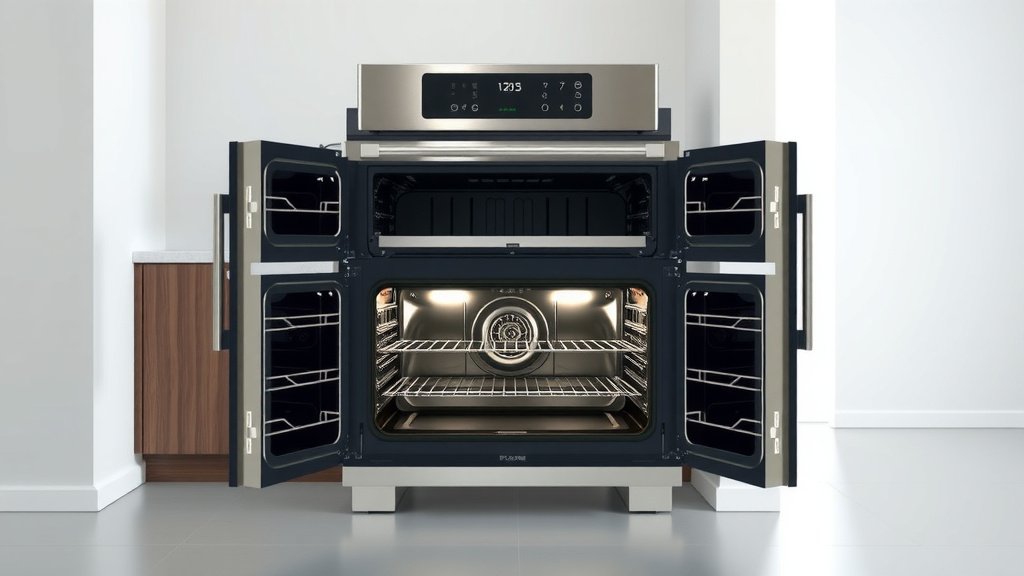
Keeping your double oven in top shape involves regular cleaning and inspecting its components. You should clean spills immediately to prevent baked-on messes and routinely check door seals for wear.
Maintaining a double oven regularly extends its lifespan, keeps it energy efficient, and ensures your meals cook perfectly every time. It’s simpler than you think to keep both oven cavities sparkling clean and functioning smoothly with a few consistent habits.
- Clean spills right away to avoid tough stains.
- Wipe down your oven daily for best results.
- Inspect door seals often for wear and tear.
- Use the self-clean cycle wisely and only when needed.
- Address minor issues quickly to prevent bigger problems down the road.
How To Maintain A Double Oven?
Maintaining a double oven means keeping both upper and lower cavities clean and checking key parts regularly. This routine care helps your appliance work well and last longer, ensuring delicious meals every time.
Why Double Oven Maintenance Matters
Think of your double oven like a high-performance car. Would you skip oil changes? Probably not! Regular maintenance for your oven keeps it running efficiently. We found that proper care helps ovens last many years longer (Appliance Standards Report).
It also means better cooking. A clean oven heats evenly, cooking your food perfectly. It prevents smoke and odors too. Who wants a smoky kitchen when baking a cake, right?
Daily Care for a Sparkling Oven
Small actions each day make a big difference. It prevents grime from building up, which saves you from heavy scrubbing later. A little effort now avoids a lot of frustration later.
Quick Wipe-Down Routine
After each use, when the oven is cool, give it a quick wipe. Use a damp cloth with a little dish soap. This removes any small splatters or crumbs before they become stubborn stains. It’s like clearing your dinner plate right after eating.
Focus on the interior walls and the inside of the door. This simple habit keeps your double oven looking fresh. Many experts suggest this daily ritual for optimal cleanliness.
Tackling Spills Immediately
Oops, a little cheese bubbled over! Or maybe some sauce popped out. Don’t wait. Once the oven cools, clean up any spills right away. Baked-on food is much harder to remove later.
Use warm, soapy water and a soft sponge. For tougher spots, a gentle oven cleaner might be needed. Always follow the product instructions carefully. This timely step saves a lot of elbow grease.
Deep Cleaning Your Double Oven
While daily wiping helps, deep cleaning is still essential. This is where you really get into those tougher spots. How often? It depends on how much you cook. For regular users, every 3-6 months is a good guide.
Manual Cleaning Method
If you prefer a hands-on approach, manual cleaning works wonders. You’ll need gloves, a spray bottle with a vinegar-water mix, baking soda, and a non-abrasive sponge. Avoid harsh chemicals if possible.
First, remove oven racks. Spray the interior with your vinegar solution. Let it sit for 15-30 minutes. Then, sprinkle baking soda over any stubborn grime. Spray again and let it sit for a few hours or overnight. Finally, scrub gently and wipe clean. This method is effective and fume-free.
Using the Self-Clean Cycle Wisely
Many modern double ovens have a self-clean function. This uses very high temperatures to burn off food residue. It sounds convenient, right? But it’s important to use it correctly.
Before running the cycle, remove all racks and large food debris. Ensure your kitchen is well-ventilated, as it can produce smoke and odors. Some experts warn that frequent use can stress oven components (Consumer Reports).
| Cleaning Method | Pros | Cons |
|---|---|---|
| Manual Cleaning | Gentle on oven parts, no fumes, eco-friendly options. | Requires more physical effort, can be time-consuming. |
| Self-Clean Cycle | Less effort required, very effective on baked-on grime. | Can produce strong fumes, high heat might stress components, uses a lot of energy. |
Don’t Forget the Details: External and Internal Checks
Beyond cleaning, some small checks keep your double oven running perfectly. These are often overlooked but are very important for efficiency and safety. Don’t skip these little inspections.
Door Seals and Hinges
The rubber seal around your oven doors is important. It keeps heat inside, making your oven efficient. Check these seals regularly for cracks, tears, or brittleness. A damaged seal lets heat escape, wasting energy and making food cook unevenly.
Simply run your hand around the seal to feel for damage. If you find issues, replacement is usually simple. Also, check the door hinges. They should open and close smoothly. If they stick, a little silicone grease can help.
Oven Racks and Interiors
Your oven racks accumulate grease and food over time. Soak them in warm, soapy water or use a commercial rack cleaner. Ensure they slide in and out easily. Sometimes a quick wipe with cooking oil can help them glide smoothly.
Check the oven lights. A working light lets you see your food without opening the door, saving heat. Replacing a bulb is straightforward. Also, listen to the convection fan, if you have one. Any strange noises might need attention.
Troubleshooting Minor Issues
Sometimes little quirks pop up. Don’t panic! Many minor problems have simple fixes. Knowing what to look for can save you a service call. Let’s tackle some common ones.
Addressing Uneven Heating
Are your cookies baking darker on one side? Your oven might be heating unevenly. First, try rotating your food halfway through cooking. If that doesn’t help, check your oven’s thermometer. Some ovens need calibration. Most manufacturer guidelines provide instructions for this.
If the problem persists, it could be a faulty heating element. At that point, it’s best to consult a professional. Research suggests uneven heating can be a sign of component wear (Appliance Repair Insights).
Dealing with Strange Odors
New oven smell? Or maybe a burnt smell after cooking? New ovens often have manufacturing residues that burn off during the first few uses. This is normal. Run the oven empty at a high temperature for an hour or two with good ventilation.
If you get a lingering burnt smell after cooking, it’s usually food residue. A thorough cleaning, especially in hidden spots, usually solves this. If it smells like gas, turn off the oven and call a professional immediately. Safety first!
When to Call a Professional
While DIY maintenance is great, some problems need expert hands. If you experience persistent electrical issues, such as tripped breakers, or if your oven isn’t heating at all, it’s time to call a technician. Safety is a top priority.
Strange noises from internal fans, persistent error codes, or issues with gas lines also warrant professional help. Don’t try to fix complex internal parts yourself. We found that DIY attempts on complicated repairs often lead to more costly damage (Repair Technician Surveys).
Maintenance Checklist for Double Ovens
Here’s a quick list to help you stay on top of your double oven care:
- Wipe down oven interiors after each use.
- Clean up spills as soon as the oven cools.
- Inspect door seals for damage every month.
- Clean oven racks thoroughly quarterly.
- Check and clean oven lights and fans regularly.
- Consider a deep manual clean every 3-6 months.
- Use the self-clean cycle sparingly and safely.
Conclusion
Maintaining your double oven doesn’t have to be a daunting task. By adopting simple daily habits and performing regular deep cleans, you can keep both oven cavities functioning like new. You’ll enjoy perfectly cooked meals, save on energy bills, and avoid expensive repairs.
Remember, a little consistent care goes a long way. Treat your double oven well, and it will serve your kitchen for many happy years. Your delicious creations deserve a clean and efficient cooking space!
How often should I deep clean my double oven?
For most households, a deep clean every 3 to 6 months is sufficient. This frequency keeps grime from building up too much without overdoing it. If you cook frequently or have many spills, you might choose to deep clean more often.
Can I use any cleaning product on my oven?
No, always check your oven manufacturer’s guidelines for recommended cleaning products. Many experts suggest using mild dish soap and water or baking soda and vinegar for manual cleaning to avoid harsh chemicals. Abrasive cleaners can damage the oven’s finish.
Is it safe to use the self-cleaning feature frequently?
While convenient, frequent use of the self-cleaning feature is generally not recommended. The extremely high temperatures can put stress on internal components and electronics. It’s best reserved for heavy-duty cleaning, perhaps once or twice a year, and always ensure good ventilation.
What should I do if my double oven smells like gas?
If you detect a gas smell, immediately turn off the oven and any nearby gas supply. Open windows and doors for ventilation. Do not use any electrical switches or devices. Leave your home and call your gas company or emergency services from a safe location right away. This is a serious safety concern.
How do I prevent food from burning onto the oven floor?
To prevent food from burning onto the oven floor, always use appropriate bakeware and ensure dishes aren’t overfilled. Consider placing a drip pan on the rack below your baking dish to catch any spills. And remember, cleaning up any drips immediately after the oven cools is the best defense.
