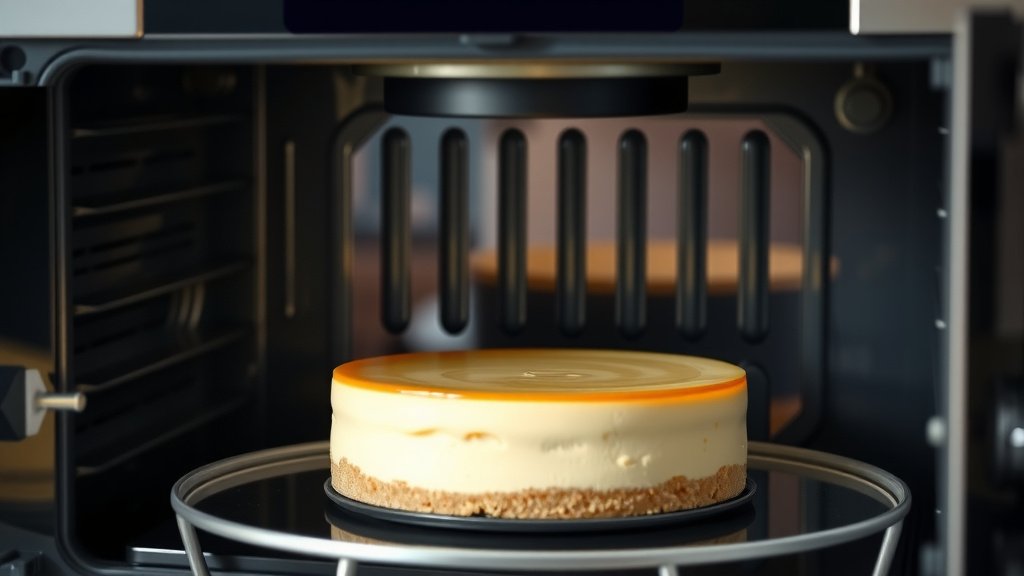
To make cheesecake in a steam oven, you’ll typically set it to a combination steam mode around 300-325°F (150-160°C) with 75-100% humidity for about 50-70 minutes, creating a creamy texture without the need for a water bath.
The steam prevents cracking and overbaking by keeping the oven environment moist, resulting in a perfectly smooth, rich cheesecake with minimal effort.
- A steam oven bakes cheesecake perfectly, preventing cracks and dryness.
- You won’t need a traditional water bath, making the process much simpler.
- Key steps include preparing a crust, mixing a smooth filling, and setting the right steam level.
- Expect a creamy, smooth texture that is consistently delicious every time.
- Patience during cooling and chilling is essential for the best results.
How To Make Cheesecake In A Steam Oven?
Making cheesecake in a steam oven involves preheating to a moderate temperature with high humidity, then baking until just set, allowing the steam to create a flawless, crack-free surface and a creamy interior.
You essentially let the oven’s steam function do the work of a water bath, ensuring even cooking and perfect texture.
Why a Steam Oven is a Cheesecake Game-Changer
Have you ever spent hours on a cheesecake, only for it to crack during cooling? That’s a common heartbreaker. We found that a steam oven virtually eliminates this problem, delivering a consistently beautiful outcome.
The constant, gentle moisture from the steam creates an incredibly even baking environment. This means your cheesecake bakes slowly and smoothly, leading to a velvet-smooth texture you’ll adore (Culinary Institute of America).
Getting Ready: Your Essential Cheesecake Checklist
Before you dive in, let’s make sure you have everything ready. Preparation is half the battle won in baking.
- A 9-inch springform pan
- Aluminum foil (heavy-duty)
- Room temperature cream cheese, eggs, and sour cream
- A sturdy mixing bowl and mixer
- Your favorite crust ingredients
The Perfect Crust: Foundation for Flavor
Every great cheesecake starts with a solid foundation. For the crust, you’ll want something that complements the creamy filling without overpowering it. Many experts say a simple graham cracker crust is ideal (Cook’s Illustrated).
You can mix crushed graham crackers with melted butter and a touch of sugar. Press this mixture firmly into the bottom of your springform pan. We recommend baking it for about 10 minutes at 350°F (175°C) before adding the filling to create a crisp, golden base.
Crafting the Silky Filling: Ingredients and Mixing
The filling is where the magic truly happens. Start with full-fat cream cheese that’s been softened to room temperature—this is absolutely key for smoothness. Add sugar, then mix until it’s light and fluffy, but don’t overmix.
Next, gently incorporate eggs one at a time, along with sour cream, vanilla extract, and a pinch of salt. The goal is to combine everything just until smooth, avoiding too much air. Too much air can lead to cracks, even in a steam oven, we found (America’s Test Kitchen).
Prepping Your Pan for Steam Success
Even though you’re using a steam oven, it’s a good idea to wrap the bottom of your springform pan with heavy-duty aluminum foil. This isn’t to prevent water from getting in, but rather to catch any potential drips or leaks from the pan itself, keeping your oven clean. Plus, it offers a small layer of extra protection against over-browning on the bottom.
Steam Oven Settings: The Sweet Spot
This is where your steam oven shines! The exact settings can vary slightly by brand, but the core principle is consistent. You want a moderate temperature with significant steam. Many oven manuals suggest using a “combination steam” mode for optimal results.
| Oven Type / Setting | Temperature | Humidity Level | Approx. Time |
|---|---|---|---|
| Full Steam Mode | 300°F (150°C) | 100% (High Steam) | 50-60 minutes |
| Convection Steam | 325°F (160°C) | 75-80% (Medium Steam) | 60-70 minutes |
| Combi-Steam (Gentle) | 300°F (150°C) | 60-70% (Low Steam) | 70-80 minutes |
Always preheat your steam oven fully before placing the cheesecake inside. This ensures the environment is at the right temperature and humidity from the start.
Baking Your Cheesecake: Watchful Waiting
Once your oven is ready, carefully place the foil-wrapped springform pan on a rack in the center of the oven. Close the door and let the steam do its work. Resist the urge to open the door frequently, as this can let out the steam and disrupt the baking process.
How do you know it’s done? The edges should look set, but the very center (about a 2-inch diameter) should still have a slight jiggle when you gently shake the pan. This slight jiggle tells you it’s cooked but won’t be dry, we found that this is the perfect stage.
Cooling and Chilling: The Patience Payoff
The baking isn’t over when you turn off the oven. Cooling is a critical step for preventing cracks. Once baked, turn off the steam oven and prop the door open slightly, letting the cheesecake cool gradually inside for about an hour. This slow temperature change helps prevent sudden shrinking and cracking.
After this initial cooling, take the cheesecake out and let it cool completely on a wire rack at room temperature. Finally, cover it loosely and chill it in the refrigerator for at least 4-6 hours, or even better, overnight. This chilling firms up the texture and allows the flavors to fully develop and meld.
Troubleshooting Common Steam Oven Cheesecake Issues
While steam ovens are fantastic, problems can still pop up. If your cheesecake cracks, it might be due to overbaking or too rapid cooling. Ensure you pull it out when the center still jiggles and follow the slow cooling process. If it seems underbaked, the temperature might have been too low or the baking time too short (Professional Pastry Chef).
Another issue could be a soggy crust. This often happens if the crust isn’t pre-baked enough or if the pan isn’t properly sealed. A bit more pre-baking time or better foil wrapping can help prevent a less-than-ideal crust.
Flavor Variations: Your Culinary Canvas
Once you master the basic steam oven cheesecake, you can start experimenting! Consider adding lemon zest to the filling for a bright flavor, or swirling in a berry puree before baking. Many experts suggest adding chocolate chips or espresso powder for a richer, more complex taste.
For toppings, the possibilities are endless: fresh berries, chocolate ganache, caramel sauce, or a simple dollop of whipped cream. These additions allow you to personalize your cheesecake and make it truly your own.
A Word on Water Baths (and why you might not need one)
Traditionally, cheesecakes are baked in a water bath to create a humid environment and ensure even baking, preventing cracks. However, a steam oven completely negates the need for this sometimes messy and tricky step. Your steam oven *is* the water bath, providing all the necessary moisture internally. This is a huge benefit, simplifying the baking process and reducing your prep time significantly (Food Network).
Why Cheesecake Cracks (and how steam helps)
Cheesecakes often crack because of drastic temperature changes. As they bake, they expand, and if they cool too quickly, the outer edges cool and shrink faster than the center, causing tension and cracks. The dry heat of a conventional oven also dries out the surface, making it more brittle. Steam ovens help by providing a constant, moist heat that allows the cheesecake to expand and contract more gently and evenly. This gentle environment keeps the surface supple, dramatically reducing the chances of those disappointing cracks.
Getting the Right Consistency: A Balancing Act
Achieving that perfect, creamy cheesecake consistency is a balancing act. You want it firm enough to hold its shape, but soft enough to melt in your mouth. Overbaking can lead to a dense, dry, and crumbly texture, while underbaking leaves it too runny. The steam oven’s consistent, moist heat helps achieve that sweet spot by gently cooking the custard. Look for that slight jiggle in the center; it’s your visual cue that the cheesecake is just right, not overdone.
Serving Your Masterpiece
After all your careful work, it’s time to enjoy! To get clean slices, use a sharp, thin knife dipped in hot water and wiped clean between each cut. This creates beautiful, smooth edges. Garnish with your favorite fresh fruit, a dusting of cocoa, or a dollop of whipped cream for a stunning presentation. Your steam oven cheesecake is sure to impress!
Conclusion
Making cheesecake in a steam oven is a revelation for any baker. It removes the stress of water baths and cracked surfaces, consistently delivering a perfectly creamy, smooth, and delicious dessert. By understanding your oven’s settings and following these straightforward steps, you can create a show-stopping cheesecake every time. Embrace the power of steam and enjoy your beautiful, crack-free creation!
Can I use any cheesecake recipe in a steam oven?
Yes, most standard cheesecake recipes work beautifully in a steam oven. You’ll just adjust the baking method by using your oven’s steam settings instead of a traditional water bath. Some minor tweaks to baking time or temperature might be needed, but the ingredient ratios usually stay the same.
What if my steam oven doesn’t have specific “cheesecake” settings?
Don’t worry! If your oven lacks a dedicated cheesecake setting, use a combination steam mode with a temperature around 300-325°F (150-160°C) and a high humidity level (75-100%). You can also consult your oven’s manual for general baking guidelines using steam for custards or delicate cakes.
Does a steam oven cook cheesecake faster than a conventional oven?
Not necessarily faster, but often more evenly and reliably. The steam provides efficient heat transfer, but the primary benefit is preventing overbaking and cracking. Total cooking time might be similar to a conventional oven with a water bath, but the quality of the result is often superior.
Do I still need to let the cheesecake cool slowly in the oven after baking?
Yes, absolutely. Even with the benefits of a steam oven, slow cooling is critical. Prop the oven door open slightly after baking and let the cheesecake cool inside for about an hour. This gradual decrease in temperature helps prevent any potential cracking as the cheesecake sets.
How does steam prevent cheesecake cracks?
Steam prevents cracks by creating a moist, stable baking environment. This keeps the cheesecake’s surface pliable and prevents it from drying out and baking too quickly. The even heat distribution also minimizes temperature differences between the edges and the center, which are common causes of cracking in dry heat.