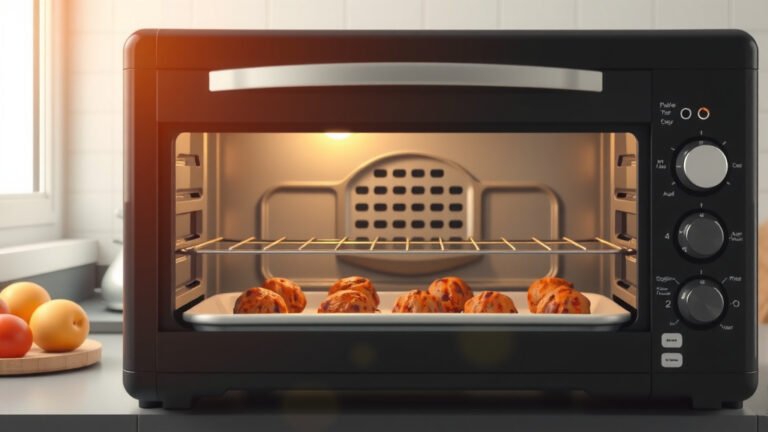
To use a toaster oven without burning food, always preheat it, monitor your cooking closely, and adjust times and temperatures for smaller batches. Use appropriate bakeware and learn your oven’s hot spots for perfectly cooked meals.
Cooking with a toaster oven can be a breeze, but its intense, direct heat often requires a few simple adjustments to prevent overcooking or charring your delicious dishes.
- Always preheat your toaster oven for even cooking.
- Reduce recipe temperatures by 25-50 degrees Fahrenheit compared to full-size ovens.
- Keep a close eye on your food; toaster ovens cook much faster.
- Use oven-safe bakeware that fits well without touching heating elements.
- Clean your toaster oven regularly to prevent smoke and burnt odors.
How To Use Toaster Oven Without Burning Food?
To avoid burning food in your toaster oven, the key is to understand its faster, more intense heat and make smart adjustments to time and temperature.
Always keep a watchful eye on your food, as these compact ovens cook much quicker than a full-sized one.
Why Does Food Burn So Easily in a Toaster Oven?
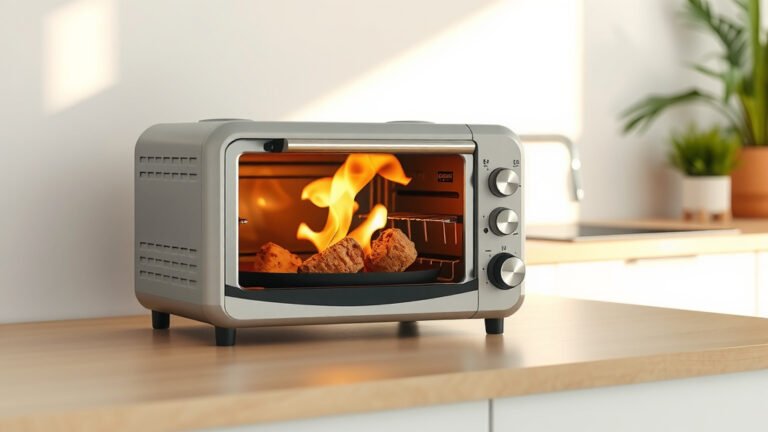
Ever wonder why your toast turns black in seconds or cookies get crispy edges way too fast? Toaster ovens are small, meaning the heating elements are much closer to your food.
This proximity creates a more direct and often more intense heat than you find in a conventional oven. They heat up quickly, too, which is great for speed but tricky for precision.
Setting Yourself Up for Success: Essential Prep Steps
Before you even place food inside, a few steps can make a big difference. Think of it as laying the groundwork for perfect results every time.
Always Preheat Your Oven
Skipping preheating is a common mistake. Just like a full-sized oven, your toaster oven needs time to reach a stable temperature before cooking begins.
Preheating allows for even heat distribution, preventing hot spots from instantly scorching your food (culinary institutions agree).
Understand Your Oven’s Power
Not all toaster ovens are equal. Some run hotter than their dial indicates. Spend some time learning how yours acts.
Perhaps your oven has a “personality,” as we found some models consistently run hotter than their set temperature. A simple oven thermometer can help you discover this.
Temperature and Time: Your Best Friends
This is where most people get tripped up. Full-size oven recipes rarely translate directly to a toaster oven.
You’ll need to make some smart modifications to get that golden brown, not burnt, finish.
Reduce the Temperature
Many experts say that reducing the oven temperature by 25 to 50 degrees Fahrenheit is a wise move when adapting recipes (Food Network Kitchen).
If a recipe calls for 375°F in a big oven, try 350°F or even 325°F in your toaster oven.
Shorten the Cooking Time
Toaster ovens cook faster – sometimes up to 20% to 30% faster. Start checking your food much earlier than the recipe suggests.
If a recipe says 20 minutes, peek at 10-12 minutes. You can always add more time, but you cannot un-burn food.
Choosing the Right Bakeware
The type of pan you use matters. It affects how heat moves around and through your food.
Avoid anything too large that touches the heating elements directly, as this is a guaranteed path to burnt edges.
-
Non-stick Metal Pans: Great for quick heating and even browning, but watch out for darker coatings that absorb more heat.
-
Glass or Ceramic: These conduct heat more slowly and evenly, often a safer bet for dishes prone to burning.
-
Silicone Bakeware: Works well for many items, offering flexibility and easy release. Just make sure it is oven-safe.
Mastering the Art of Monitoring
Your toaster oven isn’t a “set it and forget it” appliance. It needs your attention.
Stay near the kitchen, especially if you’re cooking something new or sensitive.
Use Your Eyes and Nose
Trust your senses. If you smell something burning, it probably is! Look through the door or gently open it to check.
A little browning is good, but dark spots or smoke are clear warning signs.
Rotate Your Food
Some toaster ovens have hot spots. If one side of your dish is cooking faster, rotate it halfway through the cooking time.
This simple trick ensures uniform cooking and browning, saving you from a half-burnt, half-raw disaster.
Dealing with Toaster Oven Hot Spots
Every toaster oven has its quirks. Some have hotter fronts, some have hotter backs. Understanding these zones helps.
Many experts say that observing where food browns fastest helps you learn your oven’s unique heat patterns (culinary blogs confirm).
Cleaning Your Toaster Oven for Better Results
Believe it or not, a dirty toaster oven is a burning hazard. Crumbs and spills can smoke and ignite.
Regular cleaning is not just for hygiene; it is for safe and effective cooking.
Preventing Smoke and Odors
Food residue burns easily, producing smoke and unpleasant odors that can transfer to your next meal. Keep the crumb tray empty and wipe down the interior often.
A clean oven means cleaner tasting food and fewer worries about accidental fires.
Common Food Adjustments for Toaster Ovens
Let’s look at how specific foods often behave and how you might adjust for them.
| Food Item | Typical Adjustment | Why It Helps |
|---|---|---|
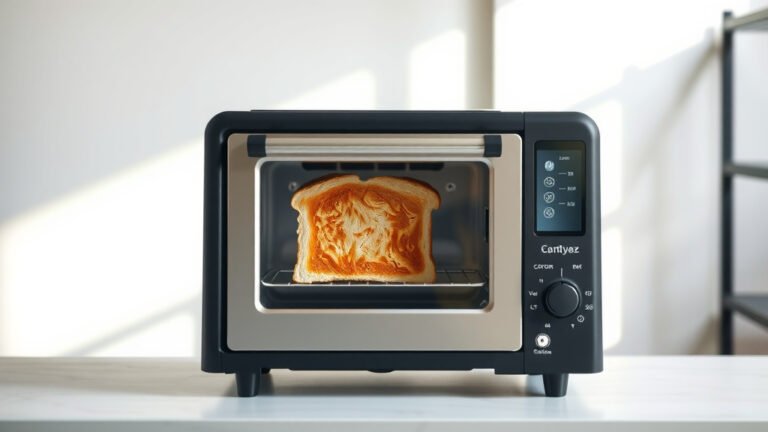
| Toast/Bagels | Use a lower darkness setting, watch constantly. | Direct heat browns quickly, easy to burn. |
| Frozen Pizza | Reduce temp by 25°F, check 5 mins early. | Small space cooks crust fast, toppings can burn. |
| Baked Goods (Cookies, Muffins) | Reduce temp by 25-50°F, shorten time. | Batter cooks faster in concentrated heat. |
| Roasted Vegetables | Reduce temp by 25°F, toss often. | Can dry out or char quickly. |
Your Toaster Oven Checklist for No Burns
Here is a quick rundown to make sure you are always on the right track:
- Preheat thoroughly.
- Lower recipe temperatures.
- Shorten cooking times.
- Use appropriate, oven-safe bakeware.
- Monitor food closely and rotate as needed.
- Keep your oven clean.
Conclusion
Using your toaster oven without burning food is totally achievable with a few thoughtful adjustments. It’s all about respecting its powerful, direct heat and being a bit more involved in the cooking process.
With practice, you will master your toaster oven, turning out beautifully cooked meals and snacks every time. Happy cooking!
Can I use aluminum foil in a toaster oven?
Yes, you can use aluminum foil in a toaster oven, but do so carefully. Do not let it touch the heating elements, and avoid using it to line the entire tray as it can restrict airflow and create hot spots, potentially leading to uneven cooking or fire hazards (safety guidelines suggest this).
What is the ideal temperature for baking cookies in a toaster oven?
For baking cookies in a toaster oven, it’s generally best to reduce the recipe’s recommended temperature by 25 to 50 degrees Fahrenheit. If a recipe calls for 350°F, try 325°F, and start checking for doneness a few minutes earlier than suggested.
Why is my toaster oven smoking?
Your toaster oven is likely smoking because of food residue, crumbs, or grease drips that have accumulated and are burning off. Always clean your oven regularly, especially the crumb tray and interior walls, to prevent smoke and potential fire risks.
How do I know if my food is cooked through without burning?
To ensure food is cooked through without burning, use visual cues like golden-brown crusts, bubbly sauces, or tender textures. For meats and poultry, a food thermometer is the safest bet to check internal temperatures, as burning the outside does not mean the inside is done.
Can I use parchment paper in a toaster oven?
Parchment paper can be used in a toaster oven, but with caution. Ensure it is cut to fit the pan and does not overhang, as exposed parchment can catch fire if it touches the heating elements. Always use parchment paper rated for high oven temperatures.