
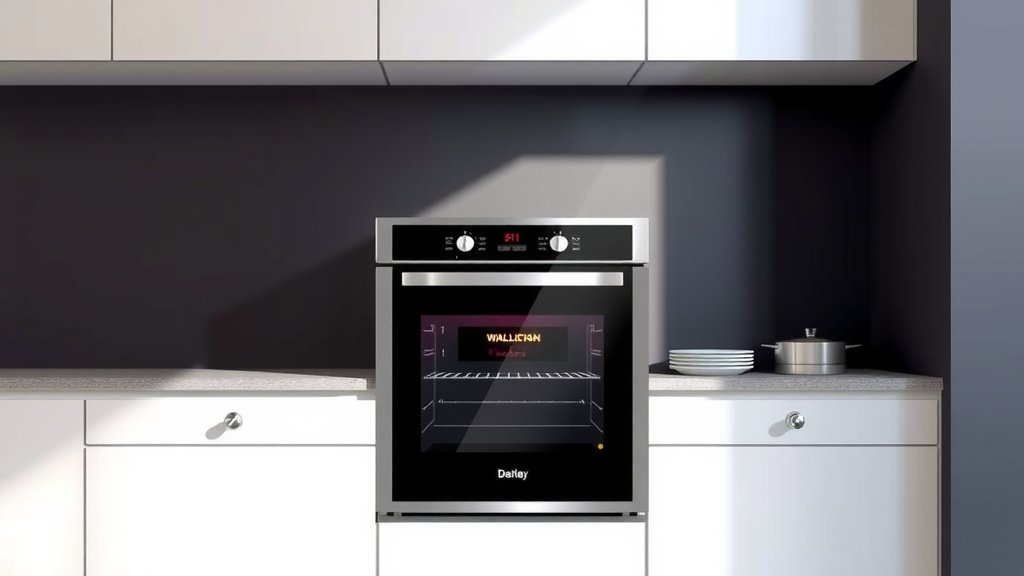
Most standard single wall ovens measure 24 to 30 inches wide, fitting into equally sized cabinets.
This measurement refers to the exterior width of the appliance, ensuring it slides perfectly into your kitchen’s designated space.
Here’s a quick rundown of what you’ll find in this guide:
- Standard single wall ovens usually come in 24, 27, and 30-inch widths.
- The 30-inch model is the most popular choice for many homes.
- Measuring your cabinet’s rough opening is the most important step before buying.
- Always check the manufacturer’s specific cut-out dimensions for a perfect fit.
- Proper installation means considering more than just width, like depth and electrical needs.
How Wide Is A Standard Single Wall Oven?
A standard single wall oven is typically 30 inches wide, but you’ll also find common sizes at 24 and 27 inches.
These dimensions are crucial for ensuring your new oven slides perfectly into your existing kitchen cabinetry.
Why Oven Width Matters More Than You Think
Imagine buying a new pair of shoes only to find they’re too tight or too big. It’s frustrating, right?
The same goes for a wall oven. Its width dictates whether it will fit snugly into its dedicated cabinet opening.
An improper fit can lead to costly installation issues or even safety concerns. We found that accurate measurements prevent headaches down the line.
The Common Widths You’ll Encounter
When you start shopping, you’ll primarily see three standard widths for single wall ovens.
These sizes have been established by the industry to fit most modern kitchen designs.
The 30-Inch Standard: A Kitchen Staple
The 30-inch wide single wall oven is often considered the industry standard and is the most popular choice.
Many homes built in recent decades are designed with a cabinet cutout specifically for this size. It offers a good balance of cooking capacity and kitchen footprint.
27-Inch Ovens: A Solid Alternative
A 27-inch wide single wall oven provides a slightly narrower option without sacrificing too much capacity.
It’s a common size, especially if you have a slightly smaller cabinet opening or prefer a less bulky appliance.
24-Inch Ovens: Compact and Capable
For compact kitchens, apartments, or secondary cooking spaces, the 24-inch wide single wall oven shines.
While smaller, these models are still very capable and can handle most everyday cooking needs. They are a smart choice when space is at a premium.
Understanding Appliance Width vs. Rough Opening
Here’s a critical distinction you need to grasp: the oven’s stated width isn’t always the exact cut-out width.
Manufacturers list an appliance’s external width, but they also provide a “rough opening” or “cut-out” dimension.
What is a Rough Opening?
The rough opening refers to the exact dimensions of the hole in your cabinet where the oven will sit.
This opening is usually slightly wider and taller than the actual oven to allow for proper clearance and installation.
Many appliance experts say that checking the rough opening is the most important measurement (Consumer Reports).
Why Cut-Out Dimensions Vary (Slightly)
Even if two ovens are both “30 inches wide,” their specific rough opening requirements can differ by a fraction of an inch.
Always consult the specific product’s installation manual or specification sheet for precise cut-out dimensions.
How to Accurately Measure Your Space
Before you even think about buying, grab your measuring tape! This step is non-negotiable.
You need to know the exact dimensions of the cabinet opening where your new oven will live.
Measuring Your Existing Cabinet Cutout
Measure the width of the opening from left to right, inside the cabinet walls.
Then, measure the height from the bottom of the opening to the top. Do this in several spots to catch any inconsistencies.
We found that measuring twice or even three times provides the most accurate results.
Don’t Forget Depth
While width is the focus, depth is equally important. Measure from the front of the cabinet opening to the back wall.
This ensures the oven won’t stick out too far or be too shallow for your space.
Beyond Standard: When You Need Something Unique
What if your kitchen doesn’t fit the mold of a standard 24, 27, or 30-inch opening?
Sometimes, custom cabinetry or older homes might have unique sizes. Don’t worry, you still have options.
Considering a Custom Fit
If your opening is slightly off, you might need minor cabinet modifications by a carpenter.
Or, you might need to explore specialized oven brands that offer less common dimensions.
Installation Considerations: More Than Just Width
A successful oven installation involves more than just fitting it into a hole.
You need to think about what happens behind the oven, too.
Electrical Requirements
Most single wall ovens require a dedicated 240-volt electrical circuit.
Make sure your existing wiring meets the new oven’s specifications. If not, you’ll need an electrician.
Ventilation and Clearance
Ovens generate heat, so proper ventilation is key for performance and safety.
Ensure there’s adequate clearance around the oven as specified by the manufacturer.
Replacing an Old Oven: What to Check
Are you swapping out an older model? That makes things a bit simpler, but there are still checks.
Your existing cutout is your guide, but don’t assume it’s perfect.
Match Current Cutout Dimensions
Measure your old oven’s cutout, and try to find a new model that matches those dimensions closely.
This is often the easiest path, avoiding the need for cabinet adjustments.
Confirm Electrical Compatibility
Just because your old oven worked doesn’t mean the wiring is ideal for a new one.
Newer ovens can have different amperage needs. Always double-check the electrical specifications.
Quick Oven Width & Cut-Out Guide
| Oven Type | Common Appliance Width | Typical Rough Opening Width |
|---|---|---|
| Single Wall Oven | 24 inches | 22.5 – 23.5 inches |
| Single Wall Oven | 27 inches | 25.25 – 26 inches |
| Single Wall Oven | 30 inches | 28.5 – 29 inches |
Your Pre-Purchase Checklist
Before you commit to a new single wall oven, run through this quick checklist:
- Measure your cabinet opening’s width, height, and depth accurately.
- Check the specific rough opening dimensions for the oven model you like.
- Verify your electrical circuit matches the oven’s voltage and amperage needs.
- Consider the oven’s capacity and features to fit your cooking style.
- Read reviews to understand installation experiences of other buyers.
Conclusion
Choosing the right single wall oven starts with one simple question: “How wide is a standard single wall oven?” You now know the answer points to 24, 27, or most commonly, 30 inches.
The key takeaway is that accurate measuring and checking manufacturer specifications are your best friends in this process. By doing your homework, you’ll ensure a perfect fit and a seamless addition to your kitchen.
Happy cooking, and enjoy your perfectly fitted new oven!
How do I measure for a replacement wall oven?
Measure the existing cabinet cutout’s width, height, and depth, not the old oven itself. Always use the smallest measurement if the opening isn’t perfectly square. Then, compare these numbers to the new oven’s specific “rough opening” or “cut-out” requirements.
Can I put a 30-inch oven in a 27-inch opening?
No, you cannot fit a 30-inch oven into a 27-inch opening without significant, often structural, cabinet modifications. This typically involves altering the surrounding cabinetry, which can be costly and complex. It’s always best to match the oven size to your existing opening.
Are all 30-inch wall ovens exactly the same size?
While commonly referred to as “30-inch,” the exterior dimensions and, more importantly, the required rough opening can vary slightly between manufacturers. Always refer to the exact specification sheet or installation guide for the specific model you are considering to ensure a precise fit.
What if my cabinet opening is slightly too big for the oven?
If your opening is slightly too large, you might be able to use trim kits or filler strips to bridge small gaps, creating a finished look. However, if the gap is substantial, you might need custom carpentry work to reduce the opening to the correct size for a secure and aesthetic installation.
Does oven capacity relate to its width?
Yes, generally, a wider oven will offer more interior cooking capacity (measured in cubic feet) than a narrower one. For instance, a 30-inch single wall oven typically provides more usable space inside compared to a 24-inch model, allowing for larger dishes or multiple items to be cooked simultaneously.
