Measuring Cups vs Measuring Spoons: Which Should You Use? (November 2026)
Use measuring spoons for small amounts and measuring cups for larger dry or liquid quantities. The right choice depends on ingredient volume, accuracy, and whether you need to scoop or pour.
On this page (10 sections)
- Measuring spoons vs measuring cups: which should you use?
- Are measuring cups or spoons better for baking?
- What is the difference between measuring cup and spoon sizes?
- Should you buy a cup and spoon set?
- Which material is best for measuring cups and spoons?
- Do long handles help with measuring?
- How should you measure dry ingredients?
- How should you measure liquid ingredients?
- How do you clean and store measuring tools?
- Which measuring tool should you choose?
Use measuring spoons for small amounts and measuring cups for larger dry or liquid quantities. The measuring spoons vs measuring cups choice becomes easier when you match the tool to the ingredient, the amount, and the way you need to fill or pour it.
Measuring spoons suit teaspoons and tablespoons of salt, spices, baking powder, extracts, oil, and other small additions. Their compact shape works well with narrow jars and containers, and the fixed sizes help you add a small amount without estimating.
The U-Taste set covers 1/8 teaspoon, 1/4 teaspoon, 1/2 teaspoon, 3/4 teaspoon, 1 teaspoon, 1/2 tablespoon, and 1 tablespoon. That range suits recipes that use several small measures in the same step, while the engraved markings and milliliter measurements help when you switch between recipe styles.
A spoon is also useful when an ingredient needs to be leveled. Fill the spoon, remove any excess with a straight edge when appropriate, and keep the handle steady as you move it to the bowl.
Deep spoon bowls can help hold dry or liquid ingredients with less spilling.
Measuring cups make more sense when the quantity is too large for a few spoonfuls. A cup gives flour, sugar, milk, water, or oil more room and reduces the need to repeat the same small measure many times.
For liquids, the OXO 2-cup measuring cup is shaped for pouring and has standard and metric markings. Its angled interior is intended to let you read the level from above, which can be useful when you do not want to bend down to check the line.
Dry ingredients need a different routine. Fill the cup according to the recipe, then level the top if a level measure is required.
A liquid cup is better for carrying and pouring, while a dry measure is easier to fill to the top and level.
Neither tool is automatically better for every recipe. Spoons give control over small additions, while cups make larger quantities easier to handle, so a useful kitchen usually keeps both available.
 Best for small measurements
U-Taste 18/8 Stainless Steel Measuring Spoons Set

Measuring spoons vs measuring cups: which should you use?
Choose measuring spoons below 1/4 cup, and choose measuring cups for larger quantities. A spoon is easier to fill and level for a small amount, while a cup saves time when a recipe needs several ounces or a full cup.
A spoon also gives you more control when adding a strong ingredient. One tablespoon of vanilla, salt, or baking powder can change a recipe, so the small fixed size helps you follow the instructions closely.
For larger amounts, a cup gives you one container to fill instead of many spoonfuls. This reduces handling and makes liquid ingredients easier to pour.
When measuring spoons are the better tool
Measuring spoons are best for ingredients used in small portions. They help you measure 1/8 teaspoon, 1/4 teaspoon, 1/2 teaspoon, 1 teaspoon, 1/2 tablespoon, and 1 tablespoon without estimating.
The U-Taste 18/8 Stainless Steel Measuring Spoons Set covers those 7 sizes and has engraved markings with milliliter measurements. Its stainless steel construction and dishwasher-safe design suit frequent baking prep.
A spoon is also useful when a container is too narrow for a cup. You can dip it into a spice jar, level the top, and return the remaining ingredient without transferring anything.
When measuring cups are the better tool
Measuring cups are best when the ingredient takes more than a few spoonfuls. They give you space for a larger quantity and make liquids easier to carry and pour.
For liquid ingredients, the De'Longhi OXO Good Grips Angled Measuring Cup has a 2-cup capacity and standard and metric markings. Its angled interior is designed to let you read the level from above, while the non-slip handle supports pouring.
A dry measuring cup works differently. Fill it with the ingredient, then level the top with a straight edge when the recipe calls for a level cup.
Are measuring cups or spoons better for baking?
A complete set of both tools is best for baking because recipes often use cups and spoons in the same step. You may need a cup of flour, a tablespoon of oil, and 1/2 teaspoon of baking soda in one bowl.
The TILUCK Stainless Steel Measuring Cups & Spoons set combines 4 cups and 6 spoons. The cups cover 1/4, 1/3, 1/2, and 1 cup, while the spoons cover 1/8 teaspoon through 1 tablespoon.
This type of set also reduces tool swapping. Keep the spoons together for small additions and use the cup sizes for flour, sugar, liquids, and other larger quantities.
A measuring spoon organizer can keep the set easy to find.
If you already own reliable spoons, adding a cup-only set may be enough. Our guide to the best measuring cups for baking can help you compare cup sizes and materials.
What is the difference between measuring cup and spoon sizes?
A measuring cup holds a much larger volume than a measuring spoon, so cups and spoons are not interchangeable without conversion. In US kitchen measurements, 1 cup equals 16 tablespoons, and 1 tablespoon equals 3 teaspoons.
That means 1/2 cup equals 8 tablespoons, while 1/4 cup equals 4 tablespoons. These conversions are useful when a recipe gives a measurement you do not have, but using the matching tool is usually faster.
The phrase “measuring cups in spoons” normally means converting a cup amount into tablespoons or teaspoons. The phrase “measuring spoons in cups” means converting a spoon amount into a fraction of a cup.
Use conversions carefully with ingredients that affect texture. A small error in baking powder or salt can matter more than the same volume difference in water.
Should you buy a cup and spoon set?
Buy a cup and spoon set if you need a basic baking setup, and buy separate tools if you have a specific gap to fill. A set is convenient, but separate pieces let you choose the best shape for dry ingredients, liquids, or storage.
The TILUCK set is the most complete option here because it includes both tool types. The U-Taste set is more focused on small measurements, while the OXO cup focuses on liquid measuring.
For a glass option, Pyrex Essentials includes 1-cup and 2-cup glass measuring cups. The cups have ounce and milliliter markings, curved spouts, easy-grip handles, and are designed for baking, cooking, and mixing.
The Pyrex pair does not include spoons, so it works best when you already have a spoon set or plan to add one. Glass is nonporous, but it still needs careful handling around counters and sinks.
Our comparison of the best measuring cups and spoons for baking covers combined sets for readers building a basic prep drawer.
Which material is best for measuring cups and spoons?
Choose stainless steel for durable nesting tools, plastic for a lightweight liquid cup, and glass when microwave or oven use matters. Material changes handling, storage, cleaning, and how the tool fits into your routine.
Stainless steel is a strong choice for spoons and dry cups. The U-Taste spoons use 18/8 stainless steel, and the TILUCK cups and spoons use stainless steel with engraved size marks.
See our guide to the best metal measuring cups and spoons if you prefer a matching metal set. Metal pieces can also be easier to keep together when they nest or connect on a ring.
Plastic can be lighter and easier to handle for a liquid cup. The OXO cup has a plastic body, an angled interior, and a soft non-slip handle.
Glass is useful when you want the same vessel to measure and handle ingredients during prep. Pyrex Essentials is made of glass and is dishwasher, freezer, microwave, and preheated oven safe.
Do long handles help with measuring?
Long handles help when ingredients sit in deep containers or narrow jars, but they do not replace the right measuring volume. The spoon must still match the recipe, and the top still needs to be level when the ingredient calls for a level measure.
A longer spoon handle can make it easier to reach flour, sugar, or spices stored below the opening. It can also keep your fingers farther from the ingredient.
If reach is your main problem, compare the best measuring cups with long handles. Check the cup shape as well, since a long handle does not help if the vessel is too wide for your storage container.
Decorative spoons may suit open shelves or gift sets, but choose readable markings first. Our guide to decorative measuring spoons is useful when appearance matters alongside everyday measuring.
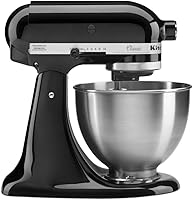
For other baking prep, a stand mixer can handle mixing while you measure ingredients in stages. A rolling pin with thickness rings helps with dough when even thickness matters.
How should you measure dry ingredients?
Scoop dry ingredients into a dry measuring cup or spoon, then level the top unless the recipe gives another method. Do not pack flour unless the instructions specifically call for packed flour.
For flour, spoon it into the cup instead of shaking the cup through the container. A straight edge can remove the excess without pressing the ingredient down.
For brown sugar, follow the recipe's packing direction. A packed cup contains more ingredient than a loose cup, so the method is part of the measurement.
Use a clean, dry spoon for small ingredients. Avoid measuring salt or spices over the mixing bowl if an accidental spill would ruin the batch.
How should you measure liquid ingredients?
Use a liquid measuring cup on a level surface, then read the line at eye level unless the cup is designed for viewing from above. Keep the cup still while the liquid settles.
The OXO angled cup is designed for an above-the-cup view, which can reduce bending during measurement. Its 2-cup capacity is suited to larger liquid quantities than a tablespoon or teaspoon.
A glass cup such as Pyrex Essentials gives you 1-cup and 2-cup sizes for liquid prep. Pour slowly, stop at the correct line, and use the spout to transfer the ingredient.
For very small liquid amounts, use a measuring spoon. A teaspoon or tablespoon is easier to read than trying to judge a small fraction of a cup.
How do you clean and store measuring tools?
Clean measuring tools soon after use, dry them fully, and store nested pieces where the markings stay easy to read. This simple routine prevents dried flour, syrup, oil, or other residue from affecting the next measure and keeps the tools ready for the following recipe.
Rinse or wash a tool soon after measuring sticky ingredients. Residue can collect around spoon edges, handles, cup markings, or pouring spouts, and it is usually easier to remove before it dries.
For ingredients with strong smells, prompt cleaning also helps keep the next preparation from picking up unwanted odors.
The U-Taste stainless steel spoons are dishwasher safe, and their engraved markings are made to remain readable through repeated use. TILUCK's stainless steel cups and spoons are also dishwasher safe, so they suit cooks who want a set that can go into the dishwasher after baking or meal preparation.
The OXO cup is dishwasher safe as well. Place it where the markings will not be covered by other items during cleaning, then check the angled interior and spout after the cycle for any remaining film.
Pyrex Essentials is dishwasher safe, but glass still deserves careful handling when it is moved from the dishwasher to the counter or cabinet. Set the cups down gently, keep them away from hard impacts, and make sure they are fully dry before stacking or storing them.
Keep the U-Taste spoons connected on their D-ring when possible. The ring keeps the seven sizes together and makes it easier to find the needed measure without searching through a drawer.
TILUCK's cups and spoons are designed to stack, so nesting them can reduce the space they occupy. Arrange the pieces so handles do not catch on nearby utensils, and leave enough room to remove the size you need without pulling the whole set apart.
Before measuring, inspect the markings and the edges. If flour or grease hides a line, wash and dry the tool first.
If a marking has become difficult to read, choose a tool with engraved or bold measurements instead of guessing.
Store cups by size when that makes selection easier. Keeping a 1-cup or 2-cup vessel in an accessible place can make larger liquid tasks quicker, while spoons are easier to use when they remain together and visible.
Which measuring tool should you choose?
Choose the U-Taste spoons for small amounts, the OXO cup for readable liquid measuring, the TILUCK set for one complete metal set, and Pyrex Essentials for glass prep. Your usual recipes should decide the final choice.
Pick measuring spoons when your recipes use teaspoons and tablespoons. Pick measuring cups when you measure larger dry or liquid quantities.
Choose a combined set if you are starting a baking drawer. If you already have one tool type, fill the gap instead of buying duplicate pieces.
The best measuring spoons vs measuring cups setup usually includes both. Keep spoons for small, precise additions and cups for larger quantities, then use the tool that matches the ingredient and the recipe's method.
Frequently asked questions
Are measuring spoons more accurate than measuring cups?
Measuring spoons are the better choice for small amounts because a teaspoon or tablespoon gives a fixed volume for ingredients such as salt, spices, and baking powder. Measuring cups suit larger quantities, but dry ingredients still need level filling for consistent results.
Can you measure a cup with measuring spoons?
Yes, but it takes many spoonfuls and creates more chances for spilling or uneven filling. A 1-cup measuring cup is faster for a cup of flour or sugar, while spoons are useful when the recipe calls for teaspoons or tablespoons.
Can you use a measuring cup instead of a spoon?
Use a cup instead of a spoon only when you can convert the amount accurately and the cup has a suitable small mark. For everyday baking, measuring spoons are simpler for amounts under 1/4 cup, especially for leaveners, salt, and extracts.
What is the difference between liquid and dry measuring cups?
Liquid measuring cups usually have space above the measurement line and a spout for pouring. Dry measuring cups are filled to the top and leveled, so use the type that matches the ingredient and follow the recipe's measurement method.