Springform Pan vs Cake Pan: Which Should You Choose? (November 2026)
Choose a springform pan for cakes that are hard to turn out, and a cake pan for firm batters that release from a solid base. The best choice depends on the recipe, batter texture and how cleanly you need to remove the cake.
On this page (8 sections)
- Springform pan vs cake pan: which releases cake more easily?
- Which pan seals better around thin batter?
- What batter works best in each pan?
- Which product suits your recipe?
- How should you prepare each pan?
- Which pan is easier to clean?
- Can you use these pans in other appliances?
- Which pan should you choose?
Choose a springform pan for cheesecakes and delicate desserts, and a solid cake pan for firm batters and layer cakes. In a springform pan vs cake pan comparison, the key difference is how the cake comes out after baking.
A springform pan has a removable bottom and a side that opens with a buckle. A regular cake pan has a fixed base, so you normally loosen the edges and invert or lift the cake out.
The right pan depends on batter thickness, recipe instructions, release needs and whether the finished cake can handle being turned over. For broader options, see our bakeware sets guide.
That release step is where many cakes succeed or fail. A soft cheesecake can crack or lose its shape if you try to turn it upside down, even when the flavor and bake are right.
A springform pan lets you open the side and lift it away, so the cake stays supported on its base.
A firm layer cake handles inversion much better. Once it has cooled, you can loosen the edges, turn it onto a rack, and build your layers without fighting a removable seam.
The solid base also keeps thin batter contained while it bakes.
Think about the finished texture, not just the name of the dessert. Dense, chilled, mousse like or custard based recipes usually point toward springform.
Sponge, butter and other batters that set firmly usually point toward a cake pan.
Also consider serving. If you want to keep the cake on the base where it baked, a springform pan gives you that option without extra moving.
If you plan to move the cake to a stand or plate right away, a fixed base may feel more straightforward.
Size matters too, because changing diameter changes depth and baking time. Use the pan your recipe was written for, and avoid swapping types just to save washing up.
In short, match the pan to how the cake will leave it. Gentle release favors springform, while a sealed base and simple inversion favor a solid cake pan.
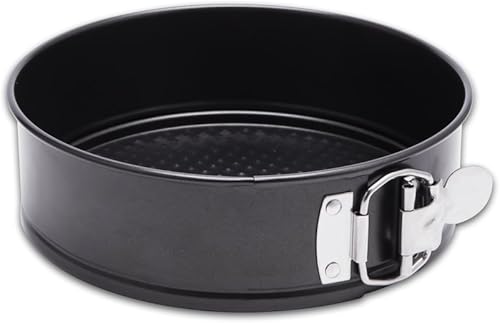 Best for standard cheesecakes
HIWARE 9 Inch Non-stick Cheesecake Pan Springform

Springform pan vs cake pan: which releases cake more easily?
A springform pan gives delicate cakes a gentler release, while a solid cake pan gives a tighter seal during baking. The removable side lets you lift the pan away instead of turning the cake upside down.
That matters for cheesecake, mousse cake and desserts with a soft center. These cakes may crack, stick or lose their shape when inverted.
A solid cake pan is often easier for firm sponge, butter and layer cake batters. Greasing, lining and cooling still matter, but the fixed base gives the pan a simpler structure.
The best springform cake pan options can help if removable sides are your main reason for shopping.
Why does a springform pan have a removable side?
The side opens after baking so you can separate the cake from the rim without sliding a knife all the way around the cake. The removable bottom stays under the dessert until you are ready to move it.
Open the buckle only after the cake has cooled enough for the recipe. Releasing a soft cake too early can make it collapse even when the pan works as intended.
A springform pan also helps when the cake needs to remain on its base for serving. That can be useful for chilled desserts and cakes with a fragile top.
Which pan seals better around thin batter?
A solid cake pan usually gives the stronger seal because its base and sides are one piece. A springform pan has a seam between the removable bottom and the side, so thin batter may escape if the parts do not sit together correctly.
Check the springform base before adding batter. The side should be locked firmly, and the bottom should sit in the groove without rocking.
Some recipes are more forgiving than others. Thick cheesecake batter may stay in place, while a thin mixture or a butter-heavy crust can find its way through a seam.
If sealing matters most, use a solid-bottom cake pan or place the springform pan on a baking sheet when the recipe and oven setup allow it. That can catch drips, but it does not turn a springform pan into a leakproof solid pan.
What batter works best in each pan?
Use a springform pan for soft, dense or delicate desserts, and use a cake pan for batters that hold their shape after baking. The pan should match the finished cake's strength.
Springform pans work well for cheesecake, mousse cake, yogurt cake and similar recipes where turning the dessert over is risky. Their removable sides reduce handling during release.
Solid cake pans suit layer cakes, sponge cakes and other batters that are normally cooled, loosened and inverted. Their fixed base also works well when the recipe depends on a fully enclosed pan.
Do not change pan sizes without checking the recipe. A different diameter changes batter depth, baking time and the risk of an underbaked center or dry edges.
Can a springform pan replace a cake pan?
A springform pan can replace a cake pan for many recipes, but it is not always the easiest choice. Its opening seam adds one more part to assemble and check before baking.
Choose it when release is the main concern. Choose a solid pan when the recipe needs a dependable seal or when you plan to turn the cake out onto a rack.
For recipes that need a springform but use a different material, our guide to a springform silicone pan covers the main trade-offs.
Which product suits your recipe?
The HIWARE 9-inch springform pan is the closest match for a standard cheesecake, while Fat Daddio's solid pans suit firm layer cakes. The other 2 options help when you need several sizes or individual desserts.
The HIWARE 9 Inch Non-stick Cheesecake Pan Springform is a practical choice when your recipe calls for a 9-inch round pan. Its stainless springform buckle opens the side, and the removable bottom stays with the cake during release.
The pan has an 8-cup capacity and a non-stick coating. HIWARE recommends hand washing, so use gentle tools and avoid treating the coating like a surface for sharp utensils.
Its stated oven-safe limit is 450°F. Keep the recipe's temperature within that limit and check that the buckle is fully closed before adding batter.
This pan fits readers who want one main springform size for cheesecake, pie or similar desserts. It is less useful if you mostly bake matching layers that need solid bottoms.
The HIWARE Springform Pan Set of 3 Non-stick gives you 6-inch, 8-inch and 10-inch round pans. That range helps when you make small cakes, standard cakes and larger desserts instead of repeating one size.
Each pan has a removable bottom and a spring buckle. The non-stick coating is designed for easier release, while the 450°F oven-safe rating covers recipes within that limit.
The set suits layered cake planning because you can use different diameters for different designs. It also takes more storage space than one pan, and HIWARE recommends hand washing.
Choose this set when flexibility matters more than keeping your bakeware shelf small. For a chilled layered dessert, compare it with our guide to the best springform pan for ice cream cake.
The O'CREME Mini Cake Pan Silicone Baking Mold is for small portions rather than a full-size cake. The pack contains 25 round molds, each with an 11.5-fluid-ounce capacity.
Its temperature range runs from -10°F to 375°F. That makes the molds useful for desserts that move from baking to freezing within that range, including flan and gelatina-style desserts.
The molds are made from PET and are intended to be washed and reused. Their mini size makes them a poor substitute for a 9-inch springform pan, but it can simplify portioning for parties and birthdays.
Choose these when the dessert format matters more than traditional cake layers. They are also useful when you want many individual portions prepared at once.
The Fat Daddio's Anodized Aluminum Round Cake Pans are solid-bottom pans in an 8 x 2-inch size. The 2-piece set helps you bake matching layers without waiting for one pan to cool.
Each pan has a capacity of 3.5 cups, or 828 ml. The anodized aluminum is designed to heat and cool quickly, and the pans are temperature rated up to 550°F.
Fat Daddio's states that the pans are safe for citrus-based foods and do not rust, peel or flake. They are also described as safe for pressure cookers, air fryers, toaster ovens and freezers.
These pans suit firm layer cakes and bakers who want straight-sided, fixed-base bakeware. They do not offer the removable side that makes springform pans useful for delicate cakes.
How should you prepare each pan?
Prepare both pan types according to the recipe, but give extra attention to the springform seam and the solid pan's corners. Release preparation affects how cleanly the cake leaves the pan.
For a solid cake pan, grease the sides and base when the recipe calls for it. Add parchment to the base when you want another layer of release support, then cool the cake before turning it out.
For a springform pan, lock the buckle before greasing or lining the pan. Press the base into place, check the seam, and keep the pan level as you move it to the oven.
Do not use a knife or metal tool that can damage a non-stick surface. A thin flexible spatula can help loosen edges after cooling, but follow the recipe before removing a delicate cake.
Which pan is easier to clean?
A solid cake pan has fewer moving parts, while a springform pan needs extra care around the buckle and removable base. Both types are easier to clean when batter is not allowed to bake onto the surface.
Soak stuck residue instead of scraping hard. Wash the pan by hand when the product instructions recommend it, and dry the seam and buckle before storage.
Non-stick surfaces need suitable utensils and gentle cleaning. Avoid assuming that a coated pan can handle every brush, abrasive cleaner or dishwasher cycle.
Anodized aluminum also benefits from hand washing. Keep the pan dry after cleaning and store pieces so the rims do not knock against other metal bakeware.
For a springform pan, check the seam after washing. Batter can hide where the base meets the side, and leaving it there can make the next bake stick or affect the seal.
Dry the buckle and the groove around the base before you put the pan away. Stacking a damp springform pan can trap moisture, so give each part a quick wipe and let it air dry.
A solid cake pan is simpler, but it still needs attention at the corners. Residue often gathers where the base and side meet, so a soft soak and gentle scrub work better than hard scraping.
Avoid metal tools on coated surfaces, and keep abrasive pads for uncoated metal only when the maker allows it. Gentle care protects the finish and helps the next cake release cleanly.
Can you use these pans in other appliances?
Check the exact temperature and appliance guidance before moving a pan from an oven to another appliance. Shape alone does not confirm compatibility.
Fat Daddio's 8 x 2-inch pans are described as safe for pressure cookers, air fryers, toaster ovens and freezers. The HIWARE springform pans are stated to be oven safe up to 450°F.
The O'CREME molds have a temperature range from -10°F to 375°F. Stay inside that range when moving a dessert between baking and freezing.
For a smaller appliance, measure the interior before buying. Our guide to the best springform pan for Instant Pots focuses on choosing a pan for that type of cooking space.
Which pan should you choose?
Pick a springform pan when clean release matters more than a fully sealed base. Pick a solid cake pan when the batter is firm and the recipe expects a fixed bottom.
Choose the HIWARE 9-inch pan for a single standard springform size. Choose the 3-piece HIWARE set when you need 6, 8 and 10-inch options.
Choose the O'CREME molds for individual flan, gelatina and small desserts. Choose Fat Daddio's 2-piece set for matching 8 x 2-inch layers and other firm-batter recipes.
The best springform pan vs cake pan choice is the one that matches the dessert's texture and release method. If the cake should not be inverted, start with springform.
If it should bake in a fully enclosed pan and turn out cleanly, start with a solid cake pan.
Frequently asked questions
Is a springform pan better than a cake pan?
A springform pan is better for cheesecake, mousse cake and other desserts that can break when turned upside down. A solid cake pan is usually better for firm cake batters that can be loosened and inverted or lifted from the pan after baking.
Does batter leak from a springform pan?
A springform pan can allow thin batter or melted butter to escape if the base and side do not seal well. Check that the buckle is closed, place the pan on a baking sheet when suitable, and use a solid cake pan when the recipe needs a fully sealed base.
Can you bake a regular cake in a springform pan?
Yes, you can bake many regular cakes in a springform pan, but the removable side is most useful when the cake should not be inverted. For a firm layer cake, a solid-bottom pan may be simpler because it has fewer seams to check and release.
What size springform pan should you buy?
Choose the size named in your recipe first. A 9-inch pan suits recipes written for that diameter, while a 6, 8 and 10-inch set gives you more flexibility for different cake sizes and layered desserts.


