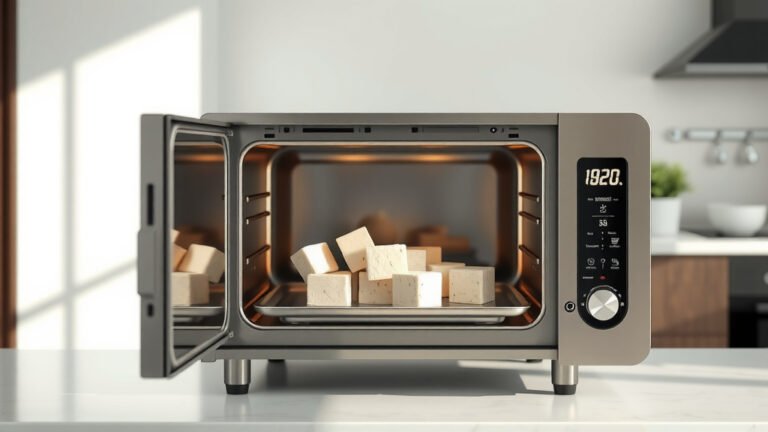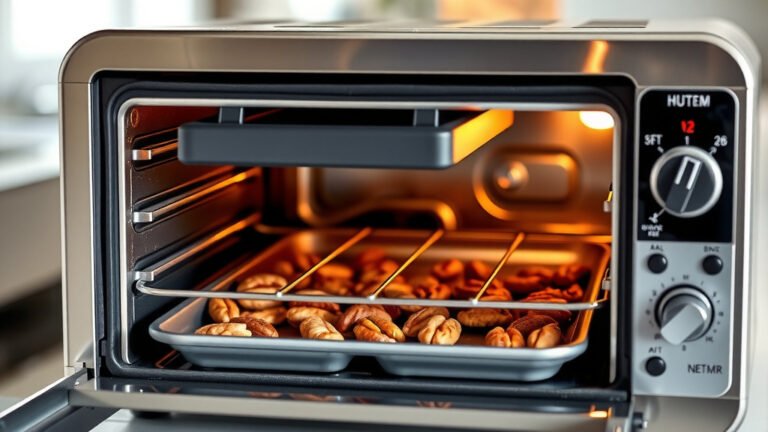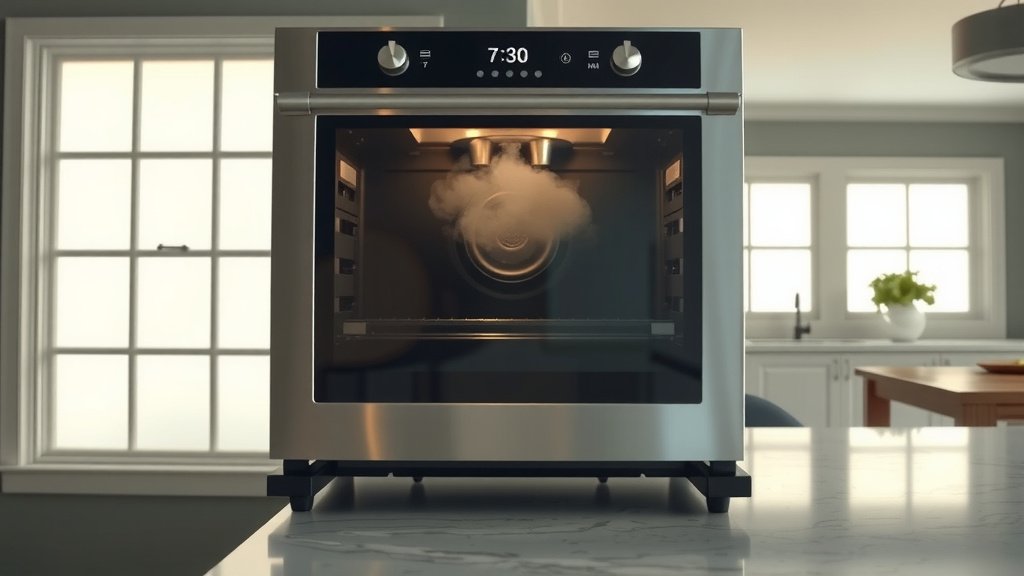
A steam injection oven introduces a burst of steam into the cooking chamber, creating a moist environment perfect for achieving crispy crusts and tender interiors in your baked goods and roasted dishes.
These ovens work by heating water to produce steam, which is then released at precise moments during the cooking cycle to enhance texture and flavor without drying out your food.
Here’s a quick summary of what you’ll discover about steam injection ovens:
- They add moisture to your cooking, improving food texture significantly.
- Great for bread baking, roasting meats, and even reheating leftovers.
- You can find them in various types, from compact models to full-sized combi-ovens.
- Maintenance is key, often involving descaling to keep them running smoothly.
- They can elevate your home cooking, bringing restaurant-quality results to your kitchen.
What Is A Steam Injection Oven?
A steam injection oven is a cooking appliance that uses both dry heat and precisely controlled steam during the cooking process. It’s like having a little cloud inside your oven, ready to work its magic on your meals.
This clever design helps prevent food from drying out while promoting amazing textures, especially in things like artisan bread.
How Do They Work Their Magic?
Think of it this way: your oven usually just blasts dry heat. A steam injection oven, however, has a special system to create steam.
Some models have a small water reservoir you fill. Others are plumbed directly into your water line. This water heats up and turns into steam, which is then released into the oven cavity.
You often control when and how much steam enters. This burst of moisture can be programmed for specific parts of the cooking cycle, offering you greater control over your culinary creations.
Why Would You Want One in Your Kitchen?
Many home cooks find these ovens transform their results. Have you ever wished your homemade bread had a crisper crust, or your roasted chicken was juicier?
Research shows that adding steam keeps surfaces moist initially, allowing for better expansion and browning later (Food Science & Nutrition Journal).
The Power of Steam in Cooking
Steam is a fantastic conductor of heat. It transfers energy to food more efficiently than dry air alone. This means your food often cooks more evenly and sometimes even faster.
Plus, the moisture acts as a protective barrier, stopping food from drying out too quickly. It’s a bit like wrapping your food in a warm, steamy hug.
Baking with Steam: A True Game-Changer
For bakers, a steam injection oven is almost a must-have. When you bake bread, the initial burst of steam delays the crust from hardening.
This allows the dough to expand more, leading to a lighter, airier crumb and that beautiful, shiny, crackly crust everyone loves. Many experts say this is the secret to bakery-quality bread at home.
Pastries, bagels, and even some cakes also benefit from this moist environment. You’ll notice a marked difference in their texture and appearance.
Roasting and Reheating: New Levels of Yum
It’s not just for baking! Roasting meats in a steam injection oven helps them stay incredibly tender and juicy inside while still achieving a lovely golden-brown exterior. Imagine a perfectly roasted chicken or a succulent pork loin.
And reheating leftovers? Forget dry, chewy pizza. Steam gently rehydrates food, making yesterday’s meal taste almost as fresh as it did initially. We found this to be a huge bonus for busy families.
Types of Steam Injection Ovens You Might See
There isn’t just one kind. You’ll find these ovens in different configurations to suit various kitchen needs and budgets.
Understanding the types helps you choose what’s best for you.
Standalone vs. Combi-Ovens
Some ovens are primarily steam ovens, focusing on that cooking method. However, many modern kitchens opt for “combi-ovens” (combination ovens).
These are super versatile. They let you cook with just steam, just convection (dry heat), or a combination of both. Think of them as the Swiss Army knife of ovens.
Compact vs. Full-Size Models
You can get smaller, countertop steam ovens perfect for apartments or for those who only need occasional steam cooking. These are often easier to install.
Then there are full-sized, built-in models that replace or complement your traditional wall oven. Your space and cooking habits will guide your choice here.
Key Features to Look For
When you’re considering a steam injection oven, a few features make a big difference. It’s smart to think about how you cook and what conveniences matter most to you.
| Feature | What It Means for You | Why It Matters |
|---|---|---|
| Water Source | Reservoir or plumbed connection | Affects convenience and installation ease. |
| Steam Settings | Different levels or timed bursts | Offers more control over cooking results. |
| Self-Cleaning | Specific cleaning cycles | Reduces maintenance effort. |
| Capacity | Internal oven size | Dictates how much food you can cook at once. |
| Temperature Range | How hot it can get | Expands versatility for various recipes. |
Water Sources for Your Oven
Will you have to manually refill a water tank, or will your oven be hooked up to your home’s water supply? A reservoir-based oven offers flexibility in placement but requires more frequent refilling for longer cooking.
A plumbed-in model is more convenient but needs professional installation. It just depends on your preference and kitchen setup.
Maintaining Your Steam Oven for Longevity
Like any appliance that uses water, steam ovens need a little TLC. Limescale can build up over time, affecting performance and efficiency. Don’t worry, it’s not a huge chore.
Here’s a simple checklist:
- Regularly wipe down the interior after each use to prevent residue buildup.
- Descale your oven as recommended by the manufacturer, usually every few months.
- Always use filtered water if your tap water is hard; this minimizes mineral deposits.
- Clean the water reservoir (if applicable) to prevent mold or bacteria growth.
- Check seals and gaskets periodically for wear and tear to maintain efficiency.
Many models even have a self-cleaning or descaling cycle built right in, making it even easier.
Is a Steam Oven Right for Your Kitchen?
This is the big question, right? Steam injection ovens definitely offer unique advantages, especially if you love baking or want consistently moist results. We found that users often report a noticeable improvement in their cooking.
Consider your cooking style and priorities. Do you often bake bread? Do you value juicy roasted meats? Do you hate dry leftovers? If you answered yes to any of these, a steam oven might be a fantastic addition.
Common Misconceptions About Steam Ovens
Some people think steam ovens are only for professional chefs or very advanced cooks. Not true! While they offer sophisticated features, many models are very user-friendly.
The controls are often intuitive, guiding you through the process. It’s about opening up new possibilities in your home cooking, not making it more complicated.
Steam vs. Conventional Ovens: A Quick Look
A conventional oven primarily uses dry heat, which can sometimes dry out food or create uneven cooking. Think about a crust that hardens too fast on bread.
A steam injection oven, by adding moisture, tackles these issues head-on. It allows for better heat transfer and maintains food’s natural moisture content, giving you more tender, flavorful results.
Conclusion
A steam injection oven is more than just another kitchen appliance; it’s a tool that can genuinely elevate your cooking. Whether you’re dreaming of crusty, artisanal bread, perfectly moist roasted chicken, or simply better-reheated leftovers, the addition of steam makes a remarkable difference.
They bring a new level of precision and quality to your home kitchen, making gourmet results more attainable than ever before. Considering one means investing in consistently delicious, perfectly textured food every time you cook.
How do I know when to use steam in an oven?
You use steam primarily at the beginning of baking bread to allow for maximum rise and a better crust. For roasting meats, you might use it during the initial stages to keep the meat juicy, then switch to dry heat for browning. Many recipes and oven manuals provide specific guidance on timing and duration.
Can a regular oven be converted into a steam injection oven?
No, a regular oven cannot truly be converted into a steam injection oven. While you can add a pan of water to a conventional oven to create some humidity, it doesn’t offer the precise control or consistent steam injection of a dedicated steam oven. The results will not be the same.
Are steam injection ovens hard to clean?
Generally, no. Modern steam injection ovens often feature easy-to-clean interiors and even self-descaling programs. Regular wiping after use and periodic descaling are typically all that’s needed to keep them in top condition. Ignoring descaling is the main cause of issues, so consistent maintenance is key.
Do steam injection ovens use a lot of water?
The water usage is relatively low. A typical steam cycle uses only a small amount of water from the reservoir or supply. You’re not steaming food for hours on end; rather, it’s about precise bursts or controlled humidity for specific cooking tasks. It’s not a significant drain on your water consumption.
Is a steam injection oven worth the investment for a home cook?
For many home cooks, especially those passionate about baking or achieving professional-quality results, a steam injection oven is a worthwhile investment. The improved texture, moisture retention, and versatility it offers can significantly enhance your culinary capabilities and satisfaction in the kitchen. It truly opens up new cooking horizons.