
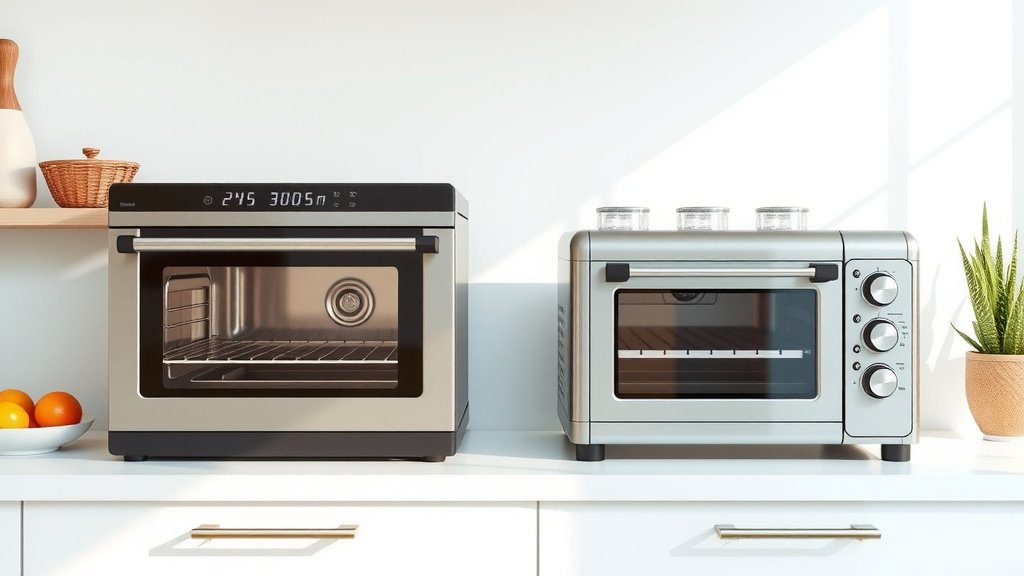
A countertop oven generally offers more cooking versatility and a larger capacity, performing many functions of a traditional oven on your counter.
In contrast, a toaster oven is typically smaller, focusing primarily on toasting, reheating, and baking smaller items quickly and efficiently.
- Countertop ovens are larger, offering more cooking space and functions like roasting or air frying.
- Toaster ovens are compact, ideal for basic toasting, warming, and small baking tasks.
- The main difference lies in size, power, and the range of cooking modes available.
- Consider your kitchen space and usual cooking needs before making your choice.
What Is The Difference Countertop Oven Vs Toaster Oven?
The primary difference lies in their size, power, and the cooking functions they offer. Countertop ovens are generally more robust and versatile.
Understanding Countertop Ovens
Imagine a smaller version of your main oven sitting right on your kitchen counter. That’s a countertop oven for you!
These appliances are designed to handle more complex cooking tasks than a simple toaster oven. We found they often come with features like convection baking.
Many experts say they are perfect for roasting a small chicken or baking a batch of cookies. They truly expand your kitchen’s cooking capabilities (Food Network).
What Makes Countertop Ovens Special?
Countertop ovens boast powerful heating elements. They often distribute heat evenly, giving you consistent results.
You can bake, roast, broil, and sometimes even air fry or dehydrate food in them. It’s like having a mini culinary assistant.
Their larger interior means you can cook bigger meals without heating up your whole kitchen. Think about those hot summer days!
Getting to Know Toaster Ovens
A toaster oven is likely what first comes to mind for quick toast or reheating pizza. They are often compact and incredibly convenient.
These trusty appliances excel at tasks like making perfect toast or warming up leftovers. They are built for speed and simplicity.
Many experts point out their smaller size makes them ideal for dorm rooms, small apartments, or anyone needing quick bites (Good Housekeeping).
Toaster Oven’s Core Strengths
Toaster ovens shine when you need fast, direct heat. They are quicker to preheat than a full-sized oven.
They usually have fewer cooking functions. Toasting, baking, and broiling are common modes you’ll find.
Think of them as your daily helper for breakfast or a speedy snack. They are fantastic for everyday convenience.
Size and Capacity: Does It Matter?
This is where you’ll see a big difference right away. Countertop ovens are much larger.
They can usually fit a 12-inch pizza or a small roasting pan. This makes them great for family meals.
Toaster ovens are designed to be compact. They might fit four slices of toast or a couple of bagels at most.
If kitchen space is tight, a toaster oven wins for its small footprint. But if you cook more, a countertop oven might be a better fit.
Power and Performance: What’s Under the Hood?
Countertop ovens usually pack more wattage. This means they heat up faster and maintain higher, more consistent temperatures.
Many experts explain this higher power allows for better roasting and baking. It mimics a traditional oven more closely.
Toaster ovens generally have lower wattage. They are great for quick jobs but might struggle with larger or denser foods.
Research often connects higher wattage to more powerful and versatile cooking capabilities (Consumer Reports).
Cooking Functions: Beyond Toasting
This is a fun part! Countertop ovens often come with a whole menu of options. Here are some examples:
- Bake: For cakes, cookies, and casseroles.
- Roast: Perfect for meats and vegetables.
- Broil: To brown the tops of dishes or melt cheese.
- Convection: Circulates hot air for faster, even cooking.
- Air Fry: Gives you crispy food with less oil.
- Dehydrate: For making fruit leathers or jerky.
Toaster ovens are simpler. You’ll generally find:
- Toast: Their signature function, of course!
- Bake: For small batches of cookies or heating pastries.
- Broil: Great for open-faced sandwiches.
- Warm: Keeping food ready until serving time.
Price Point: What Will It Cost You?
Generally, countertop ovens cost more upfront. Their advanced features and larger size contribute to this.
Think of it as an investment in a more versatile kitchen tool. Prices can range quite a bit depending on features.
Toaster ovens are often more budget-friendly. They offer basic functionality without a hefty price tag.
If you’re on a tighter budget and just need something for toast and reheating, a toaster oven is a smart pick.
Energy Efficiency: Saving a Few Bucks
Using a smaller appliance makes sense for smaller tasks. Why heat a giant oven for a few chicken tenders?
For quick meals or toast, a toaster oven uses less energy than a countertop oven. It’s faster to heat up a smaller space.
However, if you’re cooking a small roast, a countertop oven is far more efficient than your full-sized range. It’s all about matching the task to the tool.
Many guidelines point to using the smallest appropriate appliance to save energy (Energy.gov).
Cleaning and Maintenance: Keeping it Pristine
Smaller size often means easier cleaning. Toaster ovens are generally simpler to wipe down inside.
Countertop ovens, especially those with convection or rotisserie features, can have more nooks and crannies. They might take a bit more effort.
Always remember to unplug your appliance before cleaning. A little regular maintenance goes a long way!
When to Choose a Countertop Oven
Consider a countertop oven if these points sound like you:
- You often cook for more than one person.
- You want to roast small meats or bake casseroles.
- You need varied functions like air frying or convection.
- You have ample counter space available.
- You want to avoid heating your large oven for small jobs.
When to Choose a Toaster Oven
A toaster oven might be your perfect match if:
- You mainly need to toast bread or bagels.
- You often reheat pizza or small leftovers.
- Your kitchen space is limited.
- You mostly cook for yourself or one other person.
- You prioritize speed and simplicity for basic tasks.
| Feature | Countertop Oven | Toaster Oven |
|---|---|---|
| Size | Larger, takes up more counter space | Compact, takes up less counter space |
| Capacity | Can fit a 12″ pizza, small roasts | Fits 4-6 slices of toast, small dishes |
| Functions | Bake, roast, broil, convection, air fry, warm | Toast, bake, broil, warm |
| Power | Higher wattage, faster heating, consistent temps | Lower wattage, good for quick tasks |
| Price | Generally higher | Generally lower |
| Energy Use | More efficient than full oven for small meals | Most efficient for toast and very small items |
| Cleaning | Can be more involved due to size/features | Usually quick and easy |
Conclusion
Choosing between a countertop oven and a toaster oven boils down to your kitchen’s needs and your cooking habits. If you crave versatility, larger cooking capacity, and advanced features, a countertop oven will likely serve you better. It’s a great companion for more involved culinary tasks.
However, if your daily routine involves quick toast, reheating pizza, or baking a couple of cookies, a compact toaster oven is an incredibly efficient and convenient choice. Think about your available space, budget, and what you’ll be cooking most often. Either way, both appliances bring unique benefits to your kitchen!
Are countertop ovens the same as convection ovens?
Not always. While many countertop ovens include a convection setting that circulates hot air for even cooking, not all of them do. Some countertop ovens are conventional without this feature.
Can you bake a cake in a toaster oven?
Yes, you absolutely can bake a small cake or cupcakes in most toaster ovens. Just be sure to use a baking pan that fits inside and adjust your baking time as they often cook faster due to their smaller size.
Is a countertop oven good for a small kitchen?
A countertop oven can be a fantastic option for a small kitchen, especially if you don’t have a full-sized oven or need extra cooking space. It offers many functions of a larger oven without taking up floor space.
Do toaster ovens use a lot of electricity?
Toaster ovens are generally energy-efficient for the tasks they perform. They use less electricity than a full-sized oven for small jobs because they heat a smaller space, reducing preheating time and energy waste.
What are the main safety tips for using these ovens?
Always place them on a flat, heat-resistant surface away from walls or cabinets. Ensure proper ventilation, never cover the appliance while in use, and regularly clean crumb trays to prevent fire hazards. Always unplug when not in use or during cleaning.
