
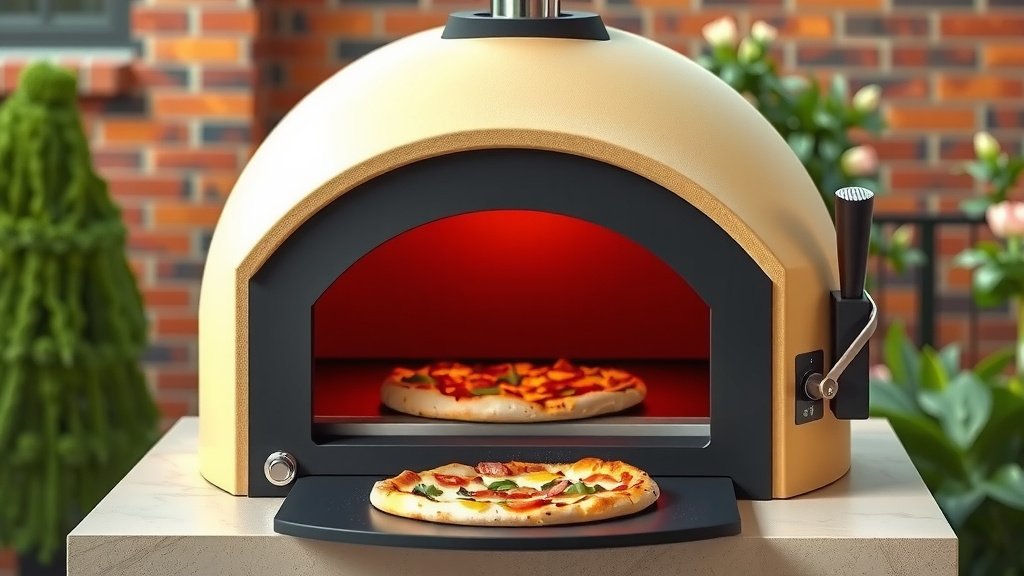
The ideal pizza oven temperature for a classic Neapolitan-style pizza is often around 850-900°F (450-480°C), allowing for a quick bake and crispy crust.
For home ovens or other styles, temperatures generally range from 450-550°F (230-290°C) to get a delicious result.
- Traditional Neapolitan pizza needs very high heat, typically 850-900°F.
- Most home ovens can achieve good results around 450-550°F for various pizza types.
- The right temperature cooks the crust and toppings perfectly without burning.
- Understanding your oven and pizza style helps you find the sweet spot.
- Don’t be afraid to experiment to get your pizza just right.
What Is The Ideal Pizza Oven Temperature?
The ideal pizza oven temperature balances cooking the crust quickly and melting the cheese and toppings evenly.
It usually falls between 450°F and 900°F (230°C and 480°C), depending on your pizza style and oven type.
Why Temperature Matters So Much for Pizza
Think about baking a cake versus searing a steak. Very different processes, right?
Pizza is similar; its specific needs mean temperature is
absolutely vital for success
.
Too low, and you get a sad, soggy crust with dried-out toppings. Too high, and everything burns before it truly cooks through.
Finding that sweet spot makes all the difference in achieving that
perfectly cooked pizza
you crave.
The Science Behind a Perfect Pizza Bake
There’s a lot more going on than just hot air when you cook a pizza.
High temperatures kickstart several chemical reactions that give pizza its unique texture and flavor.
Achieving the “Oven Spring”
When your pizza dough hits a very hot oven, the yeast gets a final burst of activity.
This creates steam, which causes the dough to puff up quickly – this is called
“oven spring”
.
We found that sufficient oven spring gives you that light, airy crust with a good chew (Bon Appetit).
Caramelization and Maillard Reaction
These fancy words describe the browning that gives your pizza flavor and color.
Caramelization is when sugars in the dough brown, adding sweetness and crispness to the crust.
The Maillard reaction is a chemical process between amino acids and sugars, creating hundreds of
complex flavor compounds
.
It’s what gives your crust its golden-brown spots and delicious aroma, especially in a hot oven (Serious Eats).
Different Pizza Styles, Different Temperatures
Not all pizzas are created equal, and neither are their ideal baking temperatures.
What works for a thin Neapolitan might ruin a deep-dish pizza. It’s about matching the heat to the style.
Neapolitan Pizza: The Inferno Heat
This is where pizza ovens truly shine. Traditional Neapolitan pizza cooks incredibly fast.
Many experts say you need temperatures between
850°F to 900°F (450-480°C)
for just 60-90 seconds.
This extreme heat creates that characteristic puffy, charred “cornicione” (crust rim) and a soft, chewy interior.
New York Style: A Steady Sizzle
For a classic New York-style slice, you’re looking for a slightly lower, more sustained heat.
Research suggests that
550°F to 700°F (290-370°C)
is often the sweet spot.
This temperature allows for a longer bake, usually 5-8 minutes, creating a crisp, foldable crust that holds its shape.
Deep Dish and Pan Pizzas: Lower and Slower
These pizzas have more volume and require gentler heat to cook through without burning.
We found that temperatures around
400°F to 500°F (200-260°C)
work best for 20-30 minutes.
This ensures the thick crust cooks through and the toppings melt into a gooey delight, preventing a raw middle.
Home Ovens vs. Dedicated Pizza Ovens
You can make amazing pizza in both, but you need to adjust your approach based on your equipment.
Dedicated pizza ovens usually reach much higher temperatures than standard kitchen ovens.
Getting the Most from Your Home Oven
Your home oven might not hit 900°F, but you can still make great pizza.
Preheat your oven to its
maximum temperature
, usually 500-550°F (260-290°C).
Use a pizza stone or steel, preheating it for at least an hour to store enough heat (King Arthur Baking).
Mastering Your Outdoor Pizza Oven
Outdoor ovens, whether wood-fired or gas, get seriously hot. They need careful management.
You’ll want to get the oven and cooking surface screaming hot for high-temp pizzas.
Learning how to manage the flame and heat distribution is a
skill that improves with practice
.
Tools to Measure and Control Temperature
Don’t guess! Accurate temperature measurement is crucial for consistent pizza results.
These tools help you know exactly what’s happening inside your oven.
Infrared Thermometers: Your Best Friend
An infrared thermometer lets you measure the
surface temperature
of your pizza stone or oven floor.
This is incredibly helpful, especially for high-temperature ovens, where air temperature can differ from surface temperature.
Many experts rely on these to ensure the cooking surface is exactly right before launching a pizza.
Oven Thermometers: A Basic Necessity
Even if your oven has a built-in display, an independent oven thermometer is a smart investment.
We found that many oven thermostats can be off by 50°F or more (America’s Test Kitchen).
A simple oven thermometer gives you a
true reading of the air temperature
inside.
Tips for Managing Your Pizza Oven Temperature
Mastering your oven’s heat takes a little practice and attention.
These tips can help you get more consistent and delicious results every time.
Preheating is Essential
Never rush preheating, especially with a pizza stone or steel.
It needs time to absorb and radiate enough heat for a
crispy crust foundation
.
Give your oven and stone at least 45 minutes to an hour to reach and stabilize at your target temperature.
Adjusting Mid-Bake
Sometimes you need to make small changes while cooking.
If your crust is browning too fast, you might
slightly lower the temperature
or move the pizza.
For outdoor ovens, rotating the pizza is key to even cooking, as heat distribution can be uneven.
| Pizza Style | Ideal Temperature Range | Typical Bake Time |
|---|---|---|
| Neapolitan | 850-900°F (450-480°C) | 60-90 seconds |
| New York | 550-700°F (290-370°C) | 5-8 minutes |
| Thin Crust (Crispy) | 475-525°F (245-275°C) | 8-12 minutes |
| Deep Dish/Pan | 400-500°F (200-260°C) | 20-30 minutes |
Here’s a quick checklist to help you get started:
- Know your pizza style’s temperature needs.
- Preheat your oven and cooking surface thoroughly.
- Use an infrared thermometer for stone temperature.
- Keep an eye on the crust for browning.
- Rotate your pizza for even cooking.
- Don’t be afraid to try different settings.
Conclusion
Achieving the ideal pizza oven temperature is like finding the secret ingredient for amazing pizza. It’s not a one-size-fits-all answer, but rather a journey of understanding your pizza style and oven.
From the blistering heat needed for Neapolitan to the gentle warmth for deep dish, each temperature range unlocks a different kind of deliciousness. With the right tools and a bit of practice, you’ll be crafting perfect pizzas every time.
What happens if my pizza oven isn’t hot enough?
If your pizza oven isn’t hot enough, your crust will likely be pale, dense, and soggy instead of crisp. The toppings might cook unevenly, and the cheese may not melt and brown properly, leading to a generally unappetizing pizza.
Can a regular home oven get hot enough for good pizza?
While a regular home oven might not reach the extreme temperatures of a dedicated pizza oven (like 900°F), it can still get hot enough to make very good pizza. Maximizing its temperature, using a preheated pizza stone or steel, and selecting appropriate pizza styles can yield excellent results.
How do I know when my pizza oven is ready?
You’ll know your pizza oven is ready when it has reached and maintained your desired temperature for a consistent period, typically 30 minutes to an hour after reaching the target. For dedicated ovens, look for glowing embers (if wood-fired) and measure the cooking surface temperature with an infrared thermometer.
Is it better to cook pizza hotter and faster, or cooler and slower?
The “better” approach depends entirely on the pizza style you’re making. Thin-crust pizzas like Neapolitan benefit from hotter and faster cooking for a crispy, airy crust. Thicker pizzas, such as deep-dish, require cooler and slower baking to cook through without burning the exterior.
What’s the best way to clean my pizza stone after use?
The best way to clean your pizza stone is to let it cool completely in the oven. Then, scrape off any stuck-on food bits with a stiff brush or metal spatula. Avoid using soap or detergents, as the porous stone can absorb them, which might impart off-flavors to future pizzas. Just wipe it down with a damp cloth if needed, and ensure it’s fully dry before storing.
