
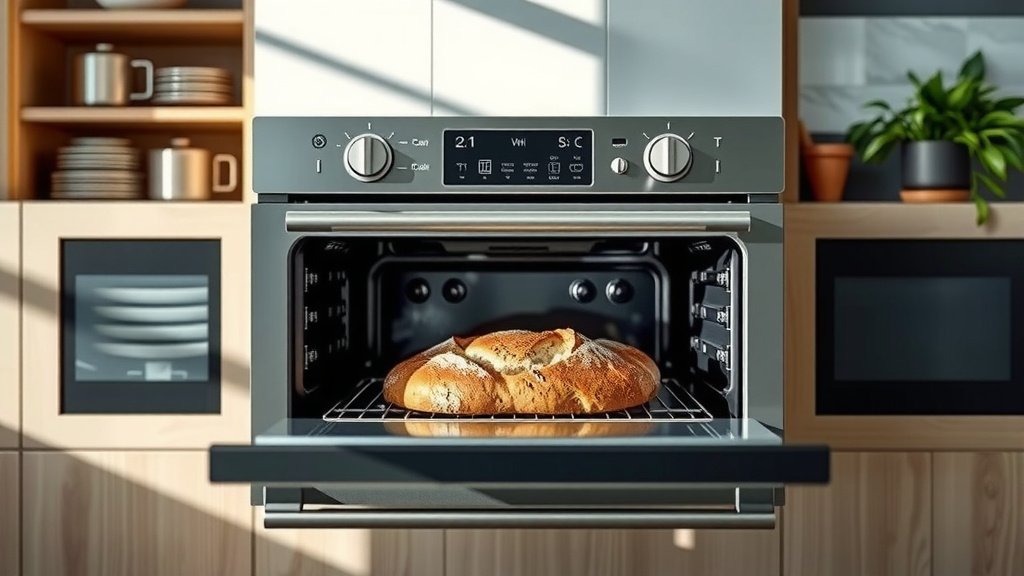
For baking bread at home, a conventional electric oven is often your best bet for consistent, delicious results.
While fancy features are nice, temperature stability and even heat are what truly matter for a beautiful crust and crumb.
- The ideal oven for home bread baking offers stable, consistent heat.
- Look for models with good insulation and precise temperature control.
- Steam injection features, while a bonus, are not strictly necessary to bake great bread.
- Electric ovens generally provide more even heat distribution than gas ovens for this task.
- A baking steel or stone can significantly improve your bread’s crust and oven spring.
What Oven Is Best For Baking Bread At Home?
The best oven for baking bread at home is typically a well-insulated conventional electric oven that maintains a steady high temperature.
It provides the consistent heat crucial for a perfectly risen loaf with a golden crust.
Understanding Your Oven’s Strengths
You might be wondering if your current oven is up to the task. Most modern ovens can bake bread quite well, but some features make the process easier.
We found that reliable heat is the biggest factor, more so than any advanced setting.
Conventional vs. Convection Heat
When you bake bread, you need consistent, stable heat. Conventional ovens use radiant heat from the top and bottom elements.
Convection ovens add a fan to circulate air. While good for roasting, the fan can sometimes create a tougher crust on bread unless used carefully.
Why Electric Ovens Often Win for Bread
Many experts agree that electric ovens provide more consistent and even heat compared to gas ovens (Consumer Reports).
Gas ovens can have “hot spots” which can make your bread bake unevenly. Electric models minimize this issue.
The Power of Temperature Stability
Imagine your bread rising beautifully, then the oven temperature dips. This can cause your loaf to deflate. An oven with excellent temperature stability prevents such baking heartbreak.
We found that checking oven reviews for temperature accuracy is very helpful before buying.
Steam: The Baker’s Secret Weapon?
Professional bakeries often use ovens with steam injection. This helps create a beautiful, crispy crust and allows the bread to expand fully. You can recreate this at home easily.
Placing a tray of hot water or ice in your oven at the start of baking will add the necessary moisture.
Considering Built-In Steam Ovens
Some premium ovens now offer steam functions. These are fantastic for bread, providing a consistent blast of steam at the right moment.
However, they are often a significant investment. You don’t need one to bake great bread.
Oven Size and Capacity Considerations
Do you bake large sourdough boules or smaller sandwich loaves? Your oven’s internal size matters. Make sure you have enough space for airflow around your bread.
Too cramped, and your bread might bake unevenly or not brown properly on all sides.
Adding a Baking Stone or Steel
A baking stone or steel acts as a thermal mass, storing heat and transferring it directly to your bread’s bottom crust. This helps achieve a crispy, golden base.
It also helps keep your oven temperature more stable when you open the door, which is a huge advantage for bread baking.
Here’s a quick look at common oven types for bread baking:
| Oven Type | Pros for Bread Baking | Cons for Bread Baking |
|---|---|---|
| Conventional Electric | Excellent temperature stability, even heat. | No built-in steam unless added. |
| Convection Electric | Heats up fast, good for browning if fan is off. | Fan can dry out crust or cause uneven rise if on. |
| Gas Oven | Often cheaper to run, provides moist heat. | Can have hot spots, less precise temperature control. |
| Steam Oven | Perfect crust and crumb, great oven spring. | Expensive, specialized appliance. |
Features That Enhance Bread Baking
Beyond the basics, some features are nice to have. A self-cleaning function is always a bonus, especially after a particularly enthusiastic flour dusting. Look for interior lights that let you check on your loaf without opening the door.
This helps maintain that precious oven temperature, preventing heat loss that can affect your bread’s rise. A good timer is also essential for precise baking.
The Role of a Proving Drawer
Some higher-end ovens come with a proving drawer, which maintains a low, consistent temperature ideal for dough rising. This creates a perfect warm, humid environment.
If you don’t have one, your microwave with a cup of hot water or a sunny spot on your counter works just as well. Don’t feel you need this feature.
Cost vs. Performance: Finding Your Sweet Spot
You don’t need the most expensive oven to bake amazing bread. Many mid-range electric ovens offer fantastic performance. Focus on stability and heat retention over a multitude of features you might not use.
Investing in a good oven thermometer is often a more valuable purchase than a very pricey oven. It helps you verify your oven’s true temperature.
Checklist for Your Ideal Bread Baking Oven
When you are looking for an oven, here are a few things to consider. This will help you make a smart choice for your bread baking journey.
- Does it offer consistent and even heating?
- Is it an electric model for better temperature stability?
- Can it reach and hold temperatures up to 500°F (260°C)?
- Is there sufficient internal space for your loaves and a baking stone?
- Does it have good insulation to minimize heat loss?
Conclusion
Ultimately, the best oven for baking bread at home is one that offers consistent, stable heat and good insulation. An electric conventional oven often fits this description perfectly, providing reliable results for bakers of all skill levels. Remember, fancy features are less important than your oven’s ability to maintain temperature and create a good environment for your dough. With a little practice and perhaps a baking stone, you’ll be pulling out delicious homemade loaves in no time. Happy baking!
What is oven spring in bread baking?
Oven spring is the rapid expansion of your bread dough during the initial minutes of baking. It happens when the yeast has a final burst of activity and gases trapped in the dough expand quickly due to the high heat. This creates a light, airy crumb structure.
Can I use a Dutch oven for baking bread?
Absolutely! A Dutch oven is a fantastic tool for baking bread, especially sourdough. It traps steam inside, mimicking professional steam ovens, which helps create a beautiful, crispy crust and allows for excellent oven spring. Preheat it thoroughly before adding your dough.
How important is preheating for bread?
Preheating your oven and any baking stone or Dutch oven is extremely important. It ensures the bread receives an immediate burst of high heat, which is essential for oven spring and setting the crust. Skipping proper preheating can lead to dense, flat loaves.
Does oven calibration matter for bread baking?
Yes, oven calibration matters significantly. If your oven’s thermostat is off, your bread may bake too fast, too slow, or unevenly. Using an external oven thermometer to check your oven’s true temperature can help you adjust your baking times or temperature settings for better results.
What temperature is ideal for baking most homemade bread?
Most homemade bread recipes call for baking temperatures between 400°F (200°C) and 475°F (245°C). Often, bakers start at a higher temperature for the first 10-15 minutes to encourage oven spring, then reduce it to complete the bake. Always follow your specific recipe’s guidance.
