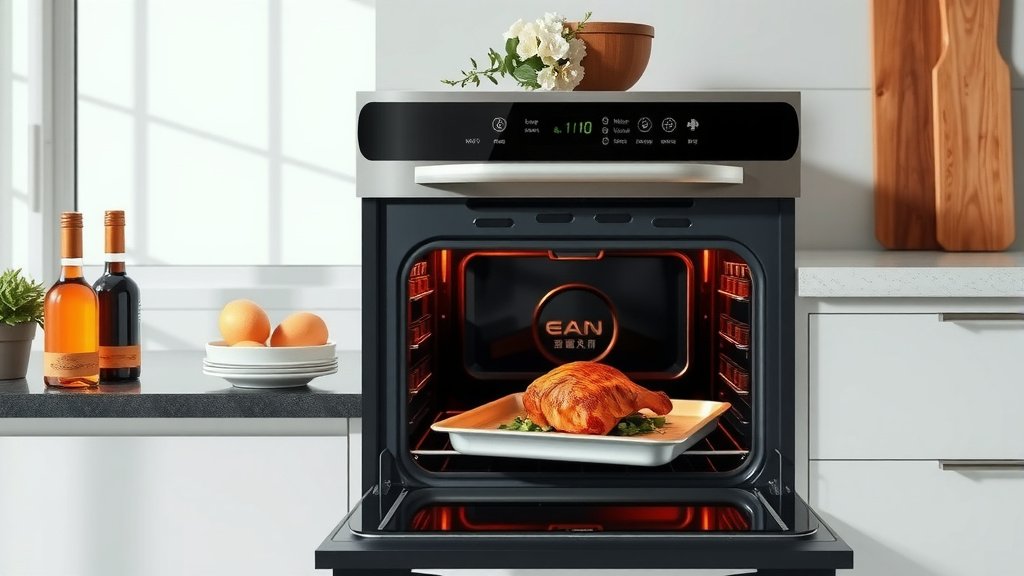
What Is Oven Roasting?
Oven roasting is cooking food with dry heat in an oven, usually uncovered, until the surface browns and the center reaches the right doneness. Temperature, airflow, pan shape, and food size all affect the result.
On this page (9 sections)
- How does oven roasting work?
- What is the difference between roasting and baking?
- Which oven settings affect roasting results?
- How should you prepare food for roasting?
- What cookware is best for oven roasting?
- Is a microwave drawer an oven for roasting?
- How do you roast in a gas or electric oven?
- How can you improve uneven roasting?
- What is the simple rule for oven roasting?
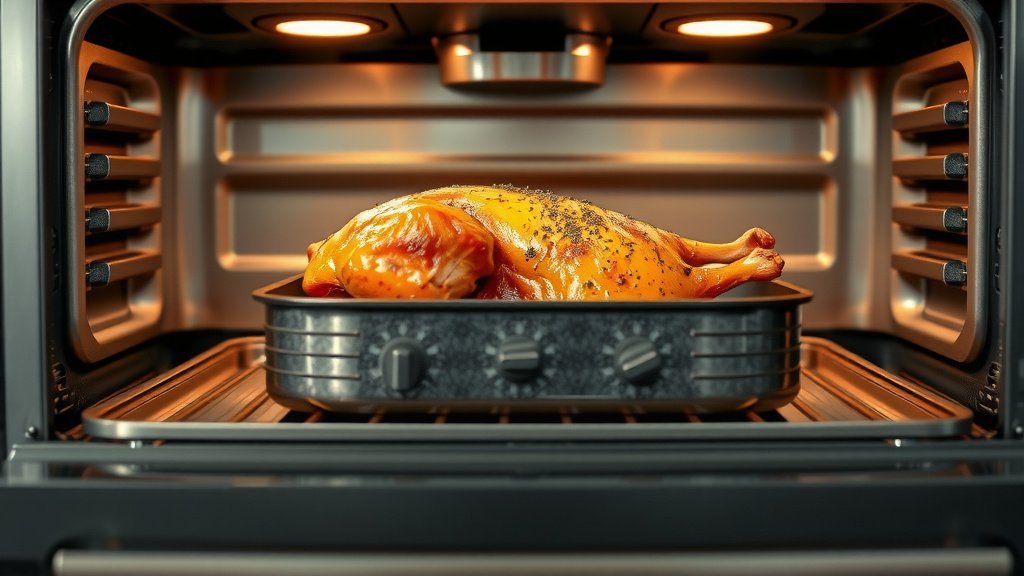
Oven roasting is cooking food with dry heat, usually uncovered, so the outside browns while the inside reaches the desired doneness. The method works because hot air transfers heat to the food surface and then moves inward.
Roasting in the oven suits meat, poultry, vegetables, potatoes, and other firm foods. The final result depends on oven temperature, food size, pan material, airflow, moisture, and the time the food stays in the heat.
How does oven roasting work?
Oven roasting uses dry heat to brown the surface and cook the center. Food placed in a hot oven loses surface moisture, while heat slowly moves toward the middle.
Browning happens most easily when the surface is hot and relatively dry. Patting meat or vegetables dry, leaving space around each piece, and avoiding a crowded pan can help the hot air reach more of the surface.
A roasting pan with low sides allows more airflow than a deep covered dish. A rack can also lift food above drippings, although the right setup depends on the recipe and the food's shape.
What is the difference between roasting and baking?
Roasting and baking use the same basic dry-heat method, but roasting usually refers to foods that benefit from browning. Baking more often describes bread, cakes, pastries, and batters that need the oven to set their structure.
The line is not strict. A tray of roasted vegetables and a baked casserole both cook in an oven, but the vegetables are usually exposed to more direct dry heat, while the casserole may retain more moisture.
Roasting often uses moderate to high heat. Slow roasting uses a lower temperature for a longer time, which can help larger cuts cook gradually.
Read How To Slow Roast In A Gas Oven? for gas-oven settings and timing considerations.
Which oven settings affect roasting results?
Temperature, convection, rack position, and preheating have the biggest effect on oven roasting. Small changes in these settings can change browning, cooking time, and moisture loss.
A higher temperature can brown the surface sooner, but it may also dry thin foods or darken the outside before the center is ready. A lower temperature gives the center more time to warm gradually and is common for slow roasting.
Convection moves heated air around the food. This can support more even browning, but it may also cook food faster than a conventional bake setting.
If you change from regular bake to convection, check the food earlier and use the temperature guidance in your oven manual or recipe.
Rack position matters too. A rack near the top receives stronger radiant heat from the upper element, while a lower rack may brown the bottom more quickly.
Start with the recipe's recommended position and adjust after you understand how your oven behaves.
What is oven roasting with a regular bake element?
A regular bake element supplies heat from the lower part of an electric oven, helping the cavity reach and maintain its set temperature. If that element fails, the oven may not bake or roast correctly.
The GE WB44X200 is a genuine OEM lower bake element for GE electric ovens. It is rated at 3,100 watts and 240 volts, uses screw-style connections, and measures about 13 in long by 19.5 in wide by 2.75 in high.
This part suits someone repairing a compatible GE appliance rather than changing the roasting method. Disconnect the appliance from utilities before installation and follow the owner's manual.
Confirm the part number and oven compatibility before ordering.
A replacement element cannot correct every roasting problem. Uneven browning may also come from rack position, a crowded pan, a faulty temperature sensor, or an oven that has not been preheated properly.
How should you prepare food for roasting?
Dry the surface, season it, use the right pan, and leave space around the food. These steps help heat reach the food evenly and make browning more predictable.
Cut vegetables into similar sizes so smaller pieces do not burn before larger pieces soften. Arrange pieces in one layer when possible.
Overlapping food traps steam and can leave the surface soft instead of browned.
For meat and poultry, use a food thermometer and follow a reliable food-safety source for the target internal temperature. Oven time alone does not prove that the center has reached a safe temperature because food size, starting temperature, and oven accuracy vary.
A countertop toaster oven can roast small portions, but its compact cavity changes how close food sits to the heating elements.
Can a toaster oven roast food?
A toaster oven can roast small portions when it has a bake function, enough room around the food, and a suitable pan. It works best for compact meals rather than large roasts.
The BLACK+DECKER TO1313SBD Toaster Oven has a 10-liter capacity, one shelf, and baking, broiling, toasting, and keep-warm functions. Its interior fits a 9 in pizza or 4 slices of bread, and the unit measures 10.8 in deep by 14.5 in wide by 8.8 in high.
Its 30-minute timer has a stay-on option, and the removable crumb tray supports routine cleanup. Keep food and bakeware at least 1.5 in from the top heating elements, use oven mitts, and allow ventilation around the unit.
This type of oven suits small portions, reheating, and compact pans. It is less suitable when the food needs a large roasting pan or enough space for air to circulate on all sides.
What cookware is best for oven roasting?
Use cookware that is rated for the oven temperature and gives the food enough room to cook without crowding. A shallow metal pan can encourage browning, while deeper or covered cookware holds more moisture.
Check the cookware instructions before placing it in a hot oven. Glass, ceramic, cast iron, stainless steel, and coated pans can have different temperature limits and care needs.
A rack can keep meat above its drippings, while a flat tray works well for vegetables spread in a single layer. Choose the pan based on the food's size, the amount of liquid, and whether you want a browned or moist surface.
Do not place a microwave-only container or plastic item in a conventional oven unless it is clearly rated for that use. The word microwave-safe does not automatically mean oven-safe.
Is a microwave drawer an oven for roasting?
A microwave drawer is not a conventional oven for dry-heat roasting. It uses microwave energy for cooking and reheating, so it should not replace a bake or roast setting when you want browned, oven-roasted food.
The Sharp SMD2470ASY 24 in. 1.2 cu. ft.
Built-In Microwave Drawer Oven has a 1.2 cu. ft. stainless steel interior, 950 watts, electric heating, cooking and defrost programs, and a built-in installation type.
Its drawer opens automatically, the control panel opens to a 45-degree angle, and the cavity fits a 4 qt casserole dish or a 20 oz beverage. Its role in a kitchen is different from a conventional oven, even though both appliances heat food.
Choose a conventional oven for dry heat, browning, and roasting. Choose a microwave drawer when quick reheating, defrosting, or flexible below-counter placement matters more.
How do you roast in a gas or electric oven?
Preheat the oven, place the food on the recommended rack, and monitor the center rather than relying only on time. Gas and electric ovens can both roast well, but their heat patterns may differ.
For gas-oven guidance, see How To Roast In A Gas Oven?. If you are comparing appliance designs for meat, Which Oven Type Is Best For Roasting Meat? explains how oven type can affect your choice.
Electric ovens often use an element to create heat, while gas ovens use a burner. Your oven's manual takes priority for rack positions, preheating instructions, cookware limits, and any convection setting.
Use a thermometer when the food's internal temperature matters. Let roasted meat rest according to the recipe so juices can settle before slicing.
How can you improve uneven roasting?
Reduce crowding, rotate the pan only when appropriate, and check the oven temperature if results stay uneven. A packed tray can steam food, while a dark pan may brown the bottom faster than a light one.
Keep the oven door closed as much as possible. Opening it releases heat and can lengthen cooking time, especially during preheating or when roasting a large item.
If one side browns faster, check whether the pan is centered and whether the rack is level. If the problem continues across different foods, an oven thermometer or appliance service check may help identify a temperature issue.
For a dual-fuel appliance, see How To Cook Roast In Dual Fuel Oven?. For an appliance with two separate cavities, read How To Cook Roast In Double Oven?.
What is the simple rule for oven roasting?
Use dry heat, leave the food uncovered when browning matters, avoid crowding, and check internal doneness with a thermometer. Adjust temperature and cookware to the size and moisture level of the food.
Choose a conventional oven for full-size roasting. Choose a toaster oven for small portions, and use a microwave drawer for microwave cooking rather than dry-heat roasting.
For poultry-specific guidance, see How To Roast Chicken In An Electric Oven?. The best roasting setup is the one that gives the food enough space, steady heat, and a safe path to the right internal temperature.
Frequently asked questions
What is oven roasting?
Oven roasting is cooking food with dry heat inside an oven, often in an uncovered pan. Hot air transfers heat to the food surface, helping it brown while the center cooks through.
Meat, poultry, vegetables, and some fruit can all be roasted.
Is roasting the same as baking?
Roasting and baking both use dry oven heat, so the terms overlap. Roasting usually describes foods such as meat and vegetables cooked at a moderate or high temperature, while baking often describes doughs, batters, and other foods that need a more controlled structure.
Should you cover food when roasting?
Leave food uncovered when you want surface browning and a drier exterior. Cover it when the recipe calls for more trapped moisture or gentler cooking.
A lid or foil changes airflow and can slow browning, so uncovering near the end may help the surface color.
What oven setting is best for roasting?
Use the regular bake setting when you want steady heat, or convection roast when your oven provides it and the recipe allows. Convection moves hot air around the food, which can improve browning and shorten cooking time, so check the food earlier.