
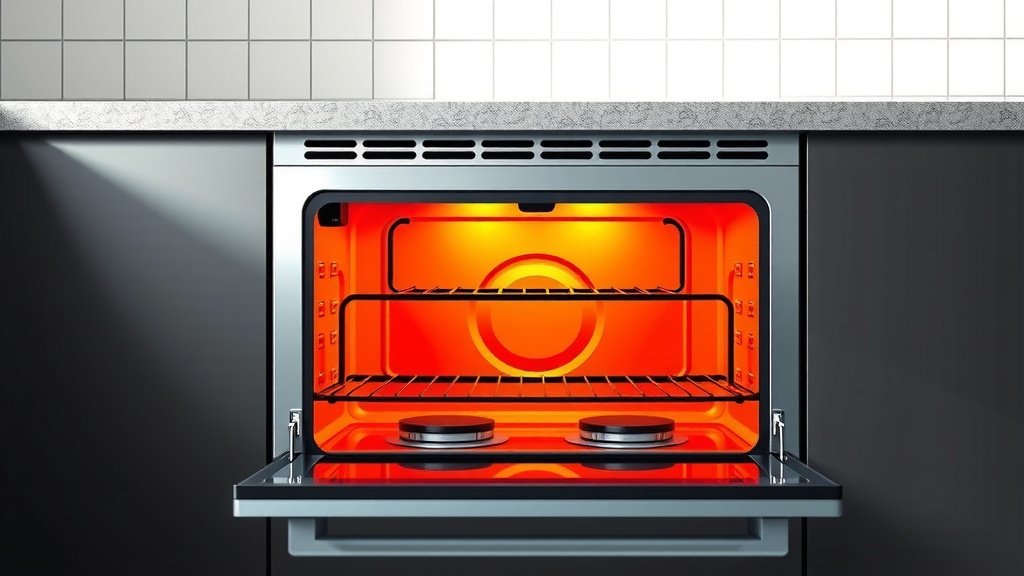
A gas oven typically reaches temperatures ranging from 150°F (65°C) for warming up to a searing 550°F (288°C) for specific tasks, though exact ranges can vary by model. Your oven’s thermostat system precisely regulates these temperatures to ensure your food cooks just right.
Most gas ovens operate within this broad spectrum, allowing you to tackle everything from slow roasts to high-heat pizzas. Understanding your specific oven’s capabilities helps you become a better cook.
- Gas ovens commonly heat from 150°F to 550°F.
- The oven’s thermostat controls temperature settings for precise cooking.
- Factors like calibration and oven placement can impact actual internal temperature.
- Regular checks with an oven thermometer ensure accuracy.
- Knowing your oven’s true temperature helps prevent over or undercooked meals.
What Temperature Does A Gas Oven Reach?
Your gas oven is designed to offer a versatile range of temperatures, typically spanning from a gentle 150°F (65°C) to a powerful 550°F (288°C). This wide spectrum lets you handle a vast array of recipes with confidence.
We often find that modern gas ovens can even exceed this, sometimes reaching up to 600°F (315°C) for specific self-cleaning cycles or specialty cooking needs. The key is understanding how your particular model performs.
How Your Gas Oven Generates Heat
Ever wondered how that warm, cozy environment forms inside your oven? A gas oven uses natural gas or propane ignited by an igniter. This creates a flame, usually at the bottom, which heats the air inside the oven cavity.
This hot air then circulates, transferring heat to your food. It’s a simple, effective system that has stood the test of time for home cooks everywhere.
Understanding the Typical Temperature Range
When you set your oven to bake, roast, or broil, you’re tapping into its designed temperature capabilities. The range is quite broad to accommodate various cooking methods.
For instance, baking cookies might call for 350°F (175°C), while slow-roasting a chicken could use 325°F (160°C). High-heat searing or pizza often requires 450°F (232°C) or higher. You have many options at your fingertips!
Low Heat Settings (150°F – 250°F)
These lower temperatures are perfect for keeping food warm without overcooking it. You might also use them for slow dehydrating or proving bread dough.
Many experts say gentle heat ensures your dishes don’t dry out. It’s a delicate dance of warmth and patience.
Medium Heat Settings (275°F – 375°F)
This is your everyday baking and roasting sweet spot. Think cakes, cookies, casseroles, and most roasted vegetables or meats.
This range provides good browning and even cooking without scorching. It’s where most of your culinary magic happens!
High Heat Settings (400°F – 550°F+)
Crank up the heat for quick cooking, searing, or achieving a crispy finish. Roasting potatoes, making crispy chicken skin, or baking a fast pizza are ideal for these temperatures.
Some gas ovens have a ‘broil’ setting, which uses direct intense heat from the top burner. This can be significantly hotter, often exceeding 550°F (288°C) for quick browning.
Why Your Oven’s Actual Temperature Might Vary
You set your oven to 350°F, but is it really 350°F inside? It’s a common question! Many factors can influence the actual temperature your gas oven reaches and maintains.
We often find that temperature readings on the dial can sometimes be off by 25-50 degrees Fahrenheit. This variance can lead to unexpected cooking results.
The Role of the Thermostat
Your oven’s thermostat is the brain of its temperature control. It senses the internal heat and tells the burner when to ignite or reduce flame.
Over time, thermostats can drift out of calibration. This means they might “think” the oven is at the right temperature when it’s actually hotter or cooler.
Oven Placement and Air Circulation
Where your oven is located in your kitchen can even affect its performance. If it’s near a drafty window or a powerful vent, it might struggle to maintain consistent heat.
Proper air circulation within the oven itself is also key. Don’t overcrowd your oven; leave space for the hot air to move around your dishes.
How to Verify Your Gas Oven’s Accuracy
Don’t just trust the dial! The best way to know what temperature your oven truly reaches is by using a simple tool.
An affordable oven thermometer is your best friend here. Place it in the center of your oven and check the reading after it’s preheated for at least 20 minutes.
Using an Oven Thermometer
Here’s a quick checklist to test your oven’s accuracy:
- Place a reliable oven thermometer in the center of your oven rack.
- Set your oven to a common temperature, like 350°F (175°C).
- Allow the oven to preheat for at least 20-30 minutes.
- Check the thermometer reading without opening the door too wide.
- Compare the thermometer’s reading to your oven’s dial setting.
- Repeat at a few different temperatures to get a full picture.
Understanding Hot Spots and Cold Spots
Even if your oven’s average temperature is accurate, you might notice some areas cook faster than others. This is normal and common in all ovens, especially gas models.
Research often connects these variations to the heat source at the bottom. Hot air rises, but some corners might receive less consistent heat.
Tips for More Even Cooking
Nobody wants a half-burnt, half-raw meal! Here’s how to minimize temperature inconsistencies in your gas oven:
- Rotate your food: Turn baking sheets or dishes halfway through cooking.
- Use the right bakeware: Light-colored pans reflect heat; dark pans absorb it more.
- Avoid overcrowding: Give dishes space for air to circulate freely.
- Preheat thoroughly: Always allow your oven to fully preheat.
- Use multiple racks wisely: If using two racks, swap them top-to-bottom midway.
When to Consider Oven Calibration
If your oven thermometer consistently shows a significant difference (more than 25-50°F) from your set temperature, your oven might need calibration.
Many modern gas ovens allow for minor thermostat adjustments. Check your oven’s manual for specific instructions on how to do this yourself. If you’re unsure, a professional appliance technician can help.
Common Cooking Temperatures for Your Gas Oven
To give you a better idea of how your oven’s temperature range translates to real-world cooking, here’s a table of common temperatures for various dishes:
| Dish Type | Typical Temperature Range | Why This Temperature? |
|---|---|---|
| Baking Cakes & Muffins | 350°F – 375°F (175°C – 190°C) | Ensures even rise and browning without drying. |
| Roasting Vegetables | 375°F – 425°F (190°C – 220°C) | Achieves tenderness with caramelized edges. |
| Roasting Meats (Chicken/Pork) | 325°F – 375°F (160°C – 190°C) | Cooks through thoroughly, keeps moisture in. |
| Baking Pizza | 450°F – 500°F (232°C – 260°C) | Creates a crispy crust and melted toppings quickly. |
| Baking Bread | 400°F – 450°F (200°C – 232°C) | A hot start helps with oven spring and crust development. |
| Warming Food | 150°F – 200°F (65°C – 95°C) | Keeps dishes warm without further cooking. |
Safety Tips for Operating Your Gas Oven
Working with gas appliances always requires a healthy dose of caution. We want your cooking adventures to be safe and enjoyable.
Always ensure good ventilation when using your gas oven. If you ever smell gas, turn off the oven, open windows, and contact your gas company immediately.
Conclusion
Knowing what temperature your gas oven reaches, and more importantly, what temperature it *actually* holds, is a game-changer for your cooking. You’ve seen that most gas ovens operate within a versatile 150°F to 550°F range, capable of handling almost any recipe.
By using an oven thermometer, understanding potential variances, and making small adjustments, you can take control of your oven’s performance. Go forth and cook with confidence, knowing your gas oven is ready to perform its best for you!
What is the maximum temperature a home gas oven can reach?
A standard home gas oven can typically reach maximum temperatures of around 550°F (288°C), though some models, especially for self-cleaning cycles or specific pizza settings, might go slightly higher, up to 600°F (315°C).
How accurate are gas oven temperature dials?
Gas oven temperature dials can vary in accuracy. It’s common for them to be off by 25-50°F (14-28°C) from the actual internal oven temperature. Using an independent oven thermometer is the best way to determine your oven’s true accuracy.
Why does my gas oven sometimes cook unevenly?
Uneven cooking in a gas oven can be due to hot spots or cold spots, which are common in all ovens. Factors like a partially blocked vent, worn-out igniter, or poor air circulation (overcrowding) can contribute. Rotating your food and using an oven thermometer can help manage this.
Can I adjust the temperature of my gas oven’s thermostat?
Many modern gas ovens allow for minor adjustments to calibrate the thermostat if it’s consistently reading too high or too low. Check your oven’s user manual for specific instructions on how to perform this adjustment. If you’re uncomfortable, a professional technician can do it for you.
Is it normal for a gas oven’s temperature to fluctuate during cooking?
Yes, some temperature fluctuation is normal in gas ovens. The burner cycles on and off to maintain the set temperature, leading to slight ups and downs. However, significant, rapid, or wide fluctuations might indicate an issue with the thermostat or igniter that may need attention.
