
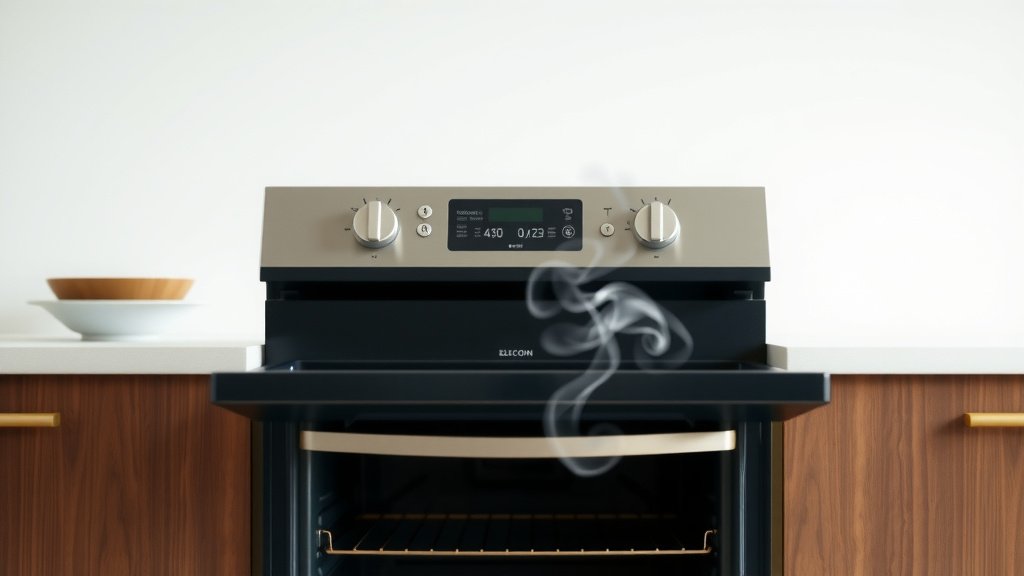
An electric oven typically smells like burning due to **food spills and residue** burning off the heating elements or oven surfaces. This is often the most common and harmless cause, usually signaling your oven needs a good cleaning.
Sometimes, a burning smell can come from a **new oven’s factory oils** during its initial burn-off, or, less commonly, from serious electrical issues requiring immediate attention.
Here’s a quick guide to what might be causing that burning smell:
- Most often, **old food crumbs and grease** are burning inside.
- A **new oven** will often smell bad for the first few uses.
- Something **plastic or paper** might have fallen in and is melting.
- Less commonly, **electrical components** could be overheating or faulty.
- Always prioritize **safety** when you notice a strong burning smell.
Why Does Electric Oven Smell Like Burning?
That alarming burning smell from your electric oven usually points to something burning inside that shouldn’t be. Most often, it’s just **burnt food residue** from past meals or a bit of grease that has splattered.
But sometimes, the cause can be more serious, like a new appliance “burning off” manufacturing oils, or even an electrical problem. Let’s get to the bottom of it.
Common Reasons for That Burning Smell
When your oven starts to smell like something’s on fire, it’s a call for investigation. Don’t panic! We found that the vast majority of these smells have simple, solvable causes.
Understanding the source helps you fix the issue quickly and safely. It’s like your oven is sending you a message, and we’re here to help you translate it.
Old Food Spills and Residue
This is the most frequent culprit. Imagine a tiny piece of lasagna that dripped last week, or some cheese that bubbled over your pizza. These bits sit there, waiting to be incinerated the next time you crank up the heat.
When your oven gets hot, these **baked-on bits** start to smoke and produce that acrid burning smell. Many experts agree that regular cleaning can prevent this common issue.
Is Your Oven Brand New? The “Burn-Off” Phase
Just unboxed a shiny new oven? You might notice a strong, chemical burning smell during its first few uses. This is completely normal and often referred to as the **initial burn-off period**.
Manufacturers apply protective coatings and oils that need to burn away. Research suggests running your new oven empty at a high temperature for an hour or two with good ventilation to clear this smell (Appliance Manufacturer Guidelines).
Accidental Items Inside Your Oven
Ever accidentally leave a plastic lid, a cleaning cloth, or even some forgotten paper packaging in your oven? It happens to the best of us.
These non-food items will melt or burn, creating a very distinct and often **pungent burning smell**. Always double-check your oven before preheating. A quick scan can save you a lot of grief.
When It’s Not Food: Electrical Concerns
Now, this is where you need to pay closer attention. If the smell is distinctly like **burning plastic or electrical wires**, and you haven’t put anything non-food inside, it could signal a more serious problem.
This might be an issue with the heating element, wiring, or insulation. Many experts recommend immediately turning off and unplugging your oven if you suspect an electrical fault (Electrical Safety Standards).
Troubleshooting Steps When Your Oven Smells
So, you’ve got a burning smell. What do you do next? We’ve found a simple sequence of steps that can help you diagnose and fix the problem without too much fuss. Your kitchen safety is our top concern.
First, Prioritize Safety
The moment you detect a burning smell, **turn off your oven immediately**. Open windows and doors to ventilate your kitchen. If the smell is very strong or you see smoke, unplug the oven if it’s safe to do so. A little fresh air goes a long way.
Check for Visible Spills and Debris
Once the oven has cooled down, open it up and give it a thorough inspection. Look closely at the bottom, under the heating elements (if removable), and on the racks. Are there any **dark, charred spots** or forgotten items?
Even small crumbs can create a big smell. Don’t forget to check around the door seal, too.
Give Your Oven a Deep Clean
If you found food residue, it’s time for a cleaning. A clean oven is a happy oven, and less likely to produce those unwanted burning smells. We found that regular cleaning can significantly reduce this issue.
- Remove all racks and accessories.
- Scrape off any large, loose debris.
- Use a commercial oven cleaner or a paste of baking soda and water.
- Let it sit, then wipe thoroughly.
- Rinse with a damp cloth to remove all cleaner residue.
Understanding Different Burning Smells
Not all burning smells are created equal. Knowing the difference can help you pinpoint the issue faster. Is it smoky, chemical, or vaguely metallic? Each has its own story.
Here’s a quick guide to help you identify the type of burning smell you’re experiencing.
| Smell Type | Common Cause | Action Needed |
|---|---|---|
| Smoky/Charred Food | Food spills, grease, burnt crumbs | Clean oven thoroughly, inspect for spills |
| Chemical/Plastic | New oven burn-off, melting plastic/paper | Ventilate, remove foreign objects, run burn-off cycle |
| Acrid/Metallic/Sulfur | Electrical wiring, heating element fault | Turn off oven, unplug, call a professional electrician/technician |
| Dusty/Musty | Dust on heating elements (rare) | Initial preheating burn-off, usually dissipates quickly |
Preventing Future Burning Smells
Prevention is always better than cure, especially when it comes to unpleasant oven odors. A few simple habits can keep your oven smelling fresh and working efficiently.
We found that consistent maintenance makes a big difference in oven performance and safety. Consider these tips as your oven’s wellness plan.
Simple Habits for a Clean Oven
Wipe up spills as they happen. A quick wipe-down after cooking, once the oven is cool, can save you from a major cleaning later. This is often the most effective method for prevention.
Aim for a deeper clean every few months, or more often if you cook frequently. Think of it like taking out the trash: little actions make a big impact.
Using Oven Liners Wisely
Oven liners can catch drips and make cleanup easier. However, ensure they are placed correctly and are oven-safe. Many experts advise against placing liners directly on the oven floor, especially in electric models, as it can block vents or damage the heating element.
Place them on the bottom rack instead, or use aluminum foil loosely draped on a rack to catch drips.
When to Call a Professional
Sometimes, the problem is beyond a simple cleanup. If you’ve cleaned your oven, checked for foreign objects, and the burning smell (especially an electrical one) persists, it’s time to call in the cavalry.
Your safety is paramount. Don’t try to fix complex electrical issues yourself. Research shows that improper repairs can lead to fire hazards (Electrical Safety Foundation International).
Your Oven Safety Checklist
When in doubt about a burning smell, follow these steps:
- Turn off the oven immediately.
- Open windows for ventilation.
- Unplug the oven if it’s safe.
- Inspect for food, plastic, or debris once cool.
- If the smell is electrical or persistent, call a certified technician.
Conclusion
Encountering a burning smell from your electric oven is certainly unsettling, but as we’ve explored, the cause is often simple and easily resolved. From stray food crumbs to the initial burn-off of a new appliance, most situations just require a bit of cleaning and patience.
However, an acrid, electrical smell should never be ignored. Always trust your instincts, prioritize safety by turning off the appliance, and don’t hesitate to seek professional help when the cause isn’t clear or seems serious. A well-maintained oven not only cooks better but also ensures a safe and pleasant kitchen environment for you and your family.
Can a dirty oven cause a burning smell?
Yes, absolutely! A dirty oven is one of the most common reasons for a burning smell. Food spills, grease, and crumbs left over from previous cooking sessions get heated up and burn, creating smoke and that distinct charred odor.
How do I get rid of the new oven burning smell?
To get rid of a new oven’s burning smell, often called “burn-off,” run your empty oven at a high temperature (around 400-500°F or 200-260°C) for 30-60 minutes. Make sure your kitchen is well-ventilated by opening windows or using an exhaust fan during this process. This helps burn off manufacturing oils and coatings.
What if my oven smells like burning plastic?
If your oven smells like burning plastic, immediately turn it off and let it cool completely. Carefully inspect the inside of the oven, including under racks and elements, for any melted plastic items like forgotten containers, bags, or even parts of oven mitts. Remove the item and clean any residue, then ventilate thoroughly.
Is a burning smell from an electric oven dangerous?
A burning smell from food residue is generally not dangerous, though it can set off smoke detectors. However, if the smell is electrical, metallic, or acrid, and accompanied by smoke, sparks, or tripping breakers, it can indicate a serious electrical fault. In such cases, it is dangerous, and you should turn off the oven and call a professional technician immediately.
How often should I clean my oven to prevent smells?
Many experts recommend wiping down minor spills as they occur, once the oven is cool. For a deeper clean, aim for every 3-6 months, depending on how frequently you use your oven. Regular cleaning prevents the buildup of food residue that causes those unpleasant burning smells.
