
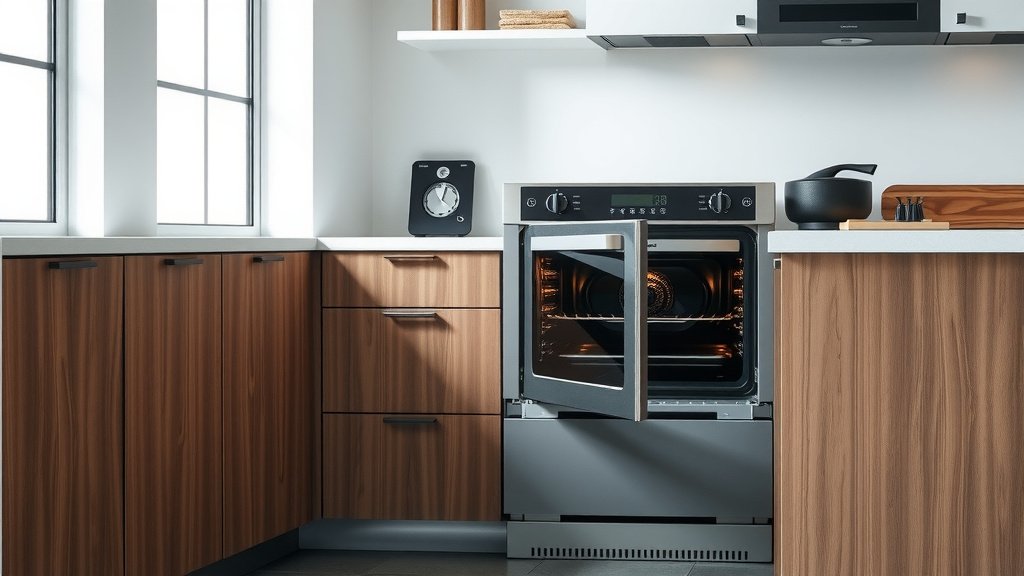
An electric oven commonly turns off by itself due to a faulty thermostat, a malfunctioning temperature sensor, or issues with its control board.
Often, this automatic shutdown is a safety mechanism preventing overheating, but it can also signal a problem with the oven’s electrical supply or internal components, causing the electric oven to turn off by itself.
Here’s a quick overview of why your oven might be acting up:
- Your oven likely has a faulty thermostat or temperature sensor.
- Overheating is a common cause, triggering the oven’s built-in safety shutdowns.
- Always check for basic power issues, like a tripped breaker or loose outlet connection.
- The main control board or even a damaged heating element could also be culprits.
- For complex internal problems, professional repair is often needed to fix your electric oven.
Why Does Electric Oven Turn Off By Itself?
When your electric oven suddenly goes dark mid-bake, it can be quite frustrating, right? This often points to a few common culprits that are usually fixable.
Understanding Oven Safety Features
Modern ovens are smart appliances. They include several features designed to protect your home and family. These systems prevent hazards like fires or electrical overloads.
We found that many manufacturers integrate thermal cut-offs. These systems kick in if the oven temperature reaches an unsafe level, shutting down power automatically (National Fire Protection Association).
Other safety measures include circuit breakers within your home’s electrical panel. These prevent too much current from flowing, protecting both the appliance and your entire electrical system.
- Thermal Cut-Offs: Prevent extreme overheating.
- Circuit Breakers: Protect against electrical surges.
- Door Switches: Stop heating if the door is open.
- Temperature Sensors: Monitor internal oven heat.
- Control Board Logic: Manages all oven functions safely.
Common Culprits: Electrical Issues
Before you panic, sometimes the problem is simply electrical. These issues are often the easiest to diagnose and fix yourself.
Tripped Circuit Breaker
Is your oven on its own dedicated circuit? Many ovens draw a lot of power. If it pulls too much current, your home’s circuit breaker might trip.
This is a safety mechanism to prevent overheating wires. Go to your electrical panel and check for a breaker in the “off” or “middle” position. Simply flip it back on (Consumer Reports).
Loose Wall Outlet or Plug
For some portable or smaller electric ovens, a loose plug can cause power interruptions. A poor connection prevents a consistent power supply to the appliance.
Check the oven’s power cord. Make sure it is securely plugged into the wall outlet. Sometimes, the outlet itself can be faulty; try plugging a different appliance into it to test.
Internal Component Failures
If electrical connections aren’t the issue, the problem likely lies within the oven itself. These internal parts are critical for operation.
Faulty Thermostat or Temperature Sensor
Your oven’s thermostat or temperature sensor is like its brain. It tells the oven when to heat up and when to maintain temperature. If this part fails, the oven cannot regulate heat correctly.
Research often shows that a faulty sensor can give incorrect readings. This might cause the oven to overheat, triggering the safety shutdown feature, or simply not maintain power (Appliance Repair Journal).
Malfunctioning Control Board
The control board is the central processing unit of your oven. It manages all functions, from setting temperatures to managing timers. A problem here can cause erratic behavior or shutdowns.
Electronic control boards can sometimes short circuit or develop bad relays. When this happens, the board might send a signal to turn off the oven, even if everything else is fine.
Overheating and Thermal Cut-Off
As mentioned, ovens have thermal fuses or cut-offs. If the oven gets too hot – maybe due to poor ventilation or a faulty fan – this fuse will trip. It’s a one-time-use safety device.
Once tripped, the oven will remain off until the fuse is replaced. This protects against fire hazards. Many experts say this is a clear sign that the oven experienced extreme internal temperatures.
Damaged Heating Element
Both the bake and broil heating elements are essential. If one of these elements is visibly broken or shorting out, it can sometimes trigger a power loss or circuit trip.
While less common for a full shutdown, a damaged element can cause electrical irregularities. We found that a shorted element can sometimes draw too much current, leading to an automatic power cut.
What You Can Do: Troubleshooting Steps
Before calling for help, there are a few simple things you can try. These steps might just resolve the issue quickly.
Check Your Power Supply
Start with the basics. Ensure the oven is plugged in firmly. Also, check your home’s electrical panel for any tripped circuit breakers. Reset them if needed.
Sometimes, an extension cord might be the culprit. Ovens should ideally be plugged directly into a wall outlet to prevent power supply issues.
Reset the Oven
Just like a computer, sometimes your oven needs a reboot. You can often reset it by unplugging it for a minute or two, then plugging it back in. Or, flip the circuit breaker off and on for 30 seconds.
This can clear minor electronic glitches on the control board. It’s a quick, easy first step before moving to more complex diagnostics.
Observe for Error Codes
Many modern ovens display error codes when something goes wrong. If your oven turns off, check the display for any flashing numbers or letters. These codes often provide valuable clues.
Consult your oven’s user manual to understand what the code means. It can point you directly to the component that needs attention, saving you time and effort.
Here’s a quick checklist to guide your troubleshooting:
- Confirm the oven’s power plug is secure.
- Inspect your home’s circuit breaker box for any tripped switches.
- Look for any visible error codes on the oven display.
- Check if the oven light works, indicating some power.
- Listen for any unusual sounds before the shutdown.
When to Call a Professional
While some issues are DIY-friendly, others definitely require expert attention. Knowing when to call a pro can save you headaches and prevent damage.
Safety First
Working with electricity can be dangerous. If you’re not comfortable or experienced with electrical repairs, it’s always safer to call a qualified appliance technician. Your safety is paramount.
Trying to fix complex internal problems without proper knowledge can lead to further damage or even personal injury. Don’t take risks when it comes to major appliances.
Signs You Need Expert Help
You should contact a professional if you see sparking, smell burning plastic, or if the oven keeps tripping the breaker. Persistent problems that you can’t identify also mean it’s time for an expert.
Many experts say that if you suspect a faulty control board or a damaged heating element, a certified technician has the right tools and knowledge for accurate diagnosis and repair (Electrical Safety Foundation International).
| Issue | Common Symptoms | Likely Solution |
|---|---|---|
| Tripped Breaker | No power to oven, other appliances on circuit also off | Reset breaker; check for overload |
| Faulty Thermostat/Sensor | Oven overheats then shuts off; inconsistent temperature | Replace sensor/thermostat |
| Control Board Malfunction | Erratic behavior, error codes, random shutdowns | Repair or replace control board |
| Overheating (Thermal Cut-Off) | Oven reaches very high temp then goes completely dead | Identify cause of overheating; replace thermal fuse |
| Damaged Heating Element | Element visibly broken; oven not heating properly before shutdown | Replace heating element |
Conclusion
When your electric oven decides to go dark mid-cook, it’s rarely just being temperamental. There’s usually a specific reason, often related to electrical supply or internal components. Starting with simple checks like the power cord and circuit breaker is always a good first step.
However, if troubleshooting doesn’t fix the issue, or if you’re dealing with complex internal parts, don’t hesitate to reach out to a qualified technician. They can diagnose the problem safely and accurately, getting your oven back to baking perfection in no time. Remember, maintaining your appliances keeps your kitchen running smoothly and safely.
What is the most common reason an electric oven stops working mid-cycle?
The most common reason an electric oven stops working mid-cycle is typically a faulty temperature sensor or thermostat. These components are vital for maintaining the correct heat, and if they malfunction, the oven’s safety systems might shut it down to prevent overheating or inconsistent cooking.
Can a dirty oven cause it to turn off by itself?
Yes, a very dirty oven can potentially cause it to turn off by itself. Heavy grease buildup or food debris can sometimes obstruct ventilation, leading to overheating. If the oven gets too hot, its thermal cut-off safety feature will activate, shutting down power to prevent fire hazards.
How do I reset my electric oven after it turns off?
To reset your electric oven after it turns off, first unplug it from the wall outlet. Wait for about 1-2 minutes, then plug it back in. If it’s hardwired, go to your home’s circuit breaker panel and flip the breaker for the oven to the “off” position, wait a minute, and then flip it back to “on.”
Is it safe to continue using an oven that periodically shuts off?
It is generally not safe to continue using an oven that periodically shuts off. This behavior usually indicates an underlying problem, possibly related to overheating or electrical faults. Using it repeatedly could pose a fire risk or cause further damage to the appliance. It’s best to have it inspected and repaired.
How long do oven thermostats or temperature sensors typically last?
Oven thermostats and temperature sensors typically last between 5 to 10 years, though this can vary depending on usage frequency and oven model. Like any electronic component, they can wear out over time, leading to inaccurate temperature readings or complete failure, which then triggers shutdowns.
