Why Is a Bread Lame Curved?
A bread lame is curved so the blade can stay at a shallow angle to the loaf while your hand stays above the dough. That curve helps you make a long, even score that opens as the crust expands.
On this page (10 sections)
- Why is a bread lame curved for scoring angle?
- How does a curved blade affect crust expansion?
- What is the difference between a curved lame and a straight razor?
- How do you hold a curved lame when you score?
- Which curved lame style suits round sourdough loaves?
- How do blade sharpness and replacement affect the curve?
- What other baking prep tools help you score with control?
- How do you make scoring designs with a curved lame?
- Which tools in this guide suit daily bread baking?
- Why is a bread lame curved in the closing answer?
A bread lame is curved so the blade can stay at a shallow angle to the loaf while your hand stays above the dough. That curve helps you make a long, even score that opens as the crust expands.
It also gives your knuckles more clearance when you score a round, proofed loaf.
A lame is a small hand tool with a very sharp blade for cutting the surface of dough before baking. Bakers score bread to guide where the crust splits, called the ear.
The shape of the blade affects how easily you can control that cut.
Why is a bread lame curved for scoring angle?
The curve helps you hold the blade at about 30 to 45 degrees to the dough surface. A shallow angle creates a flap of dough that can lift and curl in the oven.
That lifted flap forms the ear and helps the loaf expand in a controlled way.
With a flat tool, you often need to tilt your hand down to keep the blade shallow. That can put your fingers close to the dough and make the cut uneven.
A curved handle or blade mounting raises the grip so the blade can enter at the right angle more naturally.
Depth matters as much as angle. A cut that is too deep can open too wide and create a harsh split.
A cut that is too shallow may seal in the oven and limit expansion. The curve gives you a repeatable position so depth stays more consistent from one end of the loaf to the other.
How does a curved blade affect crust expansion?
A shallow score creates a thin flap that steam can lift as the loaf bakes. The flap protects the cut while the inside expands, so the split opens along the line you chose.
This is why bakers often describe the score as a guide for the crust.
If the blade enters too straight down, the cut tends to be more vertical. The crust may split in a jagged line instead of forming a clean ear.
If the blade drags or tears, the surface can look rough even when the loaf tastes fine.
Crust expansion also depends on proofing, oven heat, and steam. A lame cannot fix underproofed or overproofed dough.
It can only help you place a clean cut where the crust is most able to open. For baking setup, readers often compare What Is the Best Oven for Baking Bread? and a Best Dutch Oven For Bread Baking before they focus on small tools.
What is the difference between a curved lame and a straight razor?
A curved lame usually has a blade mounted on a curved or angled handle. That design keeps your hand above the dough while the blade stays at a shallow angle.
Many bakers find it easier to make one smooth cut across a round loaf.
A straight razor or flat blade can be very sharp and simple to store. You hold it more directly, so angle control depends more on wrist position.
Some bakers like the direct feel, especially for straight cuts or decorative marks.
Neither shape is automatically better for every loaf. Round boules often benefit from the clearance of a curved lame.
Batards and sandwich loaves may suit a straight cut made with either tool. The key is whether you can repeat the same angle without pressing down.
How do you hold a curved lame when you score?
Hold the handle lightly and keep your hand above the loaf. Start with the blade at a shallow angle, then move in one confident pass.
Light pressure and steady speed matter more than force.
Practice on a floured surface first so you can see the angle. Keep the blade moving so it slices instead of sticking.
If the dough grabs the blade, stop and clean or change the blade rather than pushing harder.
Clean tools also help the cut. Flour, dough residue, or a dull edge can cause dragging.
A clean, sharp blade enters the surface with less resistance and leaves a neater line. Our guide on how to use a bread scoring lame walks through grip, angle, and common mistakes.
How shallow should a bread score be?
A shallow score is usually about one quarter to one half inch deep. Depth should stay even across the full length of the cut.
If the center is deeper than the ends, the loaf may open unevenly.
Use the curve to keep the blade angle steady, not to press deeper. Let the sharpness do the work.
A light touch also reduces the chance of deflating a delicate, well-proofed loaf.
Which curved lame style suits round sourdough loaves?
A curved lame often suits round sourdough because the handle clears the top of the loaf. You can keep the blade shallow while moving across the curved surface.
That helps on boules that rise high in the center.
Look for a handle that feels secure when your hands are floured. A grip that slips can change the angle mid-cut.
Blade changes should also be simple enough that you will do them often.
Our list of best bread lame for sourdough compares handles and blade styles for this use. It helps to match the shape to the loaves you bake most often.
A tool that suits a boule may feel less natural on a long loaf.
How do blade sharpness and replacement affect the curve?
A curved shape only works when the blade is sharp. A dull blade drags through dough and makes the angle harder to hold.
Sharpness reduces the pressure you need, so the curve can guide the cut instead of fighting it.
Replace blades early rather than waiting for obvious tearing. Even a small loss of sharpness can make the cut ragged.
Handle old blades carefully and store replacements in their protective packaging until use.
Categories of best bread lame blades focus on fit, sharpness, and safe handling. A blade that seats firmly will stay at the angle you set.
A loose blade can shift and ruin an otherwise good score.
What other baking prep tools help you score with control?
Scoring works best when measuring, mixing, and shaping are also controlled. A scale, a clean work surface, and a good grip on the dough reduce the pressure on the lame.
Small prep tools matter because the cut happens in seconds.
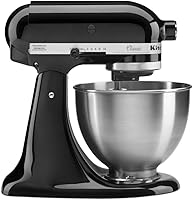
For bakers who mix dough at home, a stand mixer can help make dough handling more consistent. Consistent dough is easier to shape and score than dough that varies from batch to batch.
The mixer does not make the cut, but it supports the steps before it.
Accurate liquid measurements also help with hydration. The De'Longhi OXO Good Grips Angled Measuring Cup has a 2 cup capacity and angled markings you can read from above.
That design reduces the need to bend down to check a measurement. It is BPA free plastic, dishwasher safe, and has standard and metric markings.
A cookbook can also help you plan bakes around scoring. Gina Homolka's Skinnytaste One and Done is a 304 page cookbook with 140 recipes for an Instant Pot, slow cooker, air fryer, sheet pan, skillet, Dutch oven, and more.
It is organized by vessel, which can help you plan meals around the equipment you already own.
How do you make scoring designs with a curved lame?
A curved lame can make both functional scores and decorative cuts. Functional scores guide expansion, while designs add pattern without changing the loaf much.
Keep decorative cuts shallow so they do not weaken the crust.
Simple patterns work best when the blade angle stays light. A single central score is the easiest to repeat.
Leaf or wheat patterns need steady spacing and a very light touch.
Our guide to bread lame designs shows how to plan patterns before you cut. Sketch the design on a floured loaf first in your mind.
If the pattern requires a steep blade angle, it may not suit the curve of a lame.
Should you score before or after proofing?
Most bakers score after proofing, right before baking. At that stage the dough surface is set enough to hold the cut and delicate enough to deflate if you press hard.
Work quickly and avoid reheating the loaf with your hands.
If the surface feels sticky, a light dusting of flour can help the blade glide. Do not add so much flour that it fills the cut.
The goal is a clean entry point, not a coated surface.
Which tools in this guide suit daily bread baking?
For daily bread baking, the KitchenAid Artisan 5-Qt Tilt Head Stand Mixer suits bakers who mix dough by machine. It has a 5 quart stainless steel bowl, 10 speeds, and a tilt head design for adding ingredients.
KitchenAid says the bowl can handle small or large batches, including 9 dozen cookies with the flat beater.
The KitchenAid Artisan has metal construction and a removable bowl. It includes a pouring shield in its item highlight features.
The dimensions are 9.3 inches deep by 14.3 inches wide by 14 inches high, so counter space matters.
Choose the mixer if you bake often and want repeatable dough mixing. Skip it if you prefer hand mixing or bake small batches.
It supports prep, while the lame still handles the final scoring cut.
Why is a bread lame curved in the closing answer?
Why is a bread lame curved? It is curved to keep your hand up and the blade shallow so the score opens cleanly as the crust expands.
That simple geometry explains most of the benefit.
Pick a curved lame if you bake round loaves and want a repeatable shallow angle. Pick a flat blade if you prefer a direct grip and make mostly straight cuts.
In both cases, sharpness and light pressure matter more than shape alone.
Frequently asked questions
Why is a bread lame curved instead of flat?
The curve lets the blade enter the dough at a shallow angle while your hand stays higher and clearer of the surface. That angle helps create a long score that can open during baking.
A flat blade can still work, but it is harder to hold the same shallow angle on a round loaf.
Is a curved lame better for sourdough scoring?
A curved lame often suits round sourdough loaves because it helps you keep the cut shallow and consistent. It gives you more control over angle and depth as you move across the loaf.
Your grip, blade sharpness, and dough handling still matter as much as the shape.
How do you hold a curved lame for scoring?
Hold the handle above the loaf and tilt the blade so it enters at a shallow angle. Move in one smooth pass without pressing down hard.
Speed and light pressure usually produce a cleaner cut than force and hesitation.
When should you replace bread lame blades?
Replace a blade when it drags, tears, or feels dull despite careful use. A sharp blade needs less pressure and creates a cleaner score.
Always handle used blades as sharp waste and store a lame where the edge cannot catch fingers or other tools.