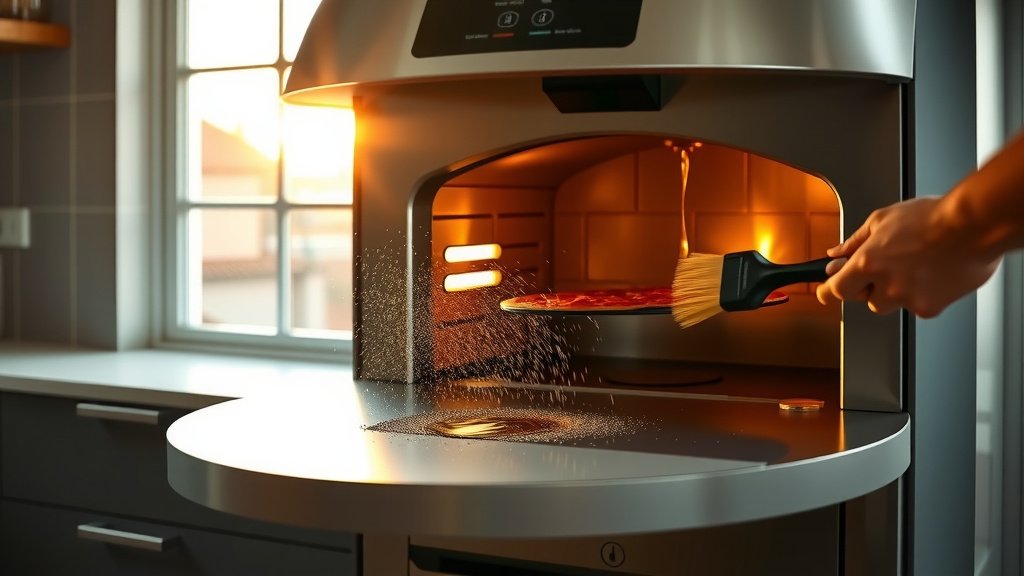
Seasoning a new pizza oven is a crucial step to prepare its cooking surfaces for high-temperature cooking and prevent dough from sticking.
This process, often called a “burn-in” or “curing,” helps remove any manufacturing oils or residues and creates a more durable, non-stick cooking environment for your pizza oven.
Want the quick rundown on seasoning your new pizza oven? Here’s the gist:
- Before anything, clean your oven thoroughly to remove dust and debris.
- Perform an initial low-temperature burn-in to bake off manufacturing residues.
- Gradually increase the heat, then allow the oven to cool completely.
- For metal parts, a thin layer of high-smoke-point oil helps prevent rust and build up a protective layer.
- Repeat the heating and cooling cycles a few times for best results.
How To Season A New Pizza Oven?
To season a new pizza oven, you will clean it, perform an initial low-temperature burn-in, apply a thin layer of suitable oil to metal surfaces, and then cure that oil with several heat cycles.
Why Bother Seasoning Your Pizza Oven?
Think of it like seasoning a new cast iron pan. You would not just cook with it straight away, would you? A pizza oven needs similar care.
Seasoning your new oven protects it from rust, especially metal components. It also creates a non-stick surface, which is fantastic for cooking.
Many experts say this process also helps remove any lingering smells from manufacturing. Nobody wants a pizza that tastes like new metal, right?
What You’ll Need For Oven Seasoning
Before you dive in, gather your tools. Having everything ready makes the process smooth and enjoyable.
Essential Cleaning Supplies
You will want some basic items for a quick wipe-down. We found that a simple approach works best.
- A clean, damp cloth
- A dry cloth or paper towels
- Mild soap (optional, for exterior surfaces only)
- A soft brush (for inside stone if needed)
The Right Oils for Metal Parts
For any metal parts that will experience high heat, oil is your friend. Choose wisely, as some oils are better than others.
Many guidelines point to high-smoke-point oils as a good choice (Cleveland Clinic). Think grapeseed, flaxseed, or avocado oil.
These oils can handle the intense temperatures of a pizza oven without burning off too quickly or leaving a sticky residue.
Step-by-Step: The Initial Burn-In
This first heating cycle is where the magic starts. It is not about cooking yet, but about preparing the oven itself.
Preheat Slowly
Start your new pizza oven at a very low temperature. If it is gas, use the lowest setting. For wood-fired, a small, controlled fire is key.
Allow the oven to slowly warm up. This gentle start helps the materials expand evenly and prevents cracking.
Hold the Temperature
Maintain this low heat for about 30 minutes to an hour. Many oven manufacturers suggest this duration.
This step helps burn off any factory oils, dust, or other residues that might have accumulated during production. You might notice some smoke or odors at this point; this is normal.
Let It Cool Down Naturally
After the initial burn, turn off your oven or let the fire die down. Then, let it cool completely on its own.
Do not try to rush this cooling process. Rapid temperature changes can stress the oven materials, especially the stone.
Oiling Your Oven’s Metal Components
Once your oven is cool, it is time to give some love to the metal parts. This often includes the oven door, internal frame, or any metal shelving.
Choosing Your Oil Wisely
As mentioned, pick an oil with a high smoke point. Flaxseed oil is a popular choice among enthusiasts for its polymerization properties.
Avoid olive oil or butter, as they have lower smoke points. These can burn easily and leave a bitter taste or gummy residue.
Applying the Oil Thinly
Using a clean cloth or paper towel, apply a very thin, even layer of oil to all exposed metal surfaces inside the oven.
Wipe off any excess oil. A little goes a long way here; you are aiming for a protective film, not a greasy coating.
Curing the Oil: The Next Heat Cycle
Now that the metal parts are oiled, you need to “cure” that oil. This means heating it to bond with the metal.
Repeat the Heat-and-Cool Process
Fire up your oven again, this time to a slightly higher temperature. Research often connects these repeated cycles with better seasoning (NIH).
Maintain this heat for another 30 minutes to an hour. Then, allow the oven to cool down completely once more.
Repeating this oiling and heating cycle two to three times can build a very durable and effective seasoning layer.
Seasoning for Stone vs. Metal Surfaces
Different materials in your oven need different approaches. It is not a one-size-fits-all situation.
Stone Baking Surfaces
Pizza stones, often made of cordierite, do not get oiled. The seasoning process for stone is primarily about baking off residues through heat.
The porous nature of stone means oil would just soak in and burn, making a mess. Just let the heat do its job.
Metal Oven Parts
The metal parts, like the steel dome or door, are where the oiling technique comes in. This protects them from rust.
This protective layer also helps in heat retention and can improve the oven’s overall performance over time.
| Oven Type Consideration | Wood-Fired Ovens | Gas/Electric Ovens |
|---|---|---|
| Initial Cleaning | Brush out ash, wipe interior. | Wipe interior, check gas lines/elements. |
| First Burn-In | Small, low fire, slowly increase. | Lowest setting, gradually increase. |
| Oiling Metal Parts | Apply to metal dome, door, chimney. | Apply to metal interior, door. |
| Ventilation | Ensure good draft, outdoor use only. | Use in well-ventilated area. |
Maintaining Your Oven’s Seasoning
Seasoning is not a one-time event. A little ongoing care keeps your oven in top shape.
Regular Light Cleaning
After each use, once the oven cools, give it a quick brush or wipe down. Remove any food debris or ash.
Avoid harsh chemical cleaners, especially on cooking surfaces. They can strip away your hard-earned seasoning.
Re-Seasoning When Needed
If you notice rust forming on metal parts, or if food starts sticking more often, it might be time to re-season.
Just repeat the oiling and curing steps for the affected areas. It is like giving your oven a spa day!
Your Pizza Oven Seasoning Checklist
Here’s a quick list to make sure you’ve covered all the bases for seasoning your new pizza oven.
- Read your oven’s specific manual first.
- Clean all interior surfaces thoroughly.
- Perform the initial low-temperature burn-in.
- Let the oven cool completely.
- Apply a thin layer of high-smoke-point oil to metal parts.
- Heat the oven to cure the oil, then cool again.
- Repeat the oiling and curing steps 2-3 times.
- Ensure adequate ventilation throughout the process.
Conclusion
Seasoning your new pizza oven is a straightforward process that pays off big time. It ensures your oven lasts longer, performs better, and delivers consistently delicious pizzas.
Taking the time for this initial preparation prevents common issues like sticking and rust. With a properly seasoned oven, you are ready to enjoy countless pizza-making adventures!
What kind of oil is best for seasoning a pizza oven?
The best oils for seasoning metal parts of a pizza oven are those with a high smoke point, such as grapeseed oil, flaxseed oil, or avocado oil. These oils can withstand the high temperatures without burning or leaving gummy residues.
Can I use my new pizza oven without seasoning it?
While you technically can use it, it is not recommended. Seasoning helps remove manufacturing residues, prevents rust on metal components, and creates a more non-stick cooking surface. Skipping this step can lead to food sticking and a shorter oven lifespan.
How long does the seasoning process take for a pizza oven?
The entire seasoning process, including multiple heat and cool cycles, can take several hours over a day or two. Each heat cycle might last 30-60 minutes, followed by a cooling period, which also takes time.
Do I need to season the pizza stone in my oven?
No, you do not need to season the pizza stone with oil. Pizza stones are porous and will absorb oil, which would then burn and create unwanted odors and flavors. The stone itself seasons naturally with use and high heat.
How often should I re-season my pizza oven?
You generally only need to re-season metal parts of your pizza oven if you notice signs of rust, or if food begins to stick more frequently. Regular light cleaning after each use often helps maintain the initial seasoning for a long time.