
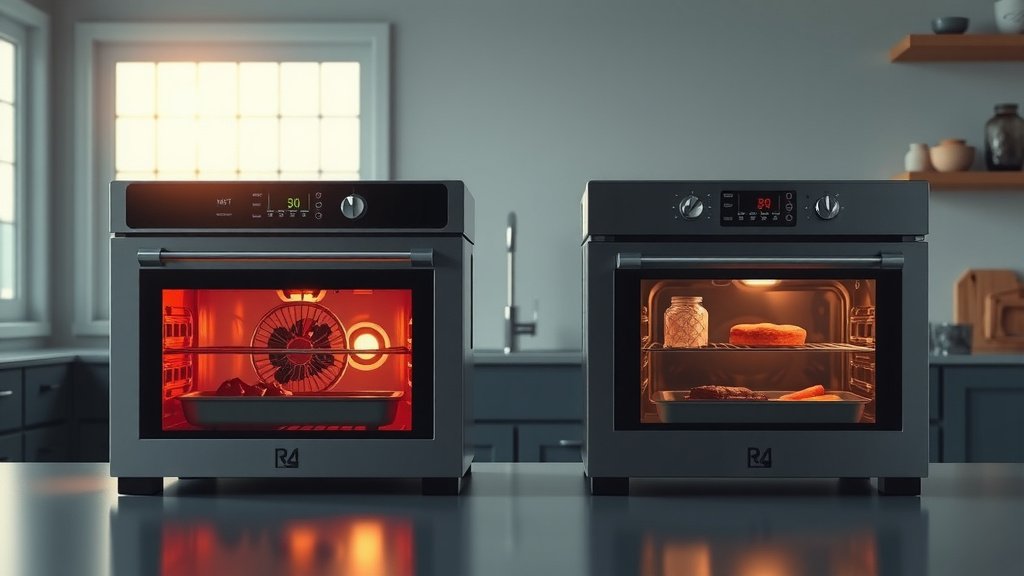
An infrared oven cooks your food directly using electromagnetic radiation, similar to how the sun warms your skin. A convection oven, on the other hand, bakes by circulating hot air around the food, providing even heating and faster cooking.
Both types offer distinct benefits for different cooking needs, affecting everything from browning to cooking time. Understanding these differences helps you choose the right tool for your kitchen.
- Infrared ovens use radiant heat, cooking food quickly and directly from the surface inward.
- Convection ovens use a fan to circulate hot air, ensuring even cooking and browning throughout.
- Infrared excels at searing, grilling, and achieving crispy textures fast.
- Convection is ideal for baking, roasting, and multi-rack cooking with consistent results.
- Your choice often depends on your primary cooking tasks and desired food textures.
What Is The Difference Infrared Vs Convection Oven?
The core difference between infrared and convection ovens lies in how they transfer heat to your food. One uses direct energy, the other moves hot air.
Understanding Convection Ovens
Imagine a tiny wind tunnel for your food. That’s essentially what a convection oven creates. It has a fan and an exhaust system that circulate hot air continuously throughout the oven cavity.
How Convection Heats Your Food
This moving air cooks food more evenly and often faster than a traditional oven. The circulated heat removes the “cold spots” common in standard ovens, leading to consistent browning and cooking (Cleveland Clinic).
It’s like having a gentle breeze push the heat around every surface of your dish. This airflow helps in rendering fats and crisping surfaces beautifully.
Understanding Infrared Ovens
Think about feeling the warmth of the sun on your face, even on a chilly day. That’s infrared energy at work. Infrared ovens use radiant heat technology.
The Science of Radiant Cooking
These ovens emit infrared waves that directly penetrate the food’s surface. This direct energy transfer cooks food from the outside in, often creating a crisp exterior quickly.
Many experts say this direct heat can be very efficient. It heats the food itself, not just the air around it, offering a unique cooking experience.
Convection vs. Infrared: A Quick Comparison
Let’s break down the main points so you can see them side-by-side. This table offers a clear picture of their core features and cooking styles.
| Feature | Infrared Oven | Convection Oven |
|---|---|---|
| Heat Transfer Method | Radiant energy, direct penetration | Circulating hot air via a fan |
| Cooking Speed | Often faster, especially for searing | Faster and more even than conventional ovens |
| Browning/Crisping | Excellent for surface browning and crisping | Promotes even browning all over |
| Moisture Retention | Can retain moisture well due to quick cooking | Can sometimes dry out delicate foods if not adjusted |
| Best For | Searing meats, grilling, quick reheating, pizzas | Baking, roasting, casseroles, multiple dishes at once |
| Preheating Time | Generally very fast | Faster than conventional, but slower than infrared |
When to Use Which Oven
Choosing between them often depends on what you are making. Do you want crispy chicken or a perfectly uniform cake? Your culinary goal guides your oven choice.
Perfect for Convection: What to Cook
Convection ovens are your best friend for anything that needs even, consistent heating. Think about those big holiday meals. You can often cook multiple trays of cookies or a large roast with confidence.
Many home chefs find convection ideal for baking bread, roasting vegetables, and cooking casseroles. The circulating air reaches every corner, preventing unevenly cooked dishes (NIH research on heat transfer).
Best Suited for Infrared: Your Go-To Dishes
Do you love a good sear on your steak or crispy chicken skin? An infrared oven can be a game-changer. It’s fantastic for quickly browning and cooking foods that benefit from intense, direct heat.
We found that infrared excels at tasks like grilling sandwiches, quickly melting cheese, or even reheating leftovers without making them soggy. It gives food that “fresh from the grill” texture.
Benefits and Drawbacks: Convection
Like any kitchen appliance, convection ovens have their highs and lows. Knowing these helps you decide if they align with your cooking habits.
Pros of Convection Cooking
- Even Baking: The fan ensures consistent temperatures, meaning no more burnt edges and raw centers.
- Faster Cooking: Food generally cooks 25% faster, saving you time.
- Better Browning: Circulating air leads to richer, more uniform browning on everything from pastries to poultry.
- Multi-Rack Cooking: You can cook several dishes at once without rotating them.
Cons of Convection Cooking
Sometimes, the strong airflow can dry out delicate items. You might need to adjust recipes, lowering the temperature or reducing cook time (Mayo Clinic guidance on cooking).
For some custards or soufflés, the airflow might even disrupt their delicate structure. It’s not a universal solution for every single dish.
Benefits and Drawbacks: Infrared
Infrared ovens also bring their unique set of perks and considerations to your kitchen countertop. Are they a match for your culinary aspirations?
Pros of Infrared Cooking
- Speed: They cook very quickly, sometimes reducing total cooking time significantly.
- Energy Efficiency: Since they heat food directly, they can be more energy-efficient for certain tasks.
- Searing Power: Excellent for achieving a beautiful, crispy crust on meats and other foods.
- Compact Size: Often available in smaller, countertop models, saving space.
Cons of Infrared Cooking
The intense, direct heat means you need to watch your food closely to prevent burning. There’s a learning curve to mastering an infrared oven.
They might not be ideal for larger items that need through-and-through even cooking without constant turning. Uneven cooking can happen if food is too close to the heat source.
Making Your Final Choice
Choosing your oven is about matching its strengths to your cooking style. Do you frequently bake or mostly quick-sear? Think about your kitchen’s needs.
Here’s a simple checklist to guide you in finding the oven that fits your home and cooking preferences:
- Will you mostly bake cakes and cookies?
- Do you often roast large cuts of meat or whole chickens?
- Are you looking for speed for quick weeknight meals?
- Is achieving a crispy crust a top priority for you?
- Do you plan to cook multiple dishes simultaneously?
- How much kitchen counter space do you have available?
Conclusion
Both infrared and convection ovens bring distinct advantages to your kitchen. A convection oven uses circulating hot air for even baking and roasting, perfect for consistency and multi-rack cooking. An infrared oven, using direct radiant heat, excels at fast cooking, searing, and achieving crispy textures. Your ideal choice really depends on your go-to dishes and how you like your food to turn out. Consider what you cook most often, and you’ll find the perfect match for your culinary adventures.
Frequently Asked Questions
Do infrared ovens cook faster?
Yes, infrared ovens generally cook food faster due to their direct radiant heat transfer. They don’t need to heat the air around the food, leading to quicker cooking times, especially for surface-level browning and searing.
Can you convert a regular oven to convection?
No, you cannot convert a standard oven into a true convection oven. A convection oven requires a built-in fan and exhaust system to circulate air, which a conventional oven lacks. Some accessories might help circulate air, but they won’t replicate a true convection system.
Is an infrared oven good for baking?
Infrared ovens can bake, but they might not be ideal for delicate baked goods like cakes or soufflés, which require gentle, even heat. They excel at baking things that benefit from a crispy exterior, such as pizzas or certain pastries, but need careful monitoring.
Which oven is better for large roasts?
For large roasts, a convection oven is generally preferred. The circulating hot air ensures that the entire roast cooks evenly, from the center to the edges, preventing one side from burning while another remains undercooked. This leads to a consistently tender and juicy result.
What oven type is common in restaurants?
Many professional restaurants often use commercial convection ovens. Their ability to cook food quickly and evenly, along with the capacity for multi-rack cooking, makes them highly efficient for high-volume food preparation. Some specialized kitchens might use infrared for specific searing or finishing tasks.
