
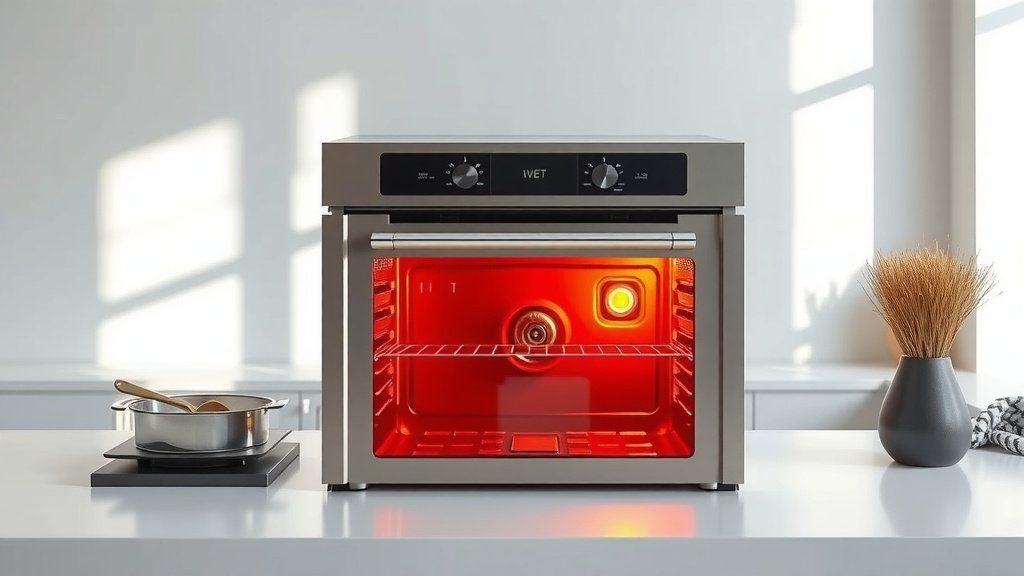
An infrared oven operates by emitting electromagnetic radiation that directly penetrates and heats food molecules, rather than relying on hot air circulation.
This direct energy transfer cooks your meals more efficiently and often achieves superior browning and crispiness on the surface of your dishes.
Here’s a quick peek at what makes infrared ovens special:
- Infrared ovens cook food by direct radiant heat, much like the sun warms your skin.
- They can often cook meals faster than traditional ovens, saving you time.
- You’ll likely notice more even cooking and better browning on your favorite foods.
- They are becoming a popular choice for their energy efficiency and precise results.
- Understanding their unique heating method helps you master delicious outcomes every time.
How Does An Infrared Oven Work?
An infrared oven employs electromagnetic radiation to transfer heat directly to your food, bypassing the need to heat the air around it first.
This direct energy transfer heats food molecules from within, allowing for quicker cooking and often a crisper finish.
Understanding Infrared Energy
What exactly is infrared energy? Think of it as a specific type of light we can’t see, but we can certainly feel as heat.
It’s part of the electromagnetic spectrum, just like radio waves or visible light, existing beyond the red end of the spectrum.
When you stand in the sun, you feel its warmth, right? That’s largely infrared radiation at work, directly warming you.
Infrared ovens harness this same principle, sending these heat-carrying waves straight to your lasagna or roasted chicken.
The Science of Direct Heat Transfer
In a traditional oven, you rely on hot air, which then heats your food. This is called convection.
Infrared ovens work differently; they send waves that are absorbed by the food’s surface, converting that energy into heat.
This process means your food starts cooking almost instantly as the infrared rays hit it, often cooking from the outside in.
Infrared Emitters: The Heart of the Oven
Inside an infrared oven, you’ll find special heating elements designed to emit infrared radiation.
These emitters often glow red-hot, visibly showing where the radiant energy is being produced.
We found that these elements are strategically placed to ensure even distribution of the infrared waves throughout the cooking cavity.
This thoughtful design helps ensure that all parts of your meal receive consistent radiant heat.
Infrared vs. Convection: A Quick Look
You might be wondering how an infrared oven stacks up against the familiar convection oven.
The main difference lies in how heat reaches your food, which affects cooking speed and results.
| Feature | Infrared Oven | Convection Oven |
|---|---|---|
| Heating Method | Direct radiant heat | Hot air circulation (fan) |
| Cooking Speed | Generally faster | Faster than conventional, slower than infrared |
| Browning/Crisping | Excellent, quick surface browning | Good, even browning over time |
| Preheating Time | Often quicker or not needed | Requires preheating to desired temp |
| Moisture Retention | Can help retain moisture (sears quickly) | Can dry out some foods if overcooked |
Why Choose an Infrared Oven?
So, why would you consider bringing an infrared oven into your kitchen? Many users point to several compelling advantages.
One of the biggest draws is the significantly reduced cooking time, which is a real bonus on busy weeknights.
Faster Cooking, Even Results
Because infrared energy heats food directly, you don’t have to wait for the entire oven cavity to reach temperature.
This means your dinner gets on the table quicker, and we found that food often cooks more evenly with a consistent crust.
Many culinary experts say that the direct heat transfer can also lead to a better sear on meats, locking in juices effectively.
Imagine perfectly roasted vegetables or a chicken with incredibly crispy skin, all in less time.
Energy Efficiency and Precision
Since infrared ovens don’t need to heat a large volume of air, they can be more energy-efficient for certain tasks.
Research suggests that their targeted heating reduces wasted energy, which is great for your utility bill and the environment.
Cooking with Infrared: What to Expect
When you first start using an infrared oven, you might notice a few differences compared to your old oven.
The cooking process feels more direct and powerful, almost like grilling inside your oven.
You’ll often find that your food’s exterior browns beautifully and quickly, creating that delicious crust many people love.
This rapid surface browning is a hallmark of infrared cooking, distinguishing it from traditional methods.
Tips for Using Your Infrared Oven
Ready to get the most out of your infrared oven? Here are some simple pointers:
- Start with slightly lower temperatures and shorter cooking times than recipes suggest.
- Keep an eye on your food, especially at first, as it cooks more quickly than you might expect.
- Use oven-safe dishes that can withstand higher heat; metal pans often work very well.
- Consider using a meat thermometer to ensure larger cuts of meat are cooked thoroughly.
- Don’t overcrowd the oven; allow space for the infrared rays to reach all food surfaces.
Common Misconceptions
Some people worry that infrared ovens might cook food unevenly or dry it out, but this isn’t necessarily true.
With proper use, many users find they achieve incredibly even cooking and dishes that remain wonderfully moist inside.
Another myth is that infrared ovens are only for certain types of food. While they excel at roasting and crisping, they are versatile.
From baking to broiling, an infrared oven can handle a wide range of culinary tasks, often with impressive results.
Maintaining Your Infrared Oven
Keeping your infrared oven in top shape is pretty straightforward, much like caring for any other appliance.
Regular cleaning is key to ensuring the infrared elements remain unobstructed and efficient.
We found that wiping down the interior after each use helps prevent food splatters from baking onto surfaces.
Always consult your oven’s manual for specific cleaning instructions and any unique maintenance tips (Manufacturer Guidelines).
Here’s a quick maintenance checklist to keep your infrared oven happy:
- Wipe interior spills promptly after cooling.
- Clean the oven racks regularly with warm, soapy water.
- Inspect heating elements for any buildup, carefully cleaning as advised by the manual.
- Ensure the oven door seal is clean and intact for efficient operation.
- Periodically check for crumbs or debris under the heating elements.
Conclusion
Understanding how an infrared oven works reveals a fascinating and efficient way to cook your meals. By utilizing direct radiant heat, these ovens offer a unique blend of speed, evenness, and quality results.
You’ll likely discover that they excel at creating beautifully browned and crispy dishes, all while potentially saving you time and energy. It’s a technology that truly elevates your home cooking, making dinner preparation a more enjoyable and less time-consuming experience.
FAQs About Infrared Ovens
Can I use any baking dish in an infrared oven?
Generally, yes, you can use most oven-safe baking dishes. However, metal pans often work best as they conduct heat well and can help with browning. Avoid highly reflective or very thin dishes that might block or deflect the infrared waves.
Do infrared ovens need to preheat?
Some infrared ovens boast minimal or no preheating time because they heat food directly. Others may still recommend a short preheat for best results, especially for baking. Always check your specific model’s instructions for optimal performance.
Is infrared cooking healthier?
The health aspect of cooking depends more on the ingredients and cooking methods (like grilling versus deep-frying) than the heat source itself. Infrared ovens can help sear foods quickly, potentially locking in nutrients, but they don’t inherently make food healthier just by their heating method.
Can an infrared oven replace my microwave?
While an infrared oven can reheat food, it typically does so by cooking or crisping, which is different from a microwave’s molecular vibration. For quick reheating, a microwave is usually faster, but an infrared oven can offer better texture and taste for leftovers.
Are infrared ovens safe to use?
Yes, infrared ovens are safe when used according to manufacturer guidelines. The infrared radiation they emit is non-ionizing, meaning it doesn’t pose the same risks as X-rays. Like any oven, ensure proper ventilation and follow safety precautions to prevent burns.
