
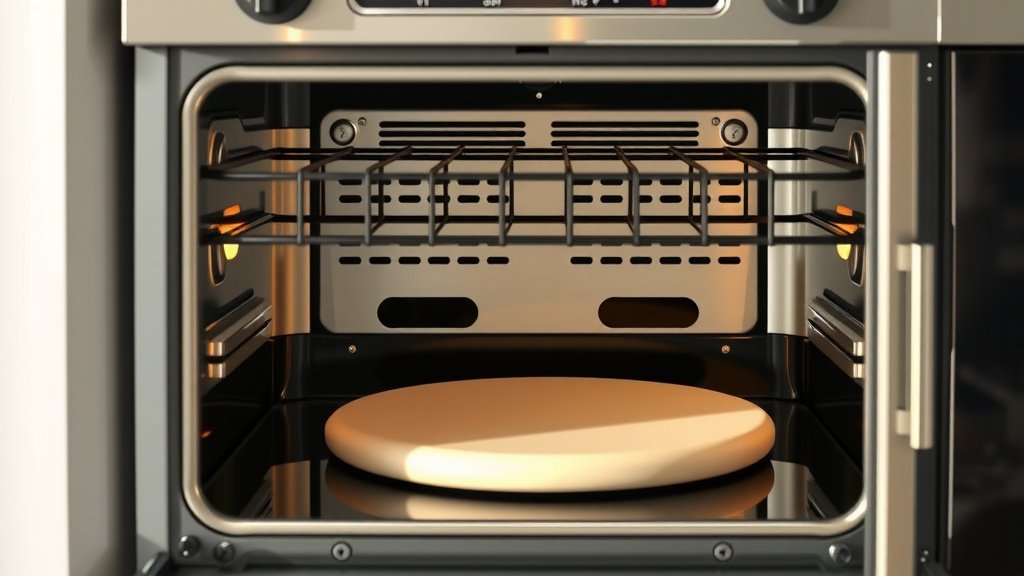
Yes, you can absolutely use a pizza stone in a gas oven to achieve a wonderfully crispy crust, often bringing a touch of pizzeria quality to your homemade pizzas.
For the best results with a pizza stone in your gas oven, proper preheating and stone placement are key to mimic the intense, even heat needed for perfect pizza.
- You can successfully use a pizza stone in a gas oven for crispy homemade pizza.
- Preheating your pizza stone for at least 45 minutes to an hour at your oven’s highest temperature is essential.
- Place the pizza stone on the middle or lower-middle rack to get direct heat for the crust.
- Cordierite stones are often recommended for their thermal shock resistance and even heating.
- Always handle a hot stone with extreme care and never use soap to clean it.
Can You Use A Pizza Stone In Gas Oven?
Absolutely, you can use a pizza stone in a gas oven, and it’s a fantastic way to elevate your homemade pizzas to a new level of deliciousness. This tool truly helps your gas oven become a pizza-making powerhouse.
You might wonder if gas ovens are really up to the task. Many home cooks like you have found that with the right technique, a pizza stone in a gas oven works beautifully (Cook’s Illustrated).
Why Even Bother with a Pizza Stone?
Have you ever baked a pizza at home only to find the crust a bit… soggy? That’s a common problem. A pizza stone solves this by mimicking a traditional brick oven.
It creates a super-hot, direct cooking surface for your pizza dough. This intense heat quickly cooks the crust, making it beautifully crisp and golden brown.
The Magic of Thermal Mass
Think of your pizza stone as a heat battery. It absorbs and holds a lot of heat, much more than your oven’s metal racks. When you slide your pizza onto it, this stored heat is immediately transferred to the dough.
This quick heat transfer is what gives you that coveted crispy crust. It ensures the bottom cooks fast before the toppings get overdone or the dough turns chewy.
Gas vs. Electric Ovens: What’s the Difference?
Gas ovens and electric ovens heat up differently. Gas ovens tend to have more humidity and can have slightly less even heat distribution compared to electric ovens.
Electric ovens often use radiant heat more consistently from top and bottom elements. Gas ovens, with their open flame, might create areas of more intense heat.
Understanding Gas Oven Hot Spots
Because gas ovens use an open flame, they can sometimes have hot spots. This means some areas inside your oven might be hotter than others. Don’t worry, this isn’t a deal-breaker for your pizza stone.
We found that understanding these potential differences helps you position your stone better. It lets you get the most from your oven, regardless of its quirks.
Getting Your Pizza Stone Ready for Action
The single most important step for success is proper preheating. You can’t just toss the stone in and expect magic right away. It needs time to soak up all that heat.
Many experts say you should preheat your pizza stone for at least 45 minutes, and often up to an hour, at your oven’s highest temperature (King Arthur Baking Company). This ensures the stone is piping hot.
The Perfect Placement for Your Stone
Where you put the stone really matters. For most gas ovens, placing the stone on the middle or lower-middle rack works best. This position allows the flame to heat the stone directly.
It helps you achieve maximum heat transfer to the bottom of your pizza. This placement helps avoid burning the top while waiting for the crust to cook through.
Choosing the Right Pizza Stone
Not all pizza stones are created equal, and some are better suited for the high heat of a gas oven. You’ll mostly find stones made from ceramic, cordierite, or even steel.
Cordierite stones are often a favorite because they are known for their excellent thermal shock resistance. This means they are less likely to crack when exposed to rapid temperature changes (Food52).
Considerations for Stone Thickness
Thicker stones (around 3/4 to 1 inch) tend to hold heat better and release it more consistently. Thinner stones heat up faster but might lose heat more quickly.
For a gas oven, a thicker stone can really help even out those potential hot spots. It acts as a more substantial heat reservoir, giving you a more stable cooking surface.
Here’s a quick comparison of common pizza stone materials:
| Stone Material | Pros | Cons |
|---|---|---|
| Ceramic | Affordable, good heat retention | Can be prone to thermal shock/cracking |
| Cordierite | Excellent thermal shock resistance, durable, even heating | Typically more expensive |
| Steel | Superior heat conductivity, virtually indestructible | Very heavy, higher price point |
Safety First! Using Your Stone Wisely
A hot pizza stone is, well, extremely hot! Always use thick oven mitts when handling it, especially when removing it from the oven. You don’t want any accidental burns.
Also, avoid placing a cold pizza stone directly into a very hot oven, or vice-versa. This can cause thermal shock and lead to cracking. Always heat it slowly with the oven.
A Quick Checklist for Pizza Success
Want to ensure your gas oven pizza is a masterpiece every time? Follow these simple steps:
- Preheat stone for at least 45-60 minutes.
- Place stone on the middle or lower-middle rack.
- Use a pizza peel lightly dusted with flour or cornmeal.
- Avoid overcrowding the stone with toppings.
- Never wash your stone with soap.
Cleaning Your Pizza Stone: The Dos and Don’ts
Cleaning your pizza stone is simpler than you might think, but there are some critical rules. First, never use soap or detergents. The porous stone will absorb the soap, and your next pizza might taste like dish soap!
Instead, let the stone cool completely. Then, simply scrape off any stuck-on food bits with a metal spatula or brush. A damp cloth can wipe away most residue, but avoid submerging it in water.
Troubleshooting Common Pizza Stone Issues
What if your pizza sticks to the stone? This often happens if the stone isn’t hot enough or if you didn’t use enough flour or cornmeal on your pizza peel. Make sure your peel is well-dusted before sliding the pizza.
If your stone cracks, it’s usually due to thermal shock—sudden temperature changes. Always let it heat and cool with the oven. Sometimes, hairline cracks are just cosmetic and don’t affect performance.
Conclusion
Using a pizza stone in your gas oven is not only possible but also a game-changer for homemade pizza. By understanding how your gas oven heats and following best practices for preheating, placement, and care, you can achieve restaurant-quality crispy crusts right in your kitchen. So go ahead, get that stone, and get ready for some truly amazing pizza nights!
Can I use parchment paper on a pizza stone?
While you can use parchment paper on a pizza stone, it’s generally not recommended for the entire cook time. Parchment paper has a maximum temperature rating, usually around 400-450°F, which your pizza stone will exceed. It might burn or char, and it also creates a barrier, preventing direct heat transfer needed for that super-crispy crust.
How do I transfer pizza to a hot stone safely?
The safest and easiest way to transfer pizza is with a pizza peel. Prepare your pizza on the peel, making sure the peel is lightly dusted with flour or cornmeal to prevent sticking. With a quick, confident jerk, slide the pizza from the peel onto the hot stone in the oven. Practice makes perfect!
Does a pizza stone need to be seasoned?
Unlike cast iron, pizza stones generally do not require seasoning. Over time, your pizza stone will naturally darken and develop a non-stick surface from oils and residue, but you don’t need to apply oil or grease to “season” it before use. In fact, adding oil can cause it to smoke or develop off-flavors.
Can I cook other foods on a pizza stone in a gas oven?
Absolutely! A pizza stone is wonderful for more than just pizza. You can use it to bake bread, flatbreads, calzones, and even cookies (on parchment paper, if preferred). Any food that benefits from a direct, high-heat surface and a crispy bottom will do well on a preheated pizza stone.
How long does a pizza stone last?
The lifespan of a pizza stone varies greatly depending on its material, care, and frequency of use. A well-cared-for cordierite stone can last for many years, even decades. Ceramic stones might crack sooner due to thermal shock if not handled carefully. Avoiding sudden temperature changes and proper cleaning are key to extending your stone’s life.
