
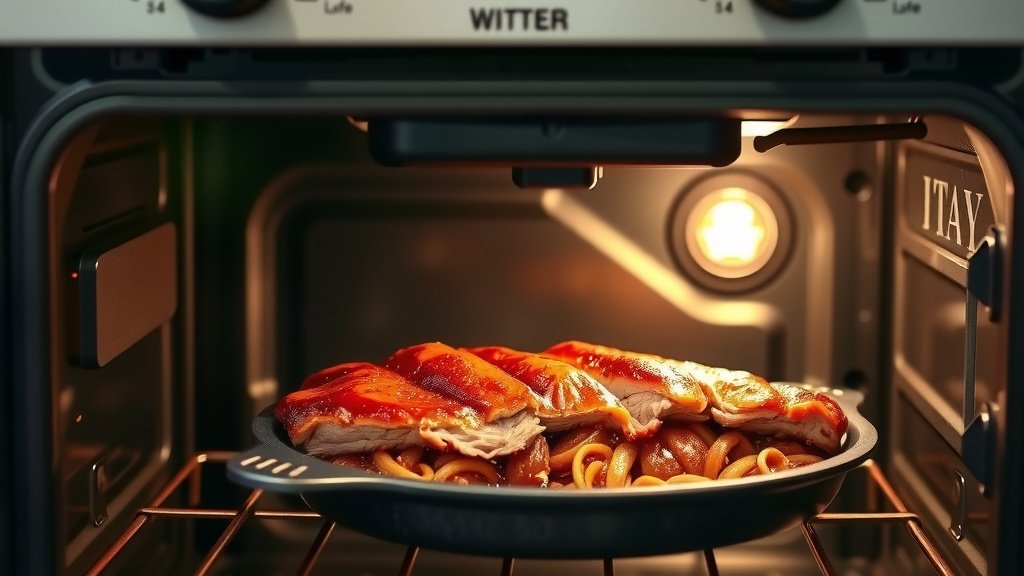
To cook delicious pulled pork in a gas oven, you’ll slow-roast a pork shoulder or butt at a low temperature, typically between 225°F and 275°F (107°C-135°C), until it reaches an internal temperature of 200-205°F.
This patient, low-heat method allows the tough connective tissues to completely break down, ensuring your pulled pork is incredibly tender, juicy, and falls apart effortlessly.
Here’s a quick overview of how to achieve perfect pulled pork:
- Choose a pork shoulder (Boston butt) for the best results.
- Season the pork well and consider searing it before cooking.
- Cook at a low oven temperature (225-275°F) for several hours.
- Monitor the internal temperature until it hits 200-205°F.
- Rest the pork, then easily shred it for a fantastic meal.
How To Cook Pulled Pork In A Gas Oven?
Cooking incredibly tender pulled pork in your gas oven is a straightforward process that simply requires a little patience and the right approach.
You’ll soon be enjoying a flavorful, fall-apart meal that’s perfect for sandwiches, tacos, or a hearty platter.
Why Your Gas Oven Excels at Pulled Pork
Gas ovens often provide a slightly moister cooking environment compared to electric ovens due to the natural byproducts of gas combustion.
This added humidity can be a real advantage for long, slow cooks, helping to keep your pork shoulder from drying out over many hours of roasting (Food Science Institute).
Selecting the Ideal Pork Cut
For outstanding pulled pork, you’ll want a pork shoulder, often labeled as “pork butt” or “Boston butt” at the grocery store.
This cut boasts a perfect ratio of fat and connective tissue, which transforms into that signature melt-in-your-mouth texture when slowly cooked (USDA guidelines).
Gathering Your Essentials
Before you dive into the cooking, it’s always a good idea to have all your tools and ingredients ready.
This makes the entire process seamless and ensures you won’t have to scramble for items mid-cook.
- A sturdy roasting pan with a rack
- Reliable meat thermometer (a game-changer for accuracy!)
- Heavy-duty aluminum foil
- Tongs or meat shredding claws
- A 4-8 pound pork shoulder (bone-in or boneless)
- Your preferred dry rub or seasoning blend
- A splash of liquid (like apple cider vinegar or chicken broth)
Prepping Your Pork for Perfection
A little preparation goes a long way in building flavor and ensuring a fantastic outcome for your pulled pork.
Think of it as setting the stage for a culinary masterpiece.
Trimming and Rubbing Your Pork
Many chefs suggest trimming off any excessively thick fat cap, leaving about a quarter-inch layer.
This thin layer provides moisture without making the final product overly greasy.
Next, apply your chosen dry rub generously all over the pork, pressing it in to form a nice, flavorful crust.
Searing for Depth of Flavor
Searing the pork before it enters the oven is an optional step, but it adds a significant layer of rich flavor and a beautiful crust.
Heat a large, oven-safe skillet with a little oil over medium-high heat, then sear the pork on all sides until it’s nicely browned.
Setting Up Your Gas Oven for Success
The key to tender pulled pork is a consistently low oven temperature.
We found that a range of 225°F to 275°F (107°C-135°C) consistently delivers the best results.
Oven Rack Placement
Position your oven rack in the middle of the oven.
This ensures that heat circulates evenly around your roasting pan, promoting uniform cooking and preventing any parts from cooking too fast or drying out.
The Slow Roasting Journey
This is where your patience truly pays off, transforming a tough cut into an incredibly tender and flavorful meal.
Remember, “low and slow” isn’t just a catchy phrase; it’s the secret to success.
Moisture is Key: Adding Liquid and Covering
Pour about half a cup of liquid, such as apple cider vinegar, chicken broth, or even water, into the bottom of your roasting pan.
This liquid creates steam, which is crucial for keeping the pork moist and aiding in tenderness during the long cooking process (Cook’s Illustrated).
Cover the pan tightly with heavy-duty aluminum foil. This seal traps all that essential moisture, turning your roasting pan into a miniature, humid cooking chamber.
Monitoring the Internal Temperature
Cooking time varies, but a good estimate is typically 1 to 2 hours per pound of pork.
More important than time, however, is reaching the correct internal temperature. Your pork is done when a meat thermometer reads 200°F to 205°F (93°C-96°C) (USDA food safety guidelines).
At this temperature, the pork will be incredibly tender, and a fork inserted into the thickest part should twist and pull out easily.
The Essential Resting Period
Once your pork reaches that perfect internal temperature, remove it from the oven, but don’t shred it yet!
Let it rest, still covered, for at least 30 minutes to an hour.
This critical resting time allows the meat fibers to relax and reabsorb all those delicious juices, ensuring your pulled pork is maximally tender and juicy.
Shredding for Deliciousness
After resting, use two forks or specialized meat claws to shred the pork directly in the roasting pan.
The meat should practically fall apart with very little effort, a true sign of a perfectly cooked pork shoulder.
Mix the shredded pork with any accumulated pan juices and your favorite barbecue sauce for an irresistible flavor boost.
Your Pulled Pork Checklist:
To help you hit every crucial step, here’s a quick reference:
- Choose a Boston butt or pork shoulder.
- Trim excess fat and apply your dry rub.
- Sear the pork for enhanced flavor (optional).
- Preheat your gas oven to 225-275°F.
- Add liquid to the pan and cover tightly.
- Cook until internal temperature reaches 200-205°F.
- Rest for 30-60 minutes before shredding.
Addressing Common Pulled Pork Questions
Even with careful planning, sometimes little questions pop up.
Here are answers to a couple of common pulled pork concerns you might face.
What if the Pork Isn’t Tender Enough?
If your pork isn’t easily shredding or feels tough, it simply needs more time in the oven.
The connective tissues haven’t fully broken down yet, so put it back in and continue cooking until it reaches the desired internal temperature and fork-tender consistency.
My Pulled Pork Seems Dry!
Dryness can happen if your oven temperature was too high, or if the pork wasn’t covered securely during cooking.
Adding a bit more liquid to the pan initially can help, or you can always mix the finished shredded pork with extra barbecue sauce or broth to add moisture back.
| Oven Temperature | Approximate Cook Time (per lb) | Pros | Considerations |
|---|---|---|---|
| 225°F (107°C) | 1.5 – 2 hours | Maximized tenderness, very moist result | Longest overall cooking duration |
| 250°F (121°C) | 1 – 1.5 hours | Excellent balance of speed and tenderness | Still requires a good amount of patience |
| 275°F (135°C) | 45 min – 1 hour | Faster cooking, can develop more bark | Pork might be slightly less moist |
Conclusion
Cooking pulled pork in a gas oven is a rewarding culinary journey that results in tender, flavorful meat perfect for a variety of dishes.
By focusing on the right cut, a low and slow cooking temperature, and paying attention to that crucial internal temperature, you’ll consistently create pulled pork that’s juicy and falls apart.
It’s a truly satisfying cooking experience that turns a simple cut of meat into a centerpiece meal with minimal hands-on effort, letting your gas oven do the heavy lifting.
Frequently Asked Questions
How long does a 5-pound pork shoulder take to cook in a gas oven?
A 5-pound pork shoulder cooked at 250°F in a gas oven typically takes about 7 to 9 hours to reach the desired internal temperature of 200-205°F. Always use a meat thermometer to confirm doneness rather than relying solely on time.
Do I need to flip the pork shoulder while it’s cooking in the oven?
No, you generally do not need to flip the pork shoulder while it’s slow cooking in the oven. Covering the roasting pan tightly with foil and maintaining a low, consistent temperature ensures even cooking without the need for turning the meat.
What kind of liquid is best to add to the pan for pulled pork?
For pulled pork, many cooks prefer to add liquids that complement the pork’s flavor, such as apple cider vinegar, chicken or vegetable broth, or even a mix of water and apple juice. This helps keep the cooking environment moist and adds subtle flavor.
Can I use an electric oven for pulled pork, or is a gas oven better?
You can absolutely use an electric oven for pulled pork; the principles of low and slow cooking remain the same. Some find gas ovens offer a slightly moister environment, but with proper covering and temperature control, an electric oven yields excellent results too.
What if my pulled pork cooks faster or slower than expected?
It’s very common for cooking times to vary due to differences in ovens and the exact size/shape of the pork. Always rely on your meat thermometer for the true indicator of doneness (200-205°F) rather than strictly following time estimates. If it’s cooking too fast, lower the temperature slightly; if too slow, maintain the temperature and be patient.
