
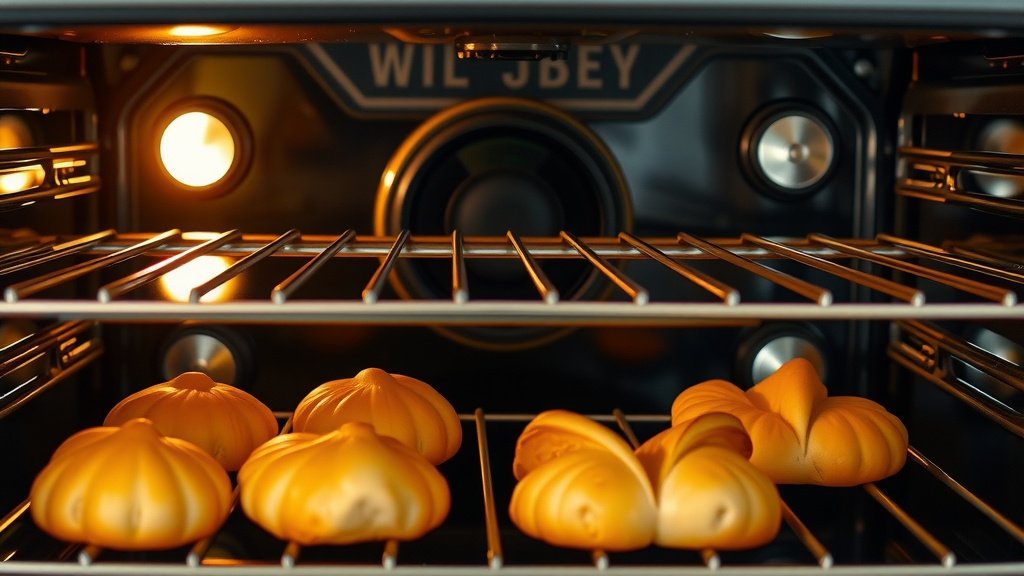
To bake evenly in a gas oven, always preheat it thoroughly and use an oven thermometer to verify the actual temperature inside. Uneven baking often stems from hot spots or incorrect temperature readings.
You can significantly improve your gas oven’s performance by understanding its quirks, like rotating your dishes and using proper bakeware.
-
Always use an oven thermometer to get the true temperature.
-
Preheat your oven longer than you might think necessary.
-
Rotate your food halfway through baking for a consistent cook.
-
Avoid opening the oven door too often to maintain steady heat.
-
Place a pizza stone or baking steel on a lower rack to help distribute heat.
How To Bake In A Gas Oven Evenly?
Baking evenly in a gas oven is entirely possible with a few smart adjustments and habits. The key is understanding how gas ovens typically heat and what you can do to manage that heat. We found that most uneven baking issues are solvable.
Understanding Your Gas Oven’s Heat
Gas ovens often heat from the bottom, causing a common issue: hot spots. This means one area might cook faster than another. It’s like having a campfire; the heat rises, but it’s not always uniform. Many experts say identifying these zones is your first step (USDA).
Why Do Gas Ovens Have Hot Spots?
The burner at the bottom cycles on and off to maintain temperature. This cycling can create blasts of direct heat, leading to areas that are hotter. We found that the bottom and back of the oven are often the warmest zones.
Your Essential Tool: An Oven Thermometer
Can you trust your oven’s display? Probably not entirely. Research often connects inaccurate thermostat readings with baking failures (National Institute of Standards and Technology). An inexpensive, independent oven thermometer is a must-have. It tells you the true internal temperature, not just what your dial says.
Preheat Properly and Patiently
Think of preheating as letting your oven “settle.” Your oven’s preheat indicator might signal readiness quickly, but that’s often just the air temperature. The oven walls and racks need more time to absorb heat. We found that waiting an extra 15-20 minutes after the light goes off makes a big difference. This ensures stable, radiating heat.
Strategic Rack Placement
Where you place your dish matters a lot. If your oven heats mostly from the bottom, putting your food on the lowest rack might lead to a burnt bottom. Consider what you are baking. For cakes, a middle rack often works best. For pizzas, a lower rack might be ideal to crisp the crust.
Rotate Your Dishes for Uniformity
This is perhaps the simplest yet most effective trick. About halfway through the baking time, gently open the oven and rotate your pan 180 degrees. This helps expose all sides of your food to different heat zones. It’s like turning a steak on the grill for an even cook.
The Power of a Baking Steel or Pizza Stone
Many experts recommend using a baking steel or pizza stone. Place it on the lowest rack during preheating. This dense object absorbs and radiates heat steadily, acting as a heat diffuser. It helps to stabilize the oven’s internal temperature and minimize those hot spots. We found that it creates a more even baking surface.
Choosing the Right Bakeware
Bakeware material plays a role in how evenly your food bakes. Dark metal pans absorb more heat and can lead to darker crusts. Glass or ceramic bakeware heats more slowly and retains heat longer. Light-colored metal pans generally promote more even baking. Sometimes, just changing your pan makes all the difference.
| Bakeware Material | Heat Absorption | Best For |
|---|---|---|
| Light Metal (Aluminum) | Reflects heat | Cakes, cookies, lighter crusts |
| Dark Metal (Steel) | Absorbs heat quickly | Pies, breads, crispy crusts |
| Glass/Ceramic | Heats slowly, retains heat | Casseroles, slow roasts, custards |
Don’t Peek Too Often!
Every time you open the oven door, you lose about 25-50 degrees of heat (Ohio State University Extension). This sudden temperature drop can affect your baking, causing cakes to fall or bread to not rise properly. Resist the urge to constantly check your food. Use your oven light and timer instead. You’ll be surprised how much better your results are.
Keeping Your Oven Clean
Built-up grease and food debris can affect your oven’s heating efficiency. These residues can absorb heat unevenly or even create smoke. A clean oven allows heat to circulate freely and consistently. We found that regular cleaning supports even baking.
Calibrating Your Oven (If Needed)
If your oven thermometer consistently reads differently from your oven’s setting, your oven might need calibration. Many ovens have a simple adjustment feature in their controls. Check your oven’s manual for instructions. This small tweak can bring your oven’s temperature readout closer to reality.
The Aluminum Foil Tent Trick
If you notice one part of your dish browning too quickly, you can create a loose foil tent. Simply place a sheet of aluminum foil over the browning area. This acts as a shield, deflecting some of the direct heat. It is a quick fix for preventing over-browning.
Tips for Specific Baked Goods
Different foods have different needs. For delicate items like soufflés, minimize movement. For sturdy breads, a burst of steam can help create a crisp crust. Knowing what your recipe needs helps you adjust your baking strategy.
Your Baking Evenness Checklist:
-
Did you use an oven thermometer?
-
Did you preheat long enough?
-
Is your bakeware appropriate for the recipe?
-
Did you place your food on the correct rack?
-
Are you ready to rotate your dish midway?
-
Is your oven clean and calibrated?
Conclusion
Baking evenly in a gas oven doesn’t require a magic wand, just patience and smart practices. By using an oven thermometer, preheating thoroughly, rotating your dishes, and understanding your oven’s unique heating patterns, you can achieve consistently delicious results. Embrace these simple changes, and you’ll soon be baking like a pro. Your efforts will be rewarded with perfectly golden-brown creations every time.
Can I put a pan of water in my gas oven for even baking?
Yes, placing a pan of water on the lowest rack can introduce moisture into the oven, which can help with crust development for breads and create a more humid environment. Some research suggests that added humidity can improve heat distribution and prevent drying out delicate items. It’s a useful technique for specific recipes.
Why do the bottoms of my baked goods burn in a gas oven?
The bottoms often burn because gas ovens typically have a direct heat source at the bottom. This strong, rising heat can quickly scorch the bottom of your dish. To prevent this, try moving your rack higher, using a lighter colored metal pan, or placing a baking steel/pizza stone on a lower rack to diffuse the heat.
Should I use convection mode in a gas oven for even baking?
Many gas ovens do not have a convection mode. If yours does, convection uses a fan to circulate hot air, which generally leads to more even baking and faster cooking times. However, you often need to reduce the baking temperature by about 25 degrees Fahrenheit and check doneness earlier. If your gas oven has it, it’s worth trying for better uniformity.
How do I find the hot spots in my gas oven?
To find hot spots, you can perform a “toast test.” Lay slices of white bread across your oven racks and bake them at a moderate temperature until browned. The areas where the toast browns fastest are your hot spots. This visual guide will show you exactly where your oven heats most intensely, allowing you to adjust your cooking placement.
Is it better to bake one dish at a time in a gas oven?
For the most even results, especially with delicate items like cakes or soufflés, baking one dish at a time is often preferred. Overcrowding the oven can block airflow and heat circulation, leading to uneven baking. If you must bake multiple dishes, ensure there’s enough space around each one for heat to move freely, and consider rotating them more frequently.
