
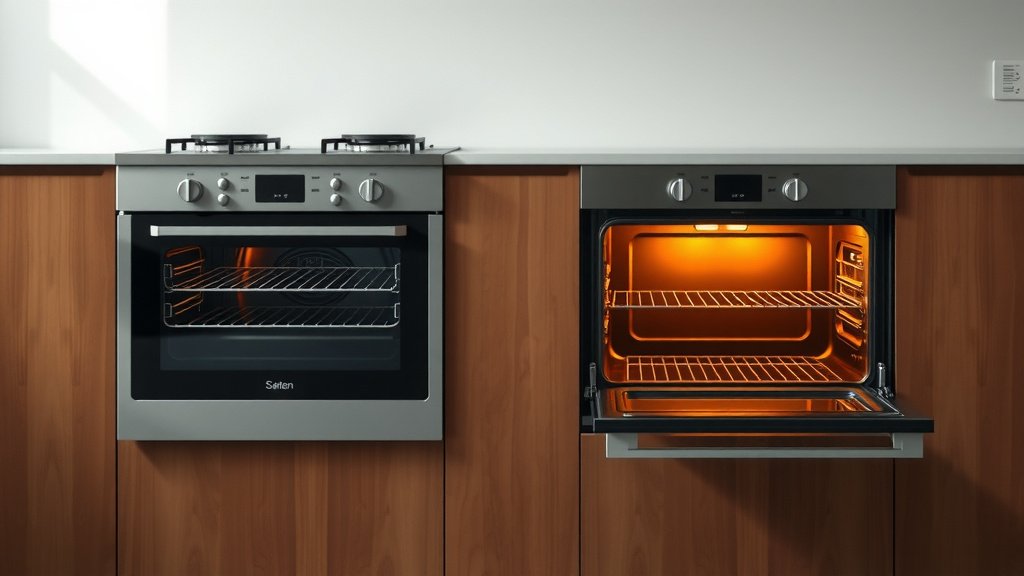
Gas ovens generally provide a moist heat, which can be beneficial for some dishes, but they often have more noticeable temperature fluctuations and hot spots than electric ovens.
While an electric oven may take longer to preheat, it usually maintains a more consistent and even temperature throughout the baking chamber, especially with convection features.
Here’s a quick summary to guide your oven choice:
- Gas ovens offer moist heat, great for roasts, but can have hot spots.
- Electric ovens generally provide dry, consistent heat, ideal for baking.
- Convection technology significantly improves evenness in both types.
- Consider your primary cooking needs: baking favors electric, roasting can favor gas.
- Proper preheating and oven maintenance are key for any oven’s performance.
Does Gas Oven Heat More Evenly Than Electric?
No, electric ovens generally heat more evenly than gas ovens due to their consistent heat distribution and lack of an open flame.
Many experts find that electric models often maintain a more stable temperature, leading to better baking results.
Gas Oven Basics: How Do They Heat?
Gas ovens work by igniting a burner at the bottom. This flame heats the oven cavity. The heat rises, circulating inside. This process creates a moist heat environment, which many home cooks love for specific dishes. Think juicy roasted chicken or tender casseroles (Bon Appétit).
However, this direct flame can sometimes mean the bottom of your oven gets much hotter. Airflow helps distribute this heat, but it’s a natural characteristic of gas models. We found that the heat tends to be strongest near the burner itself.
Electric Oven Basics: The Science Behind the Heat
Electric ovens use heating elements, usually one at the bottom and one at the top. These elements glow red and radiate heat. This radiant heat then warms the air inside the oven. Because there’s no open flame, the heat source is often more spread out.
Electric ovens tend to provide a “dryer” heat. This quality can be a big plus for crispy crusts or perfectly browned cookies. We found that this method generally leads to a more stable temperature throughout the oven space.
The “Evenness” Debate: What Does It Mean?
When we talk about “even heating,” what are we really looking for? It means that every spot in your oven reaches and maintains the same temperature. Imagine baking a tray of cookies: you want them all to brown similarly, right? Uneven heating means some cookies burn while others stay pale.
This is where the gas versus electric discussion gets interesting. Each type has its own heating pattern. Understanding these patterns helps you become a smarter cook and baker. You can then adjust your techniques to get the best results from your own appliance.
Understanding Hot Spots in Ovens
Every oven, whether gas or electric, can have hot spots. These are areas that get hotter than others. In gas ovens, the burner at the bottom often creates a hot zone. In electric ovens, it might be areas directly above the heating elements (Good Housekeeping).
Recognizing your oven’s hot spots is like understanding its personality. You can then rotate your dishes or adjust rack positions. This simple trick can make a big difference in how your food cooks.
Airflow: A Key Player in Evenness
Airflow is surprisingly important for even oven heating. Hot air needs to move freely around your food. If the air gets trapped, you’ll end up with uneven cooking. This is why you should avoid overcrowding your oven.
In many ovens, vents are designed to help circulate air. A well-designed oven, regardless of fuel type, will try to optimize this circulation. Proper airflow ensures that the heat energy reaches all parts of your dish.
Temperature Swings: Gas vs. Electric
Gas ovens tend to have more noticeable temperature swings. The burner cycles on and off more aggressively. This means the temperature inside can dip lower, then surge higher, before settling again (Consumer Reports). While it averages out, these fluctuations can affect delicate baking.
Electric ovens, on the other hand, often maintain a tighter temperature range. Their heating elements cycle more gently. This leads to a more consistent internal temperature, which is a major benefit for precision cooking.
Convection Technology: The Game Changer
Have you heard about convection ovens? They are a fantastic innovation! A convection oven adds a fan that circulates the hot air. This constant movement helps distribute heat much more evenly than a standard oven.
Convection can turn a good oven into a great one. We found that it significantly reduces hot spots and speeds up cooking times. This technology is available in both gas and electric models.
- Faster Cooking: Circulating air transfers heat more efficiently.
- More Even Browning: Hot air reaches all surfaces uniformly.
- Reduced Hot Spots: Fan movement minimizes temperature differences.
- Crispier Textures: Moving air helps to dry out the food’s surface.
When Does Even Heating Matter Most?
Even heating is especially critical for baking. Think about soufflés, cakes, cookies, and delicate pastries. These items need consistent heat to rise properly and bake through without burning. A slight temperature variation can lead to disaster in the baking world.
For roasting meats or vegetables, a little unevenness might be less of an issue. Some people even prefer the slightly varied browning. However, for best overall results, consistent temperatures are always a win.
Comparing Gas and Electric Oven Heating
Let’s put it side-by-side. Here’s a quick overview of how gas and electric ovens stack up on heating characteristics.
| Feature | Gas Oven | Electric Oven |
|---|---|---|
| Heat Source | Bottom burner (open flame) | Top & bottom elements (radiant) |
| Heat Type | Moist heat | Dry heat |
| Temperature Stability | More fluctuations, larger swings | More stable, consistent |
| Preheat Time | Often faster | Generally slower |
| Evenness (Standard) | Can have noticeable hot spots | Generally more even |
| Best For | Roasting, casseroles | Baking, delicate pastries |
Factors Affecting Your Oven’s Performance
It’s not just about gas versus electric. Many other things influence how well your oven heats. The oven’s insulation plays a huge role. Better insulation means less heat loss and more stable temperatures.
The age and cleanliness of your oven also matter. Old, dirty ovens can struggle with consistent heating. Even the type of bakeware you use can make a difference. Dark pans absorb more heat, while light pans reflect it.
Tips for Achieving More Even Baking
Want to get the most out of your oven, no matter its type? Try these simple tips!
- Preheat Thoroughly: Give your oven plenty of time to reach the set temperature and stabilize. Don’t rush it!
- Rotate Your Dishes: Halfway through cooking, turn your baking sheets around. This helps even out any hot spots.
- Don’t Overcrowd: Leave space around your food for air to circulate. Overcrowding blocks heat flow.
- Use Proper Bakeware: Choose light-colored, heavy-gauge bakeware for even browning (Food Network).
- Check Oven Thermometer: Invest in an inexpensive oven thermometer. It helps you know your oven’s true temperature.
- Keep it Clean: Food spills can affect heating elements and airflow. Regular cleaning helps.
Choosing Your Oven: What’s Right for You?
So, which oven is best for you? It really comes down to your cooking style and priorities. If you are a passionate baker, someone who needs precise, consistent heat, an electric oven (especially with convection) is often the better choice. We found that most professional bakers prefer electric ovens for this reason.
If you enjoy roasting, making casseroles, and appreciate a slightly moister cooking environment, a gas oven can be wonderful. It often provides a satisfying heat for savory dishes. Ultimately, both can cook delicious food; it’s about understanding their unique characteristics.
Conclusion
When asking if a gas oven heats more evenly than electric, the answer generally points towards electric ovens. They typically offer more consistent and stable temperatures, which is a major advantage for precise baking. Gas ovens, with their direct flame and moist heat, can have more noticeable hot spots and temperature fluctuations. However, advancements like convection technology significantly improve evenness in both types.
Your ideal oven choice depends on your specific needs. If you’re a serious baker, an electric convection oven will likely be your best friend. If you enjoy roasting and desire that moist heat, a gas oven might suit you well. No matter which you choose, understanding your oven’s quirks and applying smart cooking techniques will help you achieve excellent culinary results every time.
FAQs
Are gas ovens better for roasting?
Many home cooks find gas ovens excellent for roasting. The moist heat produced by a gas flame can help keep meats juicy and prevent them from drying out too quickly, which is a desirable quality for roasts and stews.
Does convection make a gas oven as even as an electric?
Convection technology significantly improves the evenness of heat distribution in both gas and electric ovens. While it greatly reduces hot spots in a gas oven, an electric convection oven often still maintains a slightly more consistent overall temperature due to its fundamental heating method.
Why does my gas oven have hot spots?
Gas ovens often have hot spots because the heat comes from a single burner at the bottom. This direct flame creates a concentrated heat source, leading to areas near the burner being hotter than other parts of the oven cavity. Airflow also plays a role in how this heat spreads.
Is one type of oven cheaper to run?
The cost of running an oven depends on local utility prices for natural gas and electricity. In many regions, natural gas can be cheaper than electricity, but this varies widely. An energy-efficient electric oven might still be more cost-effective in some areas (Department of Energy).
How can I test my oven for even heating?
A simple test involves spreading slices of white bread evenly across a baking sheet and baking them in a preheated oven until toasted. The varying levels of browning on the bread will reveal your oven’s hot and cool spots, helping you understand its heating patterns.
