
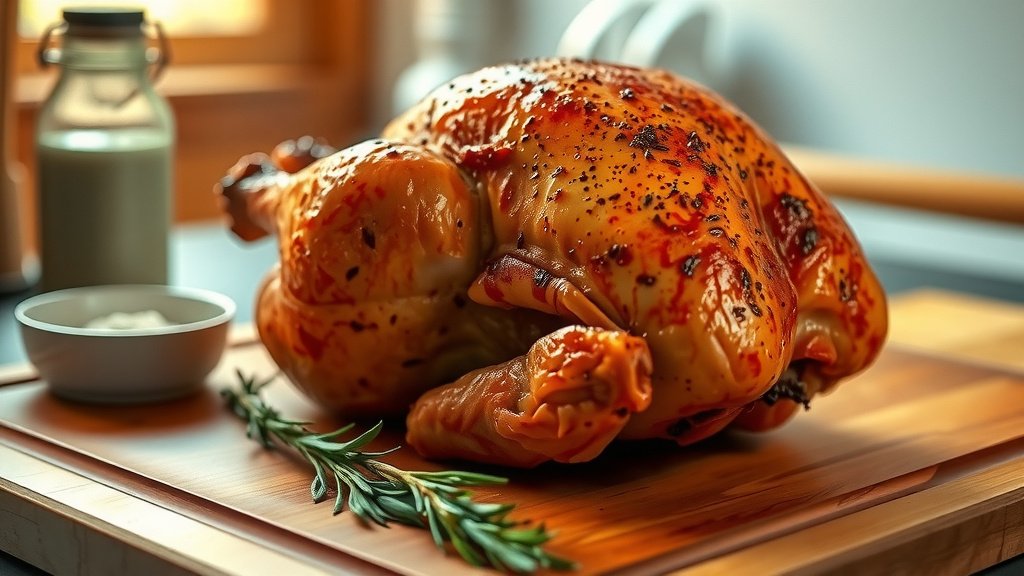
To keep rotisserie chicken juicy, prevent it from drying out after cooking by cooling it quickly, storing it properly in airtight containers, and reheating it gently with added moisture.
The key is to manage temperature and air exposure, ensuring the meat retains its natural juices from the moment it leaves the oven until you serve it again.
TL;DR: Keep your rotisserie chicken delicious and moist with these quick tips:
- Cool chicken fast after buying to stop carryover cooking.
- Shred or carve the chicken before storing in an airtight container.
- Add a splash of broth or water when refrigerating to lock in moisture.
- Reheat gently, ideally in the oven with a little liquid, to avoid dryness.
- Utilize leftover chicken in dishes that add moisture, like soups or stews.
How To Keep Rotisserie Chicken Juicy?
Keeping your rotisserie chicken juicy involves a few simple steps, mainly focusing on how you handle it immediately after purchase, store it, and reheat it.
The goal is to protect the delicate moisture within the chicken’s meat from evaporating.
The Moisture Mystery: Why Does Chicken Dry Out?
Ever wonder why that perfectly cooked chicken goes from tender to tough? It is mostly about moisture loss.
When chicken cools, juices can escape, and reheating often accelerates this process, leaving you with dry, stringy meat.
The Science of Succulence
Chicken meat is packed with water, held within muscle fibers. High heat, especially prolonged heat, causes these fibers to contract, squeezing out that precious moisture.
That is why managing temperature is so important, both when cooking and reheating (NIH).
Immediate Steps for Freshly Bought Chicken
You have just brought home a warm, delicious rotisserie chicken. What is your first move? Do not just leave it on the counter!
Think about its journey from hot display to your plate. Every minute counts for moisture retention.
Cooling Correctly
After you have enjoyed your first serving, the rest needs to cool quickly. Leaving it out too long lets it continue “cooking” from residual heat, drying it out.
Many experts say to get perishable food into the fridge within two hours (USDA Food Safety and Inspection Service).
- First, let the chicken cool on a clean plate for about 30 minutes.
- Then, carve or shred the chicken. This reduces its bulk, allowing it to chill faster.
- Place the pieces in a shallow dish or containers. This faster cooling helps seal in the juices.
Storage Secrets: Fridge and Freezer
Once cooled, where do you put it? The fridge and freezer are your best friends for preservation, but only if you use them correctly.
Proper storage is a game-changer for juicy leftovers.
Airtight is Always Right
Air is the enemy of moisture. When storing chicken in the refrigerator, always use an airtight container.
Consider adding a splash of chicken broth, water, or even a thin layer of gravy to the container before sealing it. This creates a humid environment, keeping the meat moist (Mayo Clinic).
Freezing for Future Feasts
Thinking long-term? Freezing is great. Shred or dice your chicken, then portion it into freezer-safe bags or containers.
Again, a little broth in the bag can work wonders. Be sure to remove as much air as possible before sealing.
Reheating Without Ruin
This is where many people lose the moisture battle. Reheating too fast or too hot can turn juicy chicken into a Sahara desert on a plate.
Gentle heat and added moisture are your secret weapons.
| Reheating Method | Key Steps for Juiciness | Ideal Temp/Time |
|---|---|---|
| Oven | Wrap in foil with a splash of broth. | 300-325°F (150-160°C) for 15-20 mins |
| Stovetop | Sauté with liquid in a covered pan. | Medium-low heat, 5-7 mins |
| Microwave | Cover with a damp paper towel; short bursts. | High, 1-2 mins (check often) |
Oven Revival
For best results, especially with larger pieces, the oven is fantastic. Place chicken in an oven-safe dish with a tablespoon or two of chicken broth.
Cover tightly with foil. This steams the chicken gently, bringing it back to life.
Stovetop Savvy
If you have shredded chicken, a quick sauté on the stovetop works well. Add a little oil or butter and a splash of broth.
Keep the heat low and cover the pan to trap steam.
Microwave Cautions
The microwave is fast but can be harsh. Use it cautiously. Place chicken in a microwave-safe dish, add a little liquid, and cover with a lid or damp paper towel.
Reheat in short bursts, stirring often, to avoid dry spots.
Creative Ways to Use Leftovers (and keep them moist!)
Sometimes, the best way to enjoy “leftover” rotisserie chicken is to transform it! Think beyond just reheating plain pieces.
Incorporating chicken into new dishes naturally adds moisture and flavor.
For example, a creamy chicken pasta or a rich chicken noodle soup will keep your chicken feeling fresh and delicious (Cleveland Clinic).
Common Mistakes to Avoid
Want to ensure your chicken stays moist? Steer clear of these pitfalls:
- Do not leave cooked chicken out at room temperature for hours.
- Avoid storing chicken in uncovered dishes; air exposure dries it out.
- Do not blast chicken in the microwave at full power for long periods.
- Do not reheat the entire chicken if you only need a small portion.
Conclusion
Keeping rotisserie chicken juicy is not a miracle, it is a habit! By being mindful of cooling, storage, and reheating techniques, you can enjoy delicious, moist chicken for days.
Remember, a little care goes a long way in preserving that tender flavor you love. Enjoy your succulent chicken!
How long can you safely store rotisserie chicken in the refrigerator?
You can safely store cooked rotisserie chicken in the refrigerator for 3 to 4 days. Always make sure it is in an airtight container to maintain freshness and prevent bacterial growth.
Can you freeze a whole rotisserie chicken?
Yes, you can freeze a whole rotisserie chicken, but for best results, many experts suggest carving or shredding the meat first. This allows for quicker thawing and better portion control, helping to preserve its texture when reheated.
What is the best way to add moisture when reheating dry chicken?
The best way to add moisture is by using a liquid like chicken broth, water, or gravy. When reheating in the oven or stovetop, add a splash of liquid and cover the dish to create steam, which rehydrates the meat.
Why does my rotisserie chicken sometimes taste rubbery after reheating?
Chicken often tastes rubbery after reheating because it has been overcooked. High, dry heat causes the muscle fibers to tighten excessively, squeezing out moisture and resulting in a tough, rubbery texture. Gentle reheating at lower temperatures is key.
Can I use an air fryer to reheat rotisserie chicken without drying it out?
You can use an air fryer, but it requires careful attention. Reheat at a lower temperature (around 300°F or 150°C) for short bursts, typically 3-5 minutes, and consider brushing the chicken with a little oil or broth to help maintain moisture.
