
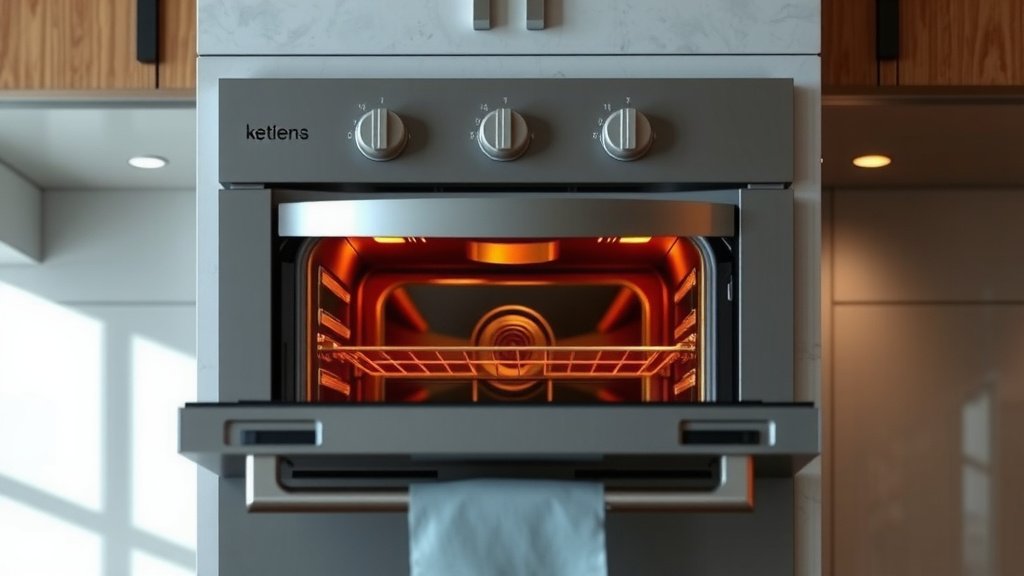
Your electric oven might take a long time to heat up due to a failing bake element, a faulty temperature sensor, or issues with the door seal. These common problems prevent your oven from reaching or maintaining the desired heat efficiently.
Often, your oven simply needs more time to achieve its set temperature, especially with larger capacities or when it’s just starting up.
TL;DR: Is your oven acting sluggish? Here’s a quick overview:
- Slow heating can be normal preheating time.
- A common culprit is a damaged bake element.
- The temperature sensor or thermostat might also be failing.
- Check your oven door seal for any leaks.
- Keeping your oven clean helps it run better.
Why Does My Electric Oven Take So Long To Heat?
An electric oven that takes too long to heat can really throw off your cooking schedule. While some preheating time is normal, excessive delays usually point to a few key issues.
The Normal Preheating Process
Every electric oven needs a bit of time to reach its set temperature. Think of it like warming up a car on a cold morning. For most models, preheating for 10 to 15 minutes is completely normal (Energy Star).
Factors like your oven’s size and the ambient room temperature can also affect this duration. A larger oven simply has more air space and metal to heat up.
Common Culprits Behind Slow Heating
When normal preheating stretches into an eternity, it’s time to dig a little deeper. We often find that one of these components is causing the issue.
A Failing Bake Element
The bake element is the visible heating coil at the bottom of your oven. If it’s not glowing red or has visible breaks, it’s a strong sign of trouble. A partially damaged element might still work, but it won’t heat efficiently.
Many experts say that if your oven heats slowly and unevenly, the bake element is often the first thing to check (Appliance Repair Guide).
Issues with the Temperature Sensor
Your oven’s temperature sensor tells the oven how hot it is inside. It’s usually a small probe sticking out from the back wall. If this sensor is coated with grime or is defective, it can send incorrect readings to the control board.
Research often connects inaccurate temperature readings with a faulty sensor, leading to either slow heating or temperature fluctuations (Consumer Reports).
A Faulty Thermostat
The thermostat works closely with the temperature sensor. It’s the brain telling the elements when to turn on and off. If your oven is taking ages to heat, the thermostat might not be calling for enough heat or might be cutting power too soon.
A simple test often helps determine if your thermostat is miscalibrated. You can use an external oven thermometer to compare its reading with the oven’s display.
Check Your Oven’s Physical Condition
Sometimes, the problem isn’t electrical but rather something you can physically see or feel. These issues might seem minor but can greatly affect heating performance.
Leaky Door Seal
Take a moment to inspect your oven door gasket, the rubber or silicone seal around the door. If it’s torn, brittle, or cracked, heat can escape. This means your oven constantly works harder to maintain the set temperature, taking longer to reach it.
Think of it like trying to heat a room with a window open. All that hot air just vanishes!
Is Your Oven Dirty?
Grease and food spills can coat the oven’s interior, creating an insulating layer. While not the most common cause of slow heating, a heavily soiled oven can make it less efficient. Plus, it just doesn’t smell great when cooking!
Regular cleaning ensures your oven can distribute heat properly. We found that a clean oven generally heats more effectively.
Rack and Pan Placement
Loading your oven with too many racks or large, heavy baking sheets before preheating can slow things down. Metal absorbs heat, and if there’s too much of it, it takes longer for the air around your food to get hot.
Consider removing extra racks when not in use during preheating to help your oven get to temperature faster.
What You Can Do
Before calling for help, there are a few simple things you can try yourself. These steps can often pinpoint the issue or even fix it.
DIY Troubleshooting Steps
Here’s a quick checklist to help you investigate your slow-heating oven:
- Check the bake element for visible damage or breaks.
- Look at the broiler element too; if it’s damaged, it can sometimes affect overall heating.
- Ensure the oven door closes tightly and the seal is intact.
- Clean the interior of your oven, especially around the sensor.
- Use an independent oven thermometer to verify temperature accuracy.
- Unplug the oven for a few minutes to reset the controls.
When to Call a Professional
Not all issues are DIY-friendly. Knowing when to bring in an expert can save you time and frustration, and sometimes prevent further damage. Here’s a simple guide:
| Problem Type | DIY Fix? | Call a Pro? |
|---|---|---|
| Damaged Bake/Broil Element | Maybe, if you’re comfortable with electrical work and can find the exact part. | Yes, for safety and proper installation. |
| Faulty Temperature Sensor | Possibly, if it’s easily accessible and you have the right tools. | Recommended, as calibration can be tricky. |
| Thermostat Malfunction | No, this involves complex electrical components. | Definitely, for accurate diagnosis and repair. |
| Damaged Door Seal | Yes, often a simple replacement part. | Only if you struggle with installation. |
| Control Board Issues | No, requires specialized knowledge. | Absolutely, for safety and proper function. |
Understanding Different Oven Types
Did you know that conventional electric ovens often take a bit longer to heat than their convection counterparts? Convection ovens use fans to circulate hot air, which can speed up preheating and cook times.
So, if you have a traditional electric oven, a slightly longer preheat is simply part of its design. It’s not necessarily a sign of a problem.
Conclusion
A slow-heating electric oven can be annoying, but it’s often a fixable issue. Most of the time, the problem traces back to a bake element, temperature sensor, or a leaky door seal. By understanding these common causes and taking some simple troubleshooting steps, you can often restore your oven to its efficient self.
Always prioritize your safety when working with appliances. If you’re unsure or uncomfortable with any repair, calling a qualified technician is always the best choice. Happy cooking!
Does putting foil in the oven make it heat slower?
Yes, placing aluminum foil on the bottom rack or floor of your electric oven can definitely make it heat slower. It blocks the heat distribution and can even interfere with the temperature sensor, making your oven less efficient and sometimes even damaging the elements.
How long should an electric oven take to preheat to 350°F?
Typically, an electric oven should take about 10 to 15 minutes to preheat to 350°F (175°C). This can vary based on your oven’s age, size, and whether it has a convection feature, which can sometimes reduce preheat times.
Can a power surge affect my oven’s heating?
A power surge can potentially affect your oven’s heating by damaging its electronic components, such as the control board or the heating elements. If you suspect a power surge caused a problem, it’s wise to have a professional check your appliance for damage.
Is it normal for the heating element to turn on and off during baking?
Yes, it’s completely normal for your electric oven’s heating element to cycle on and off during baking. This cycling helps maintain a consistent temperature inside the oven. The element turns on to add heat and then turns off once the set temperature is reached, preventing overheating.
When should I replace my electric oven instead of repairing it?
You should consider replacing your electric oven if the repair cost is more than half the price of a new oven, if it’s very old and constantly breaking down, or if replacement parts are no longer available. Sometimes, the energy savings from a new, more efficient model can also justify an upgrade.
