
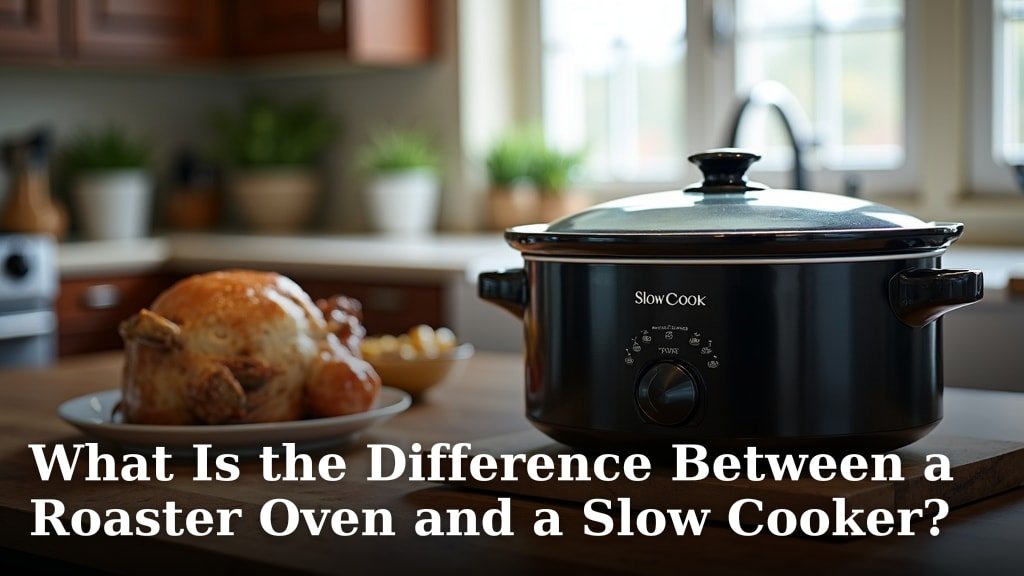
The main difference between a roaster oven and a slow cooker lies in their primary function and heating elements. A roaster oven is designed for roasting larger cuts of meat, offering higher heat and faster cooking times. A slow cooker is for gentle, long-duration cooking at lower temperatures.
You’re likely wondering which appliance is best for your kitchen needs, especially when cooking for a crowd or preparing everyday meals. We found that each has its unique strengths and ideal uses, making them great tools for different culinary tasks.
- Roaster ovens cook food faster at higher temperatures.
- Slow cookers excel at low-and-slow cooking.
- Roaster ovens are often better for large roasts.
- Slow cookers are perfect for stews, soups, and tender meats.
Let’s dive into the specifics, helping you understand exactly what makes each appliance different and when to choose one over the other.
Understanding Roaster Ovens vs. Slow Cookers: Core Differences
While both appliances cook food with heat, roaster ovens and slow cookers operate on distinct principles, impacting how your food turns out and what you can prepare. It’s all about temperature, cooking speed, and overall design.
What is a Roaster Oven?
Think of a roaster oven as a portable, countertop version of your conventional oven. It’s built to mimic the dry heat and higher temperatures you get from a full-sized oven. You’ll often find them used for big holiday meals or when your main oven is already full.
Key Characteristics of Roaster Ovens
- High Heat Capability: Roaster ovens can reach temperatures similar to a standard oven, typically from 200°F up to 450°F (USDA). This allows for proper browning and roasting.
- Faster Cooking: Because they operate at higher temperatures, food cooks more quickly than in a slow cooker. This is ideal for larger cuts of meat that need to be done in a few hours.
- Moisture Retention: The tight-fitting lid helps trap moisture, which can be great for keeping meats from drying out. Some models even have self-basting lids.
- Capacity: They come in various sizes, often larger than most slow cookers, making them perfect for whole turkeys, large hams, or big batches of casseroles.
What is a Slow Cooker?
A slow cooker, often called a Crock-Pot (which is a brand name, like Kleenex for tissues), is designed for gentle, long-duration cooking at lower temperatures. It’s your go-to for tenderizing tough cuts of meat and blending flavors over many hours.
Key Characteristics of Slow Cookers
- Low and Slow Heat: Slow cookers operate at much lower temperatures, usually between 170°F and 280°F. This consistent, gentle heat breaks down tough fibers over time.
- Long Cooking Times: Expect meals to cook for 4-8 hours on high or 6-10 hours (or even more) on low. This extended cooking time is what makes meats so tender.
- Moist Environment: The sealed environment creates a lot of steam, keeping food exceptionally moist. This is perfect for soups, stews, and chili.
- Simplicity: Often, you just set it and forget it. This convenience is a huge draw for busy individuals.
Heating Methods and Their Impact
The way each appliance generates and distributes heat is fundamental to their performance. This difference directly influences the texture and flavor of your food.
How Roaster Ovens Heat Food
Roaster ovens typically use a heating element wrapped around the sides and bottom of the cooking pan. This setup provides even heat distribution, much like a conventional oven. They often come with a rack to lift food off the bottom, allowing air to circulate around it for better browning.
- Radiant Heat: The elements heat the air inside the roaster, which then cooks the food.
- Direct Contact: The bottom and sides of the pan also transfer heat directly to the food.
- Browning Power: The higher heat allows for the Maillard reaction, giving meats a delicious brown crust.
How Slow Cookers Heat Food
Slow cookers use heating elements embedded in the base and sometimes the sides of the outer casing. This heats the ceramic or stoneware insert very gradually and evenly. The low, consistent heat ensures food cooks through without burning, even over many hours.
- Conduction and Convection: Heat transfers slowly from the stoneware insert to the food. The trapped steam also contributes to an even cooking environment.
- Gentle Cooking: The low temperature prevents direct scorching and slowly breaks down connective tissues in meats.
- Flavor Development: The long cooking time allows flavors to meld and deepen over many hours, creating rich and complex dishes.
Ideal Uses for Each Appliance
Choosing between a roaster oven and a slow cooker often comes down to what you’re cooking and the desired outcome. Each excels in different culinary situations.
When to Use a Roaster Oven
A roaster oven shines when you need to cook larger items or when your main oven is occupied. It’s truly a secondary oven you can plug in anywhere.
- Holiday Roasts: Perfect for your Thanksgiving turkey, Christmas ham, or a large prime rib. It frees up your main oven for side dishes (USDA Food Safety and Inspection Service).
- Baking: Some models can bake cakes, breads, or casseroles, acting as a true secondary oven.
- Large-Batch Cooking: If you’re feeding a crowd and need to keep food warm, a roaster oven is excellent for holding temperature.
- Browning and Crisping: If you want that nice, crispy skin on a chicken or turkey, a roaster oven can deliver.
When to Use a Slow Cooker
A slow cooker is your best friend for convenience and for dishes that benefit from extended, gentle cooking. It’s often associated with comfort food.
- Soups, Stews, and Chili: These dishes thrive in the slow cooker, becoming rich and flavorful over hours.
- Tenderizing Tough Cuts of Meat: Think pot roasts, pulled pork, or beef stew meat. The low, slow heat breaks down collagen, making them incredibly tender.
- Beans and Legumes: Cooking dried beans from scratch is easy and efficient in a slow cooker.
- Set-It-and-Forget-It Meals: Prep in the morning, and dinner is ready when you get home. It’s a huge time-saver.
Comparing Roaster Ovens and Slow Cookers
To give you a clearer picture, let’s put them side-by-side. You’ll see their primary distinctions at a glance.
| Feature | Roaster Oven | Slow Cooker |
|---|---|---|
| Primary Function | Roasting, baking, keeping warm | Slow cooking, simmering, tenderizing |
| Temperature Range | 200°F – 450°F (High) | 170°F – 280°F (Low) |
| Cooking Speed | Faster (hours) | Slower (many hours) |
| Heat Source | Sides & bottom (like an oven) | Base & sides of outer unit |
| Ideal Foods | Whole turkeys, roasts, casseroles | Soups, stews, chili, pulled pork |
| Moisture Environment | Can brown, retains moisture | Very moist, steamy |
Which One Do You Really Need? A Quick Checklist
Still on the fence? No problem. Consider your typical cooking habits and needs. This simple checklist might help you decide which appliance earns a spot on your counter.
- Do you frequently cook large roasts or whole poultry, especially for holidays? (Roaster Oven)
- Do you need an extra oven for overflow cooking during big meals? (Roaster Oven)
- Are you often short on time during the week and want dinner ready when you walk in? (Slow Cooker)
- Do you love making tender stews, chilis, or pulled meats? (Slow Cooker)
- Do you prioritize hands-off cooking that develops deep flavors over many hours? (Slow Cooker)
- Do you need to keep large quantities of food warm for a party or potluck? (Both can do this, but Roaster Oven often has larger capacity)
Most home cooks find that having both appliances can be incredibly useful, as they truly excel at different tasks. It’s not always about choosing one over the other, but understanding when each one is your best kitchen companion.
Conclusion
You now know that while both a roaster oven and a slow cooker bring delicious meals to your table, they do so in very different ways. Your roaster oven is your go-to for high-heat roasting and handling those big holiday meats, acting as a handy second oven. Your slow cooker, on the other hand, excels at low-and-slow cooking, creating incredibly tender dishes and giving you the gift of hands-free meal prep.
Consider your most frequent cooking needs. If you often host large gatherings or need extra oven space, a roaster oven is a smart choice. If everyday convenience and tender, flavorful stews are your priority, grab a slow cooker. You might even find that having both truly rounds out your kitchen!
Frequently Asked Questions
Can I use a roaster oven as a slow cooker?
While some roaster ovens have very low-temperature settings, they aren’t ideal for true slow cooking. Their heating elements are designed for higher, more direct heat, which can cause food to dry out or cook too quickly compared to the gentle, consistent heat of a dedicated slow cooker.
Is one appliance more energy-efficient than the other?
In general, slow cookers are quite energy-efficient for their long cooking times because they operate at lower wattages. Roaster ovens, when used for shorter periods at higher temperatures, can also be efficient compared to heating a large conventional oven. Your usage habits will impact overall energy consumption.
Which is better for keeping food warm at a party?
Both can keep food warm, but a roaster oven often has a larger capacity, making it excellent for holding bigger dishes like a large turkey or multiple casseroles. Slow cookers are great for keeping soups, chili, or dips warm for extended periods.
Can you brown meat in a slow cooker?
No, a slow cooker does not reach temperatures high enough to brown meat effectively. If your recipe calls for browning, you’ll need to do that in a separate pan on the stovetop before adding the meat to your slow cooker. Roaster ovens, however, can achieve browning.
Is cleaning a roaster oven or a slow cooker easier?
Many slow cookers have removable ceramic or stoneware inserts that are often dishwasher-safe, making cleanup quite easy. Roaster ovens usually have a large roasting pan that needs to be hand-washed, which can be more cumbersome due to its size, though some parts might be dishwasher-safe.
