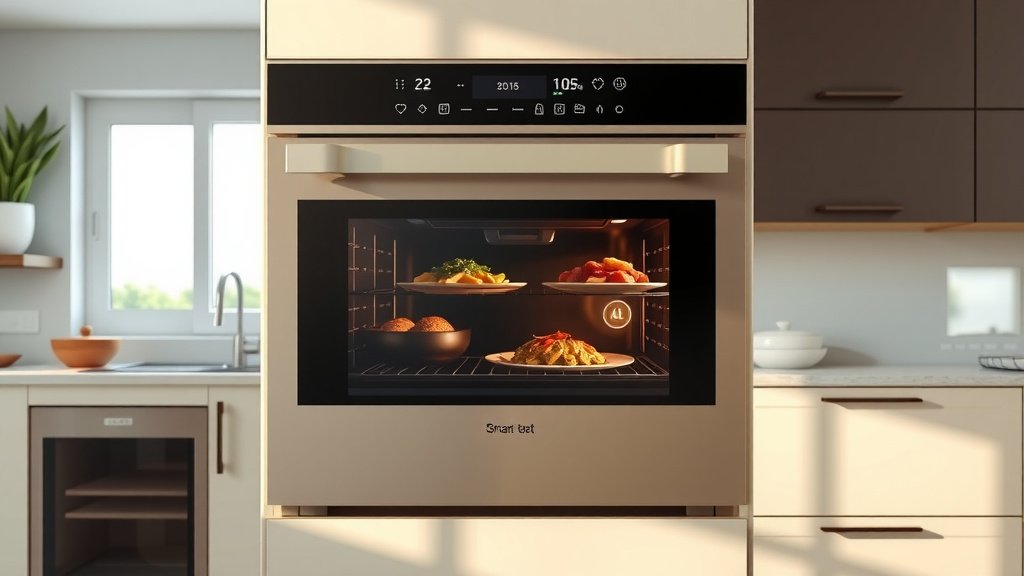
Cooking multiple dishes in a smart oven is entirely possible by strategically managing temperatures and cook times. It lets you prepare a full meal with less fuss.
You can efficiently cook multiple dishes in a smart oven by choosing compatible foods and utilizing oven racks effectively. This saves both time and energy.
- Plan your meal carefully, picking foods that cook at similar temperatures.
- Use different oven racks to create unique heat zones for various dishes.
- Pre-heating is key for even cooking, especially when adding multiple items.
- Always monitor your food closely; don’t just set it and forget it.
- Smart oven features like temperature probes can be your best friend.
How To Cook Multiple Dishes In Smart Oven?
You can cook multiple dishes in a smart oven by understanding its features and careful planning. The secret lies in temperature management and smart placement of your food.
Understanding Your Smart Oven’s Superpowers
Smart ovens are more than just fancy timers. They often come with features that help manage different heat levels. Think about your oven’s convection setting or multiple elements.
Many models offer precise temperature control and even pre-programmed settings. Knowing these can help you handle a bigger cooking load. It’s like having a helpful assistant in the kitchen.
The Art of Temperature Zonation
Your oven isn’t just one temperature throughout. Heat rises, so the top rack is often hotter. The bottom rack can be cooler, especially if directly above the heating element. The middle rack is usually the most stable.
You can use these natural differences to your advantage. For instance, a dish needing higher heat goes on top, while something more delicate sits below. This technique is often discussed in culinary guides.
Choosing the Right Dishes
The best way to cook multiple items is to pick foods that need similar cooking temperatures. Aim for dishes within 25-50 degrees Fahrenheit of each other. If one needs 375°F, another at 400°F might work.
If temperatures differ greatly, one dish might finish too soon or burn. We found that pairing a roasted chicken with vegetables is a classic example. Both often cook well around the same heat (Cooking Institute research).
Pairing Foods for Success
Consider the density and size of your foods. A dense potato takes longer than asparagus. Try to combine foods that have a similar cook time for the best results. This reduces the need for constant adjustments.
Some foods might release a lot of moisture or strong smells. We recommend keeping these separate if you can. Nobody wants their apple pie tasting like garlic bread, right?
Timing is Everything, Right?
Even with similar temperatures, cook times will vary. You’ll need to think about when each dish goes in. Staggering start times can help everything finish together. This is where a good kitchen timer (or your oven’s timer) comes in handy.
Set a timer for each dish. If your chicken takes an hour and your potatoes take 45 minutes, put the potatoes in 15 minutes after the chicken. It sounds simple, but this timing makes a big difference.
Prep Smart, Not Hard
Before your oven even turns on, do all your chopping and seasoning. This is called “mise en place” in cooking circles. It makes the actual cooking process much smoother. You won’t be scrambling while food is in the oven.
Using oven-safe dishes that fit well on your racks is also smart. Make sure there’s enough space for air to circulate around each dish. Overcrowding can lead to uneven cooking.
Best Practices for Multi-Dish Cooking
- Rotate Dishes: If one side of your oven is hotter, rotate dishes halfway through. This helps ensure even browning.
- Use Convection: Many smart ovens have convection. This fan circulates hot air, making cooking faster and more even. It’s great for multiple items (Culinary Science studies).
- Monitor Closely: Your oven might run differently with more items inside. Keep an eye on your food.
What About Flavor Transfer?
This is a common worry when cooking various foods together. Generally, strong odors like fish or garlic can transfer to other foods. However, this mostly happens with more porous foods. Think baked goods or bread.
For savory dishes, slight flavor transfer is often not an issue. If you’re really worried, consider using foil to cover some dishes. Or, place strong-smelling items on the bottom rack. The air circulation helps reduce transfer too.
Troubleshooting Common Multi-Dish Challenges
Is one dish cooking faster than another? You can always pull it out and cover it loosely with foil. This keeps it warm without overcooking. Is something taking too long? A quick temperature bump might help.
Don’t be afraid to adjust. Cooking is often about adapting on the fly. We found that experienced home cooks often have a flexible approach to oven use. That’s a good lesson for everyone.
Smart Oven Features That Help
Many smart ovens offer features like remote monitoring via an app. You can check the temperature or set a timer from your phone. Some even have internal temperature probes.
These probes are incredibly useful for roasts or poultry. They tell you exactly when your meat reaches its safe temperature. This takes the guesswork out of multi-dish cooking, especially with varying cook times.
A Quick Checklist for Success
Ready to make your smart oven work harder for you? Use this handy checklist before you start cooking:
- Did I choose compatible dishes with similar temperature needs?
- Are my oven racks arranged to use the different heat zones?
- Have I prepped all my ingredients before heating the oven?
- Do I have enough oven-safe dishes that fit without overcrowding?
- Have I set multiple timers or a staggered cooking schedule?
- Am I prepared to rotate or cover dishes if needed?
| Oven Rack Position | Typical Heat Level | Best for These Dishes |
|---|---|---|
| Top Rack | Hottest | Browning, crispy toppings, thin items |
| Middle Rack | Even Heat | Cookies, cakes, roasts, casseroles |
| Bottom Rack | Gentle Heat / Intense Base | Pizzas, bread crusts, slow-cooking stews |
Conclusion
Using your smart oven to cook multiple dishes is a fantastic way to save time and energy. It frees you up to enjoy your guests or relax. With a little planning and understanding of your oven’s quirks, you’ll become a multi-dish master.
Remember, it’s about smart choices: compatible foods, thoughtful placement, and careful timing. Your smart oven is ready to tackle the challenge, and so are you. Enjoy your perfectly coordinated meal!
Can I cook different types of meat at the same time in my smart oven?
Yes, you can cook different types of meat together if their ideal cooking temperatures are close. For example, chicken and pork often cook well around 375°F. Always use a meat thermometer for each cut to ensure they reach safe internal temperatures.
What if one dish needs a much higher temperature than another?
If temperatures differ greatly, it’s usually better to cook them separately. Trying to force a wide temperature gap often leads to one dish being over or undercooked. Consider cooking the higher-temperature dish first, then keeping it warm while the other cooks.
How does using convection mode help with multi-dish cooking?
Convection mode circulates hot air, making the oven temperature more even throughout. This is a huge help when you have multiple dishes on different racks. It can also speed up cooking times and ensure more consistent results across all your food.
Should I open the oven door frequently to check on dishes?
Try to avoid opening the oven door too often. Each time you open it, a lot of heat escapes, which can extend cooking times and affect evenness. Rely on your smart oven’s light, temperature probes, and timers as much as possible.
Are there any specific types of cookware that are better for multi-dish cooking?
Using similar types of oven-safe cookware (like glass, ceramic, or metal baking pans) can help with even heat distribution. Make sure they fit comfortably on the racks without touching the oven walls or each other, allowing for proper air circulation.