What Is the Best Material for a Pizza Stone?
Cordierite is the best material for pizza stone for most home ovens. It heats evenly, resists thermal shock, and gives a crisp base without the weight or maintenance of steel or cast iron. Ceramic and stoneware are close options if the stone will stay in a home oven and will not see rapid temperature swings.
On this page (10 sections)
- What is a pizza stone made of in most kitchens?
- Best material for pizza stone for heat retention compared
- Cordierite vs ceramic vs stoneware: what is the difference?
- Durability and thermal shock: which material lasts longer?
- Maintenance: cleaning and seasoning by material
- Cast iron and steel: when metal beats stone
- What is pizza stone made of for outdoor ovens and grills?
- Shape, size and thickness: how to pick the right stone
- Stone vs pan vs steel: which surface should you choose?
- Best material for pizza stone: final pick by bake style
The best material for pizza stone for most home bakers is cordierite. It holds heat, it is lighter than steel, and it tolerates the heat of a home oven.
Ceramic is a close second for even browning and a lower price.
You still need to match the material to where you bake. A stone for a 500 F home oven has different needs than a surface for a 900 F outdoor oven.
This guide compares the main materials by heat retention, durability and care.
What is a pizza stone made of in most kitchens?
Most pizza stones are made of cordierite, ceramic, or stoneware. Cordierite is a natural mineral that is fired into a hard, porous slab.
Ceramic and stoneware are clay blends that are fired at higher temperatures.
The porous surface is the point. It pulls moisture from the dough base as the pizza bakes.
That helps the crust set and crisp instead of steaming. A smooth metal pan cannot do the same job in the same way.
If you are new to this tool, read do pizza stones work before you buy. The short answer is yes for crisp crusts, but only when the stone is preheated.
A cold stone will not help you.
Think about your oven first. A thicker stone holds more heat but takes longer to preheat.
A thinner stone is faster but loses heat faster when you open the door. Material sets the range, and thickness sets how it behaves inside that range.
Rule: pick cordierite for a home oven, and check the temperature limit before you use any stone in an outdoor oven.
Best material for pizza stone for heat retention compared
Cordierite and ceramic hold heat well because they are dense and thick. They soak up heat slowly and release it slowly.
That steady release is what browns the underside of a pizza while the top cooks.
Steel and cast iron hold heat too, but they release it faster. That can be a plus for a fast bake and a minus if your oven temperature swings.
A stone gives you a more forgiving bake at moderate heat.
Thickness matters as much as the material name. A 3/8 inch stone will heat faster than a 1 inch stone.
A thick stone will keep cooking after you slide the pizza off, which helps with a thick crust.
Preheat time is the trade-off. A very thick stone may need 60 minutes.
A thinner stone may be ready in 30 minutes. Plan your bake around the preheat, not the other way around.
For a stone that will live in your oven, see the Best Pizza Stone For Oven picks. For high heat outdoor use, see the Best Pizza Stone For Pizza Ovens guide.
Rule: choose thickness for your preheat patience, and choose cordierite or ceramic if you want steady, forgiving heat.
Cordierite vs ceramic vs stoneware: what is the difference?
Cordierite is the most common pizza stone material for a reason. It expands and contracts less than other ceramics when it heats and cools.
That makes it more resistant to cracking from sudden temperature changes.
Ceramic stones are often glazed on one side or left unglazed. Unglazed ceramic is porous and works like cordierite.
Glazed ceramic is easier to clean but may not pull moisture the same way.
Stoneware is a dense clay that is fired hard. It is strong and it can look like a baking stone or a serving slab.
Some stoneware is made for broiler use and some is not, so the limit matters.
Weight is a practical difference. Cordierite is lighter than stoneware at the same thickness.
That makes it easier to move in and out of a hot oven. A heavy stone is harder to clean and harder to store.
Price follows the material and the finish. Plain cordierite is usually budget friendly.
Stoneware with a glaze and a branded finish costs more. Cleaner does not always mean better for crust, and porous does not always mean harder to keep.
If you want this material in a current pick, see our best cordierite pizza stone roundup. It compares sizes, shapes and thickness.
Rule: buy cordierite for the best mix of heat tolerance and weight, and buy stoneware only if you will check its broiler limit.
What is pizza stone made of when it says ceramic on the box?
A ceramic pizza stone is a fired clay slab, often with a mix of stoneware and other minerals. It may be unglazed, glazed, or glazed on the bottom only.
The unglazed face is the baking face.
Some ceramic stones are sold as baking stones for bread and pizza. They are usually thinner than cordierite.
That makes them faster to preheat and easier to move.
Ceramic can crack if it hits cold water or a sudden cold draft while hot. Let it cool in the oven.
Do not place it on a cold counter.
Rule: a ceramic stone is fine for a home oven if you treat it like a hot ceramic piece and let it cool slowly.
Durability and thermal shock: which material lasts longer?
Cordierite lasts well because it resists thermal shock. You can put it in a cold oven and heat the oven to 500 F.
Most cordierite stones are made for that routine.
Ceramic and stoneware are strong but less forgiving of sudden changes. A splash of water, a metal spatula dropped on a hot edge, or a cold pan placed on a hot stone can cause a crack.
Cast iron and steel do not crack from thermal shock. They can warp if heated unevenly, and they can rust if they get wet.
Their durability is high, but their care is different.
Edge chips are common on all stone types. A small chip on the edge does not hurt baking.
A crack across the baking face can let dough stick and can grow with use.
Storage protects a stone. Keep it flat and supported.
Do not stack heavy pans on it. Do not use it as a cutting board.
If you use the stone in an RV oven, heat cycles are short and space is tight. Read best pizza stone for rv oven for size and support tips.
Rule: cordierite wins on thermal shock for home use, and cast iron wins only if you will season and dry it after each use.
Maintenance: cleaning and seasoning by material
Cordierite and unglazed ceramic need no seasoning. You scrape off baked-on bits with a bench scraper or a stiff brush.
You wipe with water only when the stone is cool and dry. You never soak it.
Oil and cheese spills will stain a porous stone. That stain does not hurt the next bake.
It can smoke a little the next time you heat the stone. A light scrape and a dry wipe are enough.
Cast iron needs seasoning and a dry storage spot. Steel needs a light oil coat to stop rust.
Both need more care than a stone after each use.
Do not use soap on a porous stone. Soap can soak into the surface and affect flavor.
Hot water and a brush are enough for most messes. A paste of baking soda and water can help for a stubborn spot.
A stone in a pizza oven will see more smoke and more flour. That can leave a dark film.
Scraping and a hot preheat will burn off most of it over time.
For a full tool set, see pizza oven accessories for peels, brushes and other gear that pairs with a stone.
Rule: if you want the least care, choose cordierite and clean it dry; if you choose metal, plan to season it and keep it dry.
Cast iron and steel: when metal beats stone
Cast iron and pizza steel are not stone, but they are pizza surfaces. They conduct heat faster than stone.
That can give a faster, crisper bake in a home oven.
A steel plate can reach baking heat in 15 to 20 minutes. A stone can take 30 to 45 minutes.
Steel is thinner, so it is easier to store upright. Cast iron is heavier and needs two hands.
Metal is better for high heat and for a very crisp crust. It is also better if you want to sear the base in less time.
It is worse for moisture control, because metal does not absorb steam.
Care is the main cost. Steel can rust.
Cast iron can rust. Both need a dry towel and a thin oil coat after use.
A stone needs none of that.
If you are torn, read pizza stone vs pizza steel and pizza stone vs cast iron. Those guides compare heat, weight and care in plain terms.
Rule: choose steel or cast iron for speed and high heat, and choose stone for moisture control and low care.
What is pizza stone made of for outdoor ovens and grills?
Outdoor ovens can reach 700 to 900 F. Not every stone is rated for that heat.
Cordierite is often rated for high heat, but some ceramic stones are not. Check the limit on the box or the maker page.
Grills add hot spots. A stone placed over direct flame can crack or can heat unevenly.
Use indirect heat and keep the stone away from flare-ups. A pizza oven door helps keep heat in during a bake.
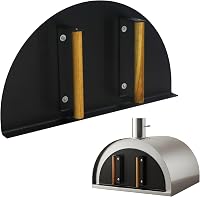
That door is 304 stainless steel, 10 gauge, with two wooden handles. It is made for indoor and outdoor pizza ovens and for commercial ovens.
It sits against the opening to seal heat when you bake.
A cart helps more than you think when you bake outside. You need a flat, stable place for dough, toppings and a hot stone.
That cart has a top load limit of 440 lb and shelf limits of 100 lb. The middle shelf height adjusts.
Two of the wheels lock. The stainless steel top wipes clean with a dry cloth.
For a stone made for this use, see Best Pizza Stone For Pizza Ovens. For a stone with a rack that can help with lifting, see best pizza stone with rack.
Rule: for outdoor heat, buy a stone rated for that heat and add a door or cart only if it fits your oven opening.
Shape, size and thickness: how to pick the right stone
Round stones fit round pizzas and round ovens. Rectangular stones fit more pizzas in a home oven.
The best shape is the one that leaves room for air to move around the pizza.
Size matters for heat. A stone that is too small will have a cooler edge.
A stone that is too large can block air flow in a small oven. Leave at least 1 inch of space around the stone.
Thickness sets preheat time and heat reserve. A 3/8 inch stone is a good start for home use.
A 5/8 inch or thicker stone holds more heat but takes longer to get ready.
Weight follows thickness. A thick stone can be hard to lift with a peel.
A stone with handles or a rack can help. See best pizza stone with handles if you need a grip.
For round home use, see best round pizza stone. For a set with a peel, see best pizza stone with peel.
For a full kit, see best pizza stone kit for oven.
That cutter is handmade in a Viking style with a skull design on the blade. The handle is ash wood.
The blade is high carbon steel. It comes with a leather sheath.
It is hand wash only.
Rule: buy the largest stone that still leaves air space in your oven, and buy handles or a rack if you bake often.
Stone vs pan vs steel: which surface should you choose?
A pizza stone wins for crust texture. It pulls moisture and it bakes the base with steady heat.
A pan wins for ease. You can slide a pan in and out with one hand.
A steel wins for speed and for a very crisp base.
If you make thin crust at home, a stone or steel will give you more lift and more browning. If you make a thick pan pizza, a pan may suit your dough better.
The surface should match the dough, not the other way around.
Read pizza stone vs pan if you want a side by side on crust, cleanup and storage. That guide is short and it covers the trade-offs that matter.
A stone also works for bread, cookies and roasted vegetables. It is a flat heat source.
A pan is a container. Steel is a fast heat source.
Each has a place.
For a stone that is made in the USA, see best pizza stone made in usa. For a specific brand check, see best unicook pizza stone.
Rule: pick stone for crust and versatility, pick steel for speed, and pick a pan for thick dough or easy moves.
Best material for pizza stone: final pick by bake style
For most home ovens, cordierite is the best material for pizza stone. It is forgiving, it is light enough to move, and it gives a crisp crust.
Ceramic is a good second choice if you want a lower price and you will let the stone cool slowly.
Choose a thicker stone if you bake back to back pizzas. Choose a thinner stone if you bake once a week and want a faster preheat.
Choose a rectangular stone for a home oven and a round stone for a round oven.
If you bake in an outdoor oven, check the heat limit first. A door and a stable cart can help, but they do not make an unrated stone safe at high heat.
A steel plate can be better at very high heat if you will care for it.
Our score weighs specs, features and buyer feedback against what you are shopping for. We compared the materials above by heat retention, durability and maintenance, and we checked the specs for the tools that pair with a stone.
Rule: buy cordierite for a home oven, buy steel for high heat speed, and buy the thickness you will actually preheat.
Frequently asked questions
What is a pizza stone made of?
Most pizza stones are made of cordierite, a mineral ceramic that handles heat well. Ceramic and stoneware stones use similar fired clay blends.
Cast iron and steel are not stone, but they are used as pizza surfaces for the same job.
What is the best pizza stone material for a home oven?
Cordierite is often the best pizza stone material for a home oven because it balances heat retention, weight and price. It preheats in 30 to 45 minutes and can go from a cold oven to a hot oven without cracking in most cases.
How long should a pizza stone preheat?
Most stones need 30 to 45 minutes at your baking temperature. Thicker stones may need up to 60 minutes.
Skip a long preheat and the center stays cooler than the edges, so the crust cooks unevenly.
Can a pizza stone go on a grill?
Many cordierite and ceramic stones can be used on a grill, but you must check the maker limits first. Grills can create hot spots above 550 F.
Place the stone away from direct flame and let it heat slowly to reduce cracking risk.