
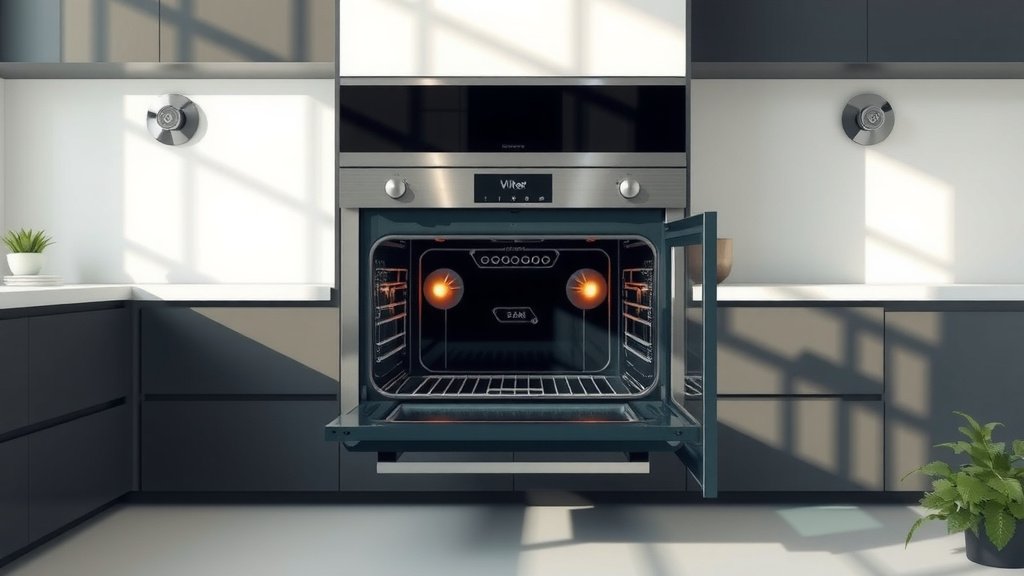
Yes, your gas oven temperature can absolutely fluctuate during cooking, often cycling above and below your set temperature to maintain an average heat.
This natural cycling of heat is a common characteristic of most gas ovens, impacting how evenly your food bakes.
- Gas oven temperatures naturally cycle, leading to fluctuations above and below your set point.
- These fluctuations are normal but can affect cooking consistency if not understood.
- Factors like oven door opening, calibration, and ventilation all play a role.
- Using an external oven thermometer is key to understanding your oven’s true temperature.
- There are practical steps you can take to minimize these temperature swings and improve your baking results.
Ever wonder why your cookies sometimes come out perfectly golden, and other times a little too pale or a bit too brown? You might be scratching your head, thinking, “Did I set the temperature right?” Well, you probably did! The real culprit often isn’t you, but rather your oven’s unique personality.
You see, gas ovens, much like us, aren’t always perfectly stable. They have their own rhythms and quirks when it comes to temperature control. Let’s dig into why this happens and what it means for your culinary adventures.
Can Gas Oven Temperature Fluctuate During Cooking?
Yes, gas oven temperatures do fluctuate during cooking. This is a normal part of how gas ovens maintain heat, cycling the burner on and off to keep an average temperature.
Why Do Gas Ovens Fluctuate? The Science Behind the Bake
Think of your gas oven as a friendly thermostat-controlled heating system. When you set it to, say, 350°F, it doesn’t just stay at that exact number. Instead, it aims for an average.
The oven’s burner ignites to heat the cavity. Once it reaches a certain point, often a bit above your set temperature, the burner turns off. As the heat dissipates, the temperature drops below your set point, and then the burner kicks back on. This constant on-off cycle creates temperature swings.
Many experts say that this cycling range can be anywhere from 20 to 50 degrees Fahrenheit (GE Appliances). This means if you set it to 350°F, it might swing between 330°F and 370°F, or even wider.
What’s Normal? Understanding the Temperature Range
So, a little fluctuation is okay. But how much is too much? We found that a typical gas oven might swing about 20-30 degrees above and below your set temperature. This is generally considered normal operation.
If your oven is swinging wildly, say 75 degrees or more in either direction, that might indicate a problem. However, for most home ovens, minor fluctuations are just part of the deal.
Impact on Your Delicious Dishes
You might be wondering, “Does this really matter for my lasagna or cake?” Absolutely! Consistent heat is crucial for consistent baking and roasting.
For delicate items like soufflés or custards, a sudden drop in temperature can cause them to deflate. For roasts, wild swings can lead to uneven cooking, where one part is done and another is still undercooked.
Spotting the Signs of an Unreliable Oven
How can you tell if your oven’s fluctuations are beyond the normal range? Your food often gives you the first clues. Are your cakes always lopsided? Do your cookies have burnt edges but raw centers?
These are all potential indicators that your oven might be running hotter or colder than it should, or experiencing significant temperature swings. Pay attention to how your dishes turn out.
The Secret Weapon: An Oven Thermometer
Forget relying on your oven’s built-in display; it can often be inaccurate. The best way to know what’s really happening inside is to invest in a separate, reliable oven thermometer.
Place it in the center of your oven. Preheat your oven, then watch the thermometer over a 30-minute period. You’ll see the temperature rise and fall, giving you a true picture of its cycle.
Checking Your Oven’s Health: A Quick Checklist
If you suspect your oven is fluctuating too much, try these simple checks:
- Use an external thermometer: This is your most accurate diagnostic tool.
- Check the door seal: A leaky seal lets heat escape, causing bigger drops.
- Clean your oven: Excess grime can affect heat distribution and sensing.
- Avoid opening the door: Every time you peek, you lose a lot of heat.
- Calibrate if needed: Some ovens can be manually adjusted (check your manual).
Common Causes of Extreme Fluctuations
While some fluctuation is normal, exaggerated swings can point to underlying issues. We found that several factors can contribute to more significant temperature problems.
Sometimes, a faulty thermostat or a struggling igniter can cause the burner to cycle incorrectly. An oven that’s poorly insulated or has a worn-out door gasket will also struggle to hold a steady temperature.
Here’s a look at what might be going on:
| Cause of Fluctuation | Explanation | Potential Solution |
|---|---|---|
| Faulty Thermostat | The oven’s ‘brain’ isn’t accurately reading or sending temperature signals. | Professional repair/replacement of the thermostat. |
| Weak Igniter | Takes too long for the gas to ignite, causing temperature to drop significantly. | Replacement of the igniter (often a DIY fix if comfortable). |
| Leaky Door Seal | Heat escapes through gaps around the oven door. | Replace the rubber gasket around the oven door. |
| Oven Calibration Off | The oven’s internal setting is misaligned with the actual temperature. | Recalibrate the oven (refer to owner’s manual). |
| Overcrowding Oven | Too many items block airflow, creating cold spots and uneven heating. | Cook in smaller batches or rotate items. |
Minimizing Fluctuations for Better Baking
You can’t eliminate temperature fluctuations entirely, but you can certainly minimize their impact. Think of it as steering your oven towards better performance.
Preheating is your best friend. Always give your oven plenty of time to fully preheat—at least 15-20 minutes after it signals it’s ready. This allows the oven walls to absorb heat, creating a more stable environment.
Tips for Consistent Oven Performance
- Always preheat thoroughly: Don’t rush it; let the oven stabilize.
- Use an oven thermometer: This gives you real-time feedback.
- Avoid opening the door frequently: Every peek drops the temperature dramatically.
- Rotate your dishes: If your oven has known hot or cold spots, turning your pan halfway through cooking helps.
- Don’t overcrowd: Leave space for air to circulate around your food.
- Use the right bakeware: Dark pans absorb more heat; lighter pans reflect it.
- Keep it clean: A dirty oven can heat unevenly.
When to Call a Professional
Sometimes, despite your best efforts, your oven just isn’t cooperating. If you’ve tried all the tips and still see extreme temperature swings, it might be time for expert help.
If your oven isn’t igniting properly, smells like gas, or if the temperature swings are truly massive (like 100 degrees or more), it’s safer to call a qualified appliance technician. They can diagnose and fix issues with thermostats, igniters, or other components that are beyond a simple DIY fix.
Conclusion
So, can gas oven temperature fluctuate during cooking? Yes, it’s a normal part of their operation. Understanding this cycling and taking proactive steps can significantly improve your cooking and baking outcomes. By using an external thermometer and implementing simple best practices, you can better manage these fluctuations and achieve more consistent, delicious results every time. Don’t let your oven’s quirks get the best of your culinary creations!
Are gas ovens less precise than electric?
Generally, electric ovens are often considered to offer more precise and consistent temperatures than gas ovens, which tend to have wider temperature fluctuations due to their burner cycling method.
How long does it take for a gas oven to stabilize its temperature?
While your oven may signal it’s preheated in 10-15 minutes, it usually takes an additional 15-20 minutes for the internal temperature to fully stabilize and for the oven walls to absorb enough heat for consistent cooking.
Does opening the oven door really affect temperature much?
Yes, opening the oven door even for a moment can cause the internal temperature to drop by 25-50 degrees Fahrenheit or more, depending on how long it’s open, significantly impacting cooking times and consistency.
Can baking stones help stabilize oven temperature?
Yes, a baking stone or pizza stone, once fully preheated, acts as a thermal mass that can help absorb and radiate heat more steadily, slightly reducing temperature swings and promoting more even baking, especially for bread and pizza.
How often should I check my oven’s calibration?
It’s a good idea to check your oven’s calibration with an external oven thermometer at least once a year, or anytime you notice significant inconsistencies in your baking or roasting results.
