
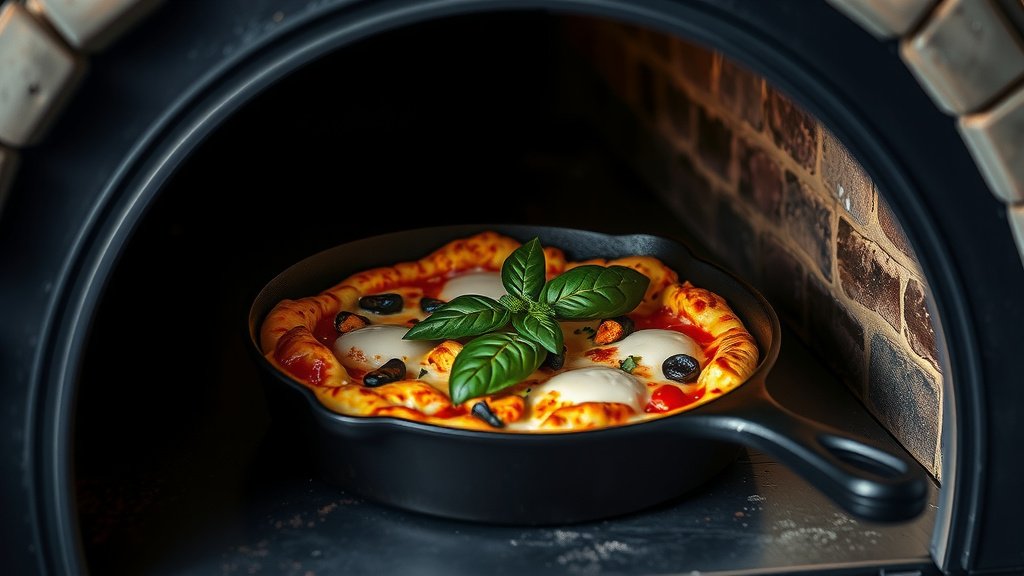
Yes, you can absolutely use a cast iron pan in a pizza oven, but it requires careful attention to preheating and temperature management.
Its excellent heat retention makes it ideal for achieving a crispy crust, just be mindful of thermal shock to protect your valuable cookware.
- Cast iron works well in pizza ovens for a wonderfully crispy crust.
- Preheat your cast iron pan slowly to prevent any thermal shock or damage.
- Always monitor oven temperatures closely, as cast iron retains a lot of heat.
- Good seasoning is crucial for a natural non-stick surface and pan durability.
- Be aware of the pan’s weight and use proper safety tools when handling it.
Can You Use A Cast Iron In Pizza Oven?
Absolutely, a cast iron pan is a fantastic tool for making pizza in a pizza oven, delivering exceptional heat and a wonderfully crisp bottom.
Just remember to preheat it gently and manage your oven’s intense temperatures to get the very best results every time.
Why Cast Iron Shines in a Pizza Oven
So, why even consider cast iron for your pizza adventures? Think about how it behaves. Cast iron is a champion at absorbing and holding onto heat.
This means when you place your pizza on a hot cast iron surface, you get a beautiful, even cook from the bottom up.
This steady, high heat creates that desired **crispy pizza crust** that many pizza lovers dream about (Chef’s Pencil).
Excellent Heat Retention
Cast iron is like a little heat battery. It soaks up all that incredible warmth from your pizza oven.
Then, it releases that heat consistently into your pizza dough, helping it cook quickly and evenly.
This is a big plus for getting a perfectly cooked base, especially in high-temperature ovens.
Achieving the Perfect Crust
Have you ever had a pizza with a soggy bottom? It’s disappointing, right? Cast iron helps you avoid this common problem.
The direct, intense heat transfer creates a lovely **golden-brown and crispy crust** that holds up well.
Many home cooks find it mimics the results of traditional brick ovens surprisingly well.
Potential Challenges and How to Avoid Them
While cast iron is great, it’s not without its quirks in a super-hot pizza oven. It asks for a little bit of your attention.
Understanding these challenges helps you prepare and ensures your pan, and your pizza, stay perfect.
Thermal Shock: The Big Concern
Imagine dropping an ice cube into boiling water. That sudden change isn’t good, right? The same applies to cast iron.
Putting a cold cast iron pan into a very hot pizza oven can cause **thermal shock**, which might lead to cracking.
We found that gradually preheating your pan is key to preventing this issue (Consumer Reports).
Weight and Handling
Let’s be honest, cast iron is heavy. A hot cast iron pan, especially with a pizza on it, becomes even more challenging to handle.
You’ll need sturdy oven mitts and perhaps even a helping hand to move it safely in and out of the oven.
Safety is paramount when working with **extremely hot cookware** in confined spaces.
Temperature Management is Key
Pizza ovens get incredibly hot, often exceeding 700°F (370°C). Cast iron, once hot, stays hot.
You need to be mindful that your pizza might cook even faster than you expect, possibly burning the bottom if not watched.
Learning your oven’s hot spots and adjusting cooking times are important skills to develop.
Preparing Your Cast Iron for Pizza Oven Use
Getting your cast iron ready isn’t difficult, but it makes a huge difference. Think of it as setting the stage for a great performance.
A little prep work ensures a smooth cooking process and a delicious pizza outcome.
- Clean Your Pan: Ensure it’s free of food debris.
- Seasoning Check: Make sure your pan has a good, robust layer of seasoning. This prevents sticking.
- Preheat Slowly: Place the cold cast iron pan in the pizza oven as it heats up, allowing it to warm gradually.
- Add Oil: A thin layer of high smoke point oil (like grapeseed or avocado) can prevent sticking and help browning.
- Monitor Temperature: Use an infrared thermometer to gauge the pan’s surface temperature before adding the pizza.
Step-by-Step: Cooking Pizza with Cast Iron in Your Oven
Ready to try it? It’s simpler than you might think! This method can truly elevate your homemade pizza game.
Just follow these basic steps for a tasty, crispy crust every time.
Preheat Your Oven and Pan Together
Start with your clean, seasoned cast iron pan inside the pizza oven. Turn the oven on and let both heat up slowly.
Many experts say this gradual heating process is critical for preventing stress on the metal.
Aim for the oven to reach your desired pizza cooking temperature, typically between 500-750°F (260-400°C), depending on your recipe.
Assemble Your Pizza
While the oven and pan are heating, get your pizza dough ready. Roll it out, add your sauce, cheese, and toppings.
Keep your toppings light, especially for high-temperature cooking, to ensure everything cooks evenly.
Heavy toppings can make a pizza oven cook slower and potentially lead to a less crispy crust.
Carefully Transfer to the Hot Pan
Once your oven and pan are screaming hot, use a pizza peel to gently slide your assembled pizza onto the cast iron pan.
Be swift but careful. The hot surface will immediately start cooking the bottom of your pizza.
This quick contact is what gives you that fantastic, crisp base.
Monitor and Rotate
Pizza ovens have very intense heat, so cooking times are short. Keep an eye on your pizza.
You may need to rotate it every 30-60 seconds using your pizza peel to ensure even cooking and browning.
Some areas of your oven might be hotter, so watch for rapid charring on the crust.
Cast Iron vs. Pizza Stone: A Quick Comparison
Are you wondering which is better? Both have their strengths for making great pizza.
Here’s a quick look to help you decide what might work best for your setup.
| Feature | Cast Iron Pan | Pizza Stone |
|---|---|---|
| Heat Retention | Excellent, consistent heat | Good, but can lose heat faster |
| Durability | Extremely durable, lasts generations | Can be prone to cracking from thermal shock |
| Crust Crispness | Exceptional, very crispy bottom | Very good, nice char and crisp |
| Preheating | Requires gradual, slow preheating | Requires gradual, slow preheating |
| Maintenance | Requires seasoning, occasional re-seasoning | Mostly maintenance-free, careful cleaning |
| Versatility | Cooks many other dishes | Primarily for pizza and baking |
Post-Pizza Care for Your Cast Iron
After enjoying your delicious pizza, a little care for your cast iron pan goes a long way.
Proper cleaning and seasoning will keep it in prime condition for countless future pizzas.
Cleaning and Seasoning
Wait for your pan to cool down completely. Then, scrape off any stuck-on food bits with a metal spatula.
Wash it by hand with hot water and a stiff brush, avoiding harsh soaps that can strip the seasoning.
Thoroughly dry it, then apply a very thin layer of cooking oil and gently heat it on a stovetop until it smokes.
Safety Reminders When Using Cast Iron in Pizza Ovens
Working with extremely hot ovens and heavy, scorching-hot pans demands your full attention.
A few simple precautions can keep your pizza-making experience safe and enjoyable.
Here’s a quick checklist to keep you safe:
- Always use **high-temperature oven mitts** for handling.
- Have a **clear path** to and from your oven for safe transfer.
- Use a **pizza peel** for easy and safe pizza placement.
- Keep **children and pets away** from the hot oven area.
- **Never pour cold water** onto a hot cast iron pan.
Conclusion
Using a cast iron pan in your pizza oven is a fantastic way to achieve that restaurant-quality, crispy crust right at home.
It demands a bit of patience with preheating and careful temperature management, but the results are truly worth it.
By understanding its unique properties and following some simple guidelines, you can confidently turn your pizza oven into a cast iron pizza powerhouse.
So go ahead, give it a try, and enjoy some of the best homemade pizza you’ve ever tasted!
Can I use a cast iron griddle in a pizza oven?
Yes, you can use a cast iron griddle in a pizza oven, following the same preheating and temperature management guidelines as for a pan. Its flat surface works wonderfully for full-sized pizzas or even multiple smaller items.
What kind of oil should I use for seasoning cast iron for high heat?
For seasoning cast iron that will face high heat, choose oils with a high smoke point like grapeseed oil, flaxseed oil, or avocado oil. These oils polymerize well at high temperatures, creating a durable, non-stick surface.
How hot can cast iron get in a pizza oven?
Cast iron can reach temperatures matching your pizza oven, which often range from 500°F (260°C) to over 900°F (480°C). Always use an infrared thermometer to gauge the pan’s surface temperature accurately before cooking.
Will using cast iron damage my pizza oven?
No, using cast iron properly will not damage your pizza oven. The concern is usually with the cast iron itself cracking from thermal shock if introduced cold into a very hot oven. The oven is designed for high temperatures.
Can I bake other things in cast iron in a pizza oven besides pizza?
Absolutely! A cast iron pan is incredibly versatile in a pizza oven. You can bake breads, roast vegetables, cook quesadillas, or even sear meats, taking advantage of the oven’s high heat and the pan’s excellent heat retention.
