
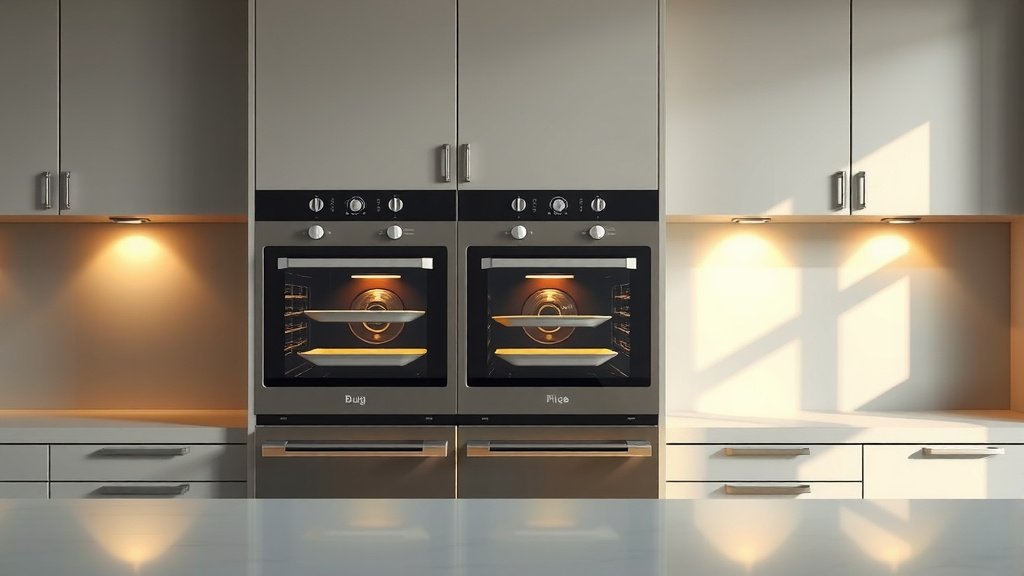
Yes, you absolutely can use both ovens at the same time in a double oven, which is precisely what they are designed for to boost your cooking efficiency.
This design allows you to cook different dishes at varying temperatures simultaneously, making meal preparation much smoother.
TL;DR: Here’s what you need to know about using your double oven:
- Double ovens are built for simultaneous use, letting you cook multiple dishes.
- You can set different temperatures for each oven compartment.
- Expect some minor temperature shifts, but your food will still cook well.
- Planning your meal and cookware helps get the best results.
- It’s a fantastic way to save time and manage big meals or baking projects.
Can You Use Both Ovens At Same Time Double Oven?
Absolutely, yes! That’s the core benefit of having a double oven in your kitchen. These appliances are specifically engineered to let you cook distinct dishes concurrently. Think of it like having two chefs in one kitchen, each handling their own special task.
This capability is a real game-changer for holidays, dinner parties, or even just busy weeknights. You can bake a cake in one section while roasting chicken in the other, all without missing a beat.
The Double Oven Advantage: Why It’s So Handy
Having two separate oven cavities means you’re not limited by space or temperature requirements. Are you tired of cooking Thanksgiving dinner in shifts? A double oven solves that scheduling puzzle effectively.
Imagine baking cookies at 350°F in the smaller top oven, while a casserole bakes at 400°F in the larger bottom one. This flexibility helps you get everything ready to serve at the same time, making you feel like a culinary wizard.
Powering Up: Understanding Your Oven’s Capacity
Modern double ovens are built with enough power to handle both compartments running at once. We found that manufacturers design these units to operate efficiently even when both heating elements are engaged (Energy Star). You don’t need to worry about overloading your electrical system under normal use.
Each oven typically has its own controls, allowing you to set unique temperatures and timers. This independent control is key to making the most of your double oven setup.
How Heat Distribution Works
While each oven operates independently, the overall appliance uses a shared power source. We found that internal sensors and elements work to maintain chosen temperatures in each compartment. You might notice a slight initial delay in reaching temperature if both are heating up simultaneously, but it’s usually minimal.
The insulation between the two cavities helps prevent significant heat transfer. This design ensures that your high-temperature roast doesn’t accidentally bake your delicate soufflé in the other oven.
Common Challenges When Multitasking
Even with advanced design, using both ovens simultaneously can present minor hurdles. It’s good to be aware of these so you can plan ahead. Being prepared helps you achieve the best cooking results possible.
Most challenges are easily managed with a little forethought and clever strategy. Don’t let minor issues deter you from harnessing your oven’s full potential.
Temperature Fluctuations
Occasionally, you might experience slight temperature variations when both ovens are working hard. Many experts say that opening one oven door can briefly affect the temperature in the other (Good Housekeeping). This is usually a temporary and minor dip.
For most recipes, these small fluctuations won’t cause problems. For very precise baking, like delicate pastries, you might want to give each oven a bit more attention.
Cross-Contamination Concerns
This is less about food safety and more about flavor and aroma. Strong smells from one oven can sometimes transfer to dishes in the other. For example, a garlicky roast might impart a subtle scent to a nearby cake.
To avoid this, try to cook items with similar aromatic profiles together. If you’re roasting fish and baking bread, you might want to consider using just one oven or staggering your cooking times.
Tips for Seamless Simultaneous Baking
To truly master your double oven, a few smart strategies can make a big difference. These tips help ensure both compartments work in harmony. You’ll be a multitasking kitchen pro in no time.
Plan Your Menu Wisely
Before you even preheat, think about your dishes. Do they require similar temperatures, or will one need significantly more heat? Grouping items by temperature need can save you energy and time.
Try to pair items that cook around the same temperature range, such as 350-375°F. This makes for a more efficient cooking session and reduces adjustments.
Preheat Both Compartments
Always preheat both ovens to their desired temperatures before adding food. This ensures a stable and accurate cooking environment. We found that adequate preheating prevents uneven cooking and helps food start cooking immediately.
Skipping this step can lead to longer cooking times and less predictable results. Give your ovens time to get truly hot.
Mind Your Cookware Choices
Using the right bakeware helps with heat distribution and fit. Darker pans tend to absorb more heat, while lighter pans reflect it. Consider this when choosing what goes where.
Here’s a quick guide to common bakeware:
| Bakeware Type | Best Use | Consideration |
|---|---|---|
| Light Metal (Aluminum) | Cookies, Cakes, Breads | Even baking, less browning |
| Dark Metal | Crispier crusts, Roasts | Absorbs more heat, quicker browning |
| Glass/Ceramic | Casseroles, Lasagnas | Retains heat well, slow even cooking |
| Silicone | Muffins, Delicate items | Flexible, good for release |
Airflow is Your Friend
Just like in a single oven, good air circulation is vital. Don’t overcrowd either oven compartment. Leave some space around your pans for heat to move freely.
We found that restricted airflow can lead to hot spots and unevenly cooked food (USDA). Proper spacing ensures consistent baking from all sides.
Proper Rack Placement
Position your racks before the oven gets hot. For general baking, the middle rack is usually best. If you’re cooking multiple items in one oven, staggering them vertically can help.
Try to avoid placing one pan directly above another, which can block heat from reaching the lower item. Adjusting rack height helps optimize heat exposure for each dish.
Keep an Eye on Doneness
When cooking multiple things, vigilance is key. Different foods will have different cooking times. Trust your instincts and check doneness regularly, especially if you’re mixing new recipes.
Here’s a quick checklist for checking doneness:
- Are edges turning golden brown?
- Does a toothpick come out clean from cakes?
- Is internal temperature met for meats (using a thermometer)?
- Is the dish bubbling as expected?
- Do baked goods spring back when lightly touched?
When to Think Twice About Dual Use
While double ovens are amazing, there are rare occasions where single-oven use might be preferable. It’s about making smart choices for your specific cooking needs. Always prioritize the quality of your final dish.
Energy Consumption Realities
Running two ovens at once will naturally use more electricity than running just one. If you’re only making a small dish that fits in one compartment, using both might be unnecessary. Consider the energy cost versus convenience.
For large meals, the efficiency gained in time and organization often outweighs the increased power use. It’s a trade-off many home cooks are happy to make for big gatherings.
Different Recipe Requirements
Sometimes, recipes have very specific instructions that don’t play well together. For example, a delicate meringue might need an oven that isn’t frequently opened. Pairing it with a dish that requires constant basting might not be ideal.
If one dish demands a perfectly stable, undisturbed environment, you might opt to give it its own dedicated baking time. This ensures optimal results for sensitive items.
Conclusion
Using both ovens at the same time in a double oven is not only possible but it’s also highly recommended. It’s the very reason these appliances exist: to give you flexibility and efficiency in the kitchen. By understanding how they work and applying a few smart cooking strategies, you can transform your meal preparation process.
Embrace the power of dual cooking. It’ll help you manage complex meals with ease, deliver hot dishes to the table simultaneously, and truly make you feel like a master chef. Go ahead, bake that pie and roast that chicken!
Can a double oven cook at different temperatures?
Yes, absolutely. Each compartment in a double oven has its own independent temperature controls. This design allows you to set the top oven to one temperature, for example, 350°F for a cake, while setting the bottom oven to a different temperature, such as 400°F for a roast, simultaneously.
Do double ovens share a fan?
Generally, no. Most modern double ovens feature separate convection fans, if equipped, for each oven cavity. This ensures that airflow and heat circulation are optimized independently within each compartment, helping to cook dishes evenly and efficiently without affecting the other oven.
Is a double oven worth the extra cost?
For many home cooks, especially those who frequently entertain, cook large meals, or enjoy baking multiple items, a double oven is well worth the investment. The convenience of cooking different dishes at varying temperatures simultaneously can be a significant time-saver and stress reducer, particularly during holidays or special occasions.
Can I use only one part of my double oven?
Yes, you can absolutely use just one part of your double oven. If you only have a single dish to cook, you can simply turn on and preheat either the top or bottom oven as needed. This saves energy compared to heating both compartments unnecessarily.
How do I maintain my double oven for optimal performance?
To keep your double oven working its best, regularly clean both compartments according to the manufacturer’s instructions. Avoid lining the oven bottom with foil unless explicitly permitted, as this can impede heat distribution. Also, promptly address any error codes or unusual noises, which helps prevent minor issues from becoming bigger problems.
