Can You Use a Hand Mixer for Dough?
Yes, you can use a hand mixer for soft doughs, batters, and quick breads, but not for stiff bread dough. Use dough hooks only when the mixer is built for them, start on the lowest speed, and finish stiff dough by hand.
On this page (8 sections)
- Can you use hand mixer for dough without damaging it?
- Which types of dough can a hand mixer handle?
- How do you attach dough hooks and set the speed?
- How do you mix dough step by step with a hand mixer?
- When should you choose a stand mixer instead of a hand mixer?
- Which hand mixers in this guide fit dough tasks?
- How do you clean and store a hand mixer after dough?
- What are common mistakes when using a hand mixer for dough?
Yes, you can use a hand mixer for soft doughs, batters, and quick breads, but not for stiff bread dough. Use dough hooks only when the mixer is built for them, start on the lowest speed, and finish stiff dough by hand.
Soft cookie dough, pancake batter, and small batches of pizza dough are the safest place to start. Stiff bread or bagel dough can strain the motor, so finish that kind by hand.
For softer doughs, compare mixer dough hook attachments rated for your mixer.
Can you use hand mixer for dough without damaging it?
Yes, if you keep the dough soft, the batch small, and the speed low. Mix in short bursts, scrape the bowl, and stop when the dough fights the attachments.
Most hand mixers are built for beating and whisking, not long kneading. A stand mixer has a fixed head and a locked bowl.
With a hand mixer, your hands provide that stability, so control matters most.
Use flat beaters for cookie dough and cake batter, and hooks for soft yeast dough. A whisk is for cream and thin batters, not dough.
The wrong attachment through thick dough adds strain fast.
Hold the bowl with one hand and move slowly in circles. Mix for 1 to 2 minutes, scrape, then mix again.
This keeps hydration even and lets you judge the dough before adding more liquid.
Which types of dough can a hand mixer handle?
Soft doughs work best, including cookie dough, quick breads, soft pizza dough, and enriched batters. Medium yeast dough can work in small batches with hooks.
Stiff bread, bagel, and pasta dough usually need hand kneading. Soft dough should hold its shape but yield when pressed, without climbing the shafts or leaving dry flour in a firm mass in the center.
Add nuts and chocolate chips near the end of cookie dough and finish with a spatula for even spread. Quick breads need even less mixing, since overmixing builds structure you do not want there.
Soft pizza dough can work with hooks when the batch is small and the recipe has enough liquid. Our guide to make pizza dough for a pizza oven explains resting times that make dough easier to handle.
What makes a dough too stiff for a hand mixer?
A dough is too stiff if it resists the hooks, climbs the shafts, or makes the mixer shake. Those signs mean the motor is fighting the dough, so stop and finish by hand.
A steady hum is normal. A rising pitch, heavy vibration, or hot smell is not.
Unplug the mixer before freeing stuck dough, and never pull hooks out while the motor runs.
How do you attach dough hooks and set the speed?
Snap the hooks in fully, lower them into the bowl, and start at the lowest speed. Never change attachments or speed while the mixer is running.
Speed 1 is for dry ingredients and folding in chips. Higher speeds suit beating and whipping, not thick dough.
QuickBurst adds power at any speed, but more power is not safer for stiff dough.
Start with the attachments already in the bowl to reduce flour spray. Add flour a spoonful at a time with the mixer paused.
Check that shaped hooks are seated correctly, since a loose hook can scratch the bowl and throw dough.
What speed should you use for dough?
Use the lowest speed for dough and move up only for soft batters. Speed 1 or 2 usually brings flour and liquid together without splashing.
Think of speed as control, not strength. Slow passes let you reposition the mixer and let hooks pull dough back down.
Fast passes make dough climb before you can react.
For cookie dough, beat butter and sugar higher first, then drop to low for flour. For yeast dough, stay low from the start and aim for even mixing, not whipping.
How do you mix dough step by step with a hand mixer?
Whisk dry ingredients first, add liquid slowly, and mix in short low speed bursts. Scrape between bursts and finish stiff spots by hand.
Start by spreading baking powder, salt, and spices through the flour with a spoon. Add most of the liquid, mix on low, then add the rest a little at a time.
Stop to scrape the bottom and sides, where flour hides under the dough mass. Scraping is the main way to get even hydration without extra mixing time.
Judge the result by how it leaves the bowl. Soft dough should clear most of the wall but still feel tacky.
Add liquid by the spoonful if it sticks in a thick sheet.
How do you knead dough by hand after hand mixing?
Turn the dough onto a lightly floured surface when the hooks start to struggle. Knead until it feels smooth and elastic, which takes only a few minutes for soft dough.
Push away with the heel of your hand, fold back, turn a quarter, and repeat. Add flour only when the surface sticks, since extra flour stiffens the dough.
Stop when the dough springs back slowly and a stretched piece does not tear right away. Hand kneading gives feedback a hand mixer cannot match.
When should you choose a stand mixer instead of a hand mixer?
Choose a stand mixer for large batches, stiff bread dough, and frequent kneading. It holds the bowl still and uses a geared motor for sustained torque.
Batch size is the clearest test. One loaf of soft dough may work with hooks, but a double batch crowds the bowl and leaves hooks no room to fold.
A stand mixer guide explains bowl size, attachments, and motor design. It helps you weigh counter space against how often you bake bread.
If you rarely knead, a hand mixer plus hand finishing may be the better buy. A best hand mixer with stand can steady the mixer over the bowl, but it still uses a hand mixer motor, so stiff dough limits stay the same.
Which hand mixers in this guide fit dough tasks?
The best fit includes dough hooks and low speed control. QuickBurst helps with batters, but attachments and low speed matter more for dough.
A best hand mixer with dough hooks makes the search easier, since hooks pull and fold yeast dough in a way beaters cannot. Always confirm hooks are included, not sold separately.
A best hand mixer with bowl can also help by giving hooks room and reducing spill. A larger bowl adds no power, so stiff dough still needs hand finishing.
The Hamilton Beach 6-Speed Electric Hand Mixer With QuickBurst and Bowl Rest has 6 speeds, QuickBurst, 250 watts of peak power, 2 traditional beaters, and a whisk, all dishwasher safe. It has no dough hooks in the data we checked, so it suits batters and soft cookie dough, not yeast dough.
Its Bowl Rest steadies it on the bowl edge, and the snap on case keeps attachments together.
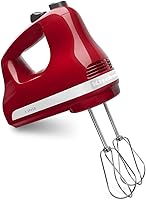
The KitchenAid 5 Ultra Power Speed Hand Mixer, KHM512, Empire Red has 5 speeds and 2 Stainless Steel Turbo Beater accessories. Speed 1 handles nuts or chocolate chips, and speed 5 whips egg whites or heavy cream.
It also has no dough hooks in the data we checked, so it fits soft doughs and batters, not stiff bread dough.
Hamilton Beach 6-Speed Electric Hand Mixer With Easy Clean Beaters
The Hamilton Beach 6-Speed Electric Hand Mixer With Easy Clean Beaters is the clearest dough fit of the three. It has 275 watts of peak power, 6 speeds, QuickBurst, 2 Easy Clean beaters, 2 traditional beaters, 2 dough hooks, and a whisk.
All attachments are dishwasher safe.
The smooth Easy Clean beaters reduce clogging in batters. Hooks pull soft dough through the bowl, and the snap on case holds the set together.
Hamilton Beach says it can knead thick bread dough, but we would still keep batches small and finish stiff dough by hand.
How do you clean and store a hand mixer after dough?
Eject the attachments, wash them in warm soapy water or the dishwasher if allowed, and dry fully. Wipe the body with a damp cloth and never submerge it.
Dough residue dries hard fast, so soak hooks and beaters before it sets. A small brush helps where dough packs around the shafts.
Check maker guidance for your model before using the dishwasher.
Wipe flour dust from the speed dial, housing, and cord right after use. A dry cloth first, then a slightly damp one, removes most of it without soaking vents.
Store attachments in a case or divider so hooks and beaters do not bend. Bent attachments will not spin evenly and can scratch the bowl.
A best hand mixer with storage case keeps the set together for switching between beaters and hooks.
What are common mistakes when using a hand mixer for dough?
The top mistakes are high speed, forcing stiff dough, and skipping the scrape. Each raises strain or leaves dry pockets, and each is easy to fix.
High speed flings flour and makes dough climb, so start low and stay low for yeast dough. Save higher speeds for beating butter and sugar before flour goes in.
If the mixer shakes or dough wraps the hooks, stop and knead by hand. A few minutes on the counter finishes most soft doughs and saves the motor.
Skipping the scrape leaves flour at the bottom and streaks in the center. Our best hand mixer for baking picks can help with batters, but scraping matters for every mixer.
Using the wrong attachment is another common error. Beaters stir dough, hooks fold it better, and a whisk is for air, not dough.
For proofing after mixing, proof dough in an oven can help you plan the next step. Start low, scrape often, and stop at the first sign of strain.
Frequently asked questions
Can you use a hand mixer for dough?
You can use a hand mixer for soft doughs, cookie dough, quick breads, and sponge batters. Stiff bread dough can strain a hand mixer motor, so mix it briefly at low speed and finish kneading by hand.
Attachments, speed, and dough hydration decide whether it is safe.
What dough hooks do for a hand mixer?
Dough hooks pull and fold dough so flour mixes more evenly than with flat beaters. They work best for soft to medium doughs in a large bowl.
They do not turn a light hand mixer into a stand mixer, and stiff dough still needs short bursts.
How do you mix dough with a hand mixer safely?
Clip in the correct attachments, start on the lowest speed, and keep the bowl steady. Move the mixer slowly around the bowl and pause to scrape the sides.
Stop if the mixer shakes, smells hot, or the dough climbs the hooks.