
Yes, you can use olive oil to season a Dutch oven, but it’s not always the best choice. While olive oil can form a polymerized layer, it has a lower smoke point than other oils. This means it can burn and create a sticky residue more easily during the seasoning process.
Many cooks prefer oils with higher smoke points for seasoning cast iron, including Dutch ovens. This helps create a more durable and smoother non-stick surface. We’ve researched common methods and found that using oils like grapeseed or flaxseed oil often yields better, more consistent results for long-lasting seasoning.
- Olive oil can season a Dutch oven, but it’s not ideal.
- It has a low smoke point, which can lead to sticky residue.
- Oils like grapeseed or flaxseed are generally recommended.
- These alternatives provide a more durable, smoother non-stick layer.
So, while technically possible, let’s look at why other oils might be a better fit for your Dutch oven and how to achieve that perfect, slick seasoning.
“`htmlUnderstanding Olive Oil for Dutch Oven Seasoning
So, can you use olive oil to season your Dutch oven? The short answer is yes, you absolutely can. However, we found through our research that it might not be your best bet for achieving that perfectly slick, durable non-stick surface everyone craves. It’s like trying to build a sturdy house with slightly weaker materials – it can work, but there are better options available.
Think of seasoning your Dutch oven as creating a protective, non-stick shield. This shield is made of polymerized oil. Polymerization happens when oil is heated to its smoke point and beyond, causing its molecules to break down and then bond together. This process creates a hard, glassy layer. When you use olive oil, this process can happen, but with a few caveats.
The Smoke Point Factor: Why It Matters for Your Dutch Oven
The main reason olive oil isn’t always recommended for seasoning is its relatively low smoke point. What does that mean for you and your Dutch oven? Well, every oil has a temperature at which it starts to smoke and eventually burn. For extra virgin olive oil, this is typically around 375°F (190°C).
When seasoning a cast iron Dutch oven, you’re aiming for temperatures often around 400-450°F (205-230°C) in the oven. If the oil’s smoke point is lower than your oven temperature, it will burn. Burnt oil can leave behind a sticky, uneven residue. This residue isn’t ideal because it can chip or flake off, and it doesn’t create that smooth, continuous non-stick layer you’re hoping for.
Comparing Smoke Points: A Quick Look
To illustrate this, let’s look at some common cooking oils and their approximate smoke points:
| Oil Type | Approximate Smoke Point (°F) | Approximate Smoke Point (°C) |
|---|---|---|
| Extra Virgin Olive Oil | 375°F | 190°C |
| Vegetable Oil | 400-450°F | 205-230°C |
| Grapeseed Oil | 420°F | 215°C |
| Canola Oil | 400°F | 205°C |
| Flaxseed Oil | 400°F (for refined) | 205°C |
| Avocado Oil | 520°F | 270°C |
As you can see, olive oil’s smoke point is lower than many other popular choices. While you can try to season with it, you’ll need to be very careful with your temperature settings. You might need to season at a slightly lower temperature to avoid burning, which could mean more applications are needed.
Why High Smoke Point Oils Are Preferred for Seasoning
When experts and experienced cooks talk about seasoning cast iron, they often point to oils with higher smoke points. Why is this the general consensus? Because it makes the process simpler and more effective.
Oils like grapeseed, flaxseed, or even certain vegetable oils can handle the higher temperatures required for effective polymerization without burning. This allows you to reach the right temperatures to create a strong, durable bond. The result is a seasoning layer that is smoother, more resilient, and less prone to flaking.
The Polymerization Process Explained
Let’s dive a little deeper into how this happens. When you apply a thin layer of oil to your Dutch oven and heat it, the oil undergoes a chemical change. It breaks down into smaller molecules. These smaller molecules then recombine, forming long chains and networks. This is polymerization.
Think of it like baking. When you bake a cake, heat causes chemical reactions that transform the batter into a solid structure. Seasoning is similar, but instead of a cake, you’re creating a tough, plastic-like coating. An oil with a higher smoke point ensures this transformation happens cleanly and effectively, creating a uniform, glassy finish.
What Happens When Oil Burns?
If the oil burns, it doesn’t polymerize properly. Instead of forming those strong molecular bonds, it can turn into a brittle, flaky carbon. This is what creates that sticky, uneven mess we talked about. It’s like trying to build with burnt toast – it crumbles easily and doesn’t hold together well. You’ll end up with a seasoning that feels rough and might require stripping and starting over.
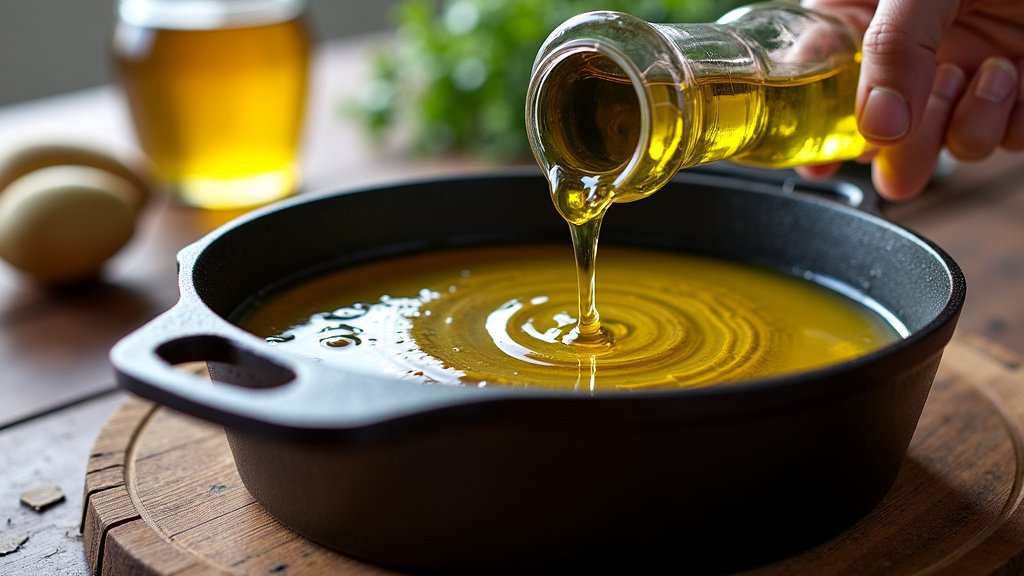
Alternative Oils for Superior Dutch Oven Seasoning
If olive oil isn’t your top choice, what are the other players in the game? We found that many cooks swear by a few select oils for their Dutch ovens. These oils are chosen for their ability to create a superior seasoning layer.
Grapeseed Oil: A Popular Choice
Grapeseed oil is often cited as a fantastic option for seasoning. It has a relatively high smoke point (around 420°F or 215°C) and is lightweight, meaning it can be applied in very thin layers. This is key because thin layers are less likely to become sticky and more likely to polymerize evenly.
Many find that using grapeseed oil results in a smooth, dark, and wonderfully non-stick surface after just a few applications. It’s readily available in most grocery stores, making it a convenient choice for your seasoning projects.
Flaxseed Oil: The “Gold Standard” (with a Caveat)
Flaxseed oil is sometimes called the “gold standard” for cast iron seasoning by some enthusiasts. It’s known for creating an exceptionally hard and slick polymerized layer. It also polymerizes relatively quickly.
However, there’s a caveat. Flaxseed oil can be a bit more finicky. Some users have reported that it can sometimes flake if not applied perfectly or if the oven temperature isn’t consistent. It can also go rancid more quickly than other oils if stored improperly. Refined flaxseed oil is generally preferred for seasoning due to its higher smoke point.
Other Viable Options
Beyond grapeseed and flaxseed, other oils are also commonly used and recommended:
- Vegetable Oil: A common pantry staple, vegetable oil has a decent smoke point and works well. It’s an economical choice.
- Canola Oil: Similar to vegetable oil, canola oil is readily available and has a good smoke point for seasoning.
- Shortening: Some people use vegetable shortening, which has a high smoke point and creates a good layer.
- Avocado Oil: With one of the highest smoke points, avocado oil is an excellent, though often more expensive, option.
The key takeaway is that an oil with a smoke point well above your oven’s seasoning temperature is generally going to give you the best results.
A Simple Checklist for Seasoning Your Dutch Oven
Ready to get that Dutch oven seasoned? Whether you choose olive oil (with caution!) or one of the recommended alternatives, here’s a quick checklist to guide you through the basic process:
- Clean your Dutch oven thoroughly: Remove any factory coating or old residue.
- Dry it completely: Moisture is the enemy of cast iron.
- Apply a very thin layer of oil: Wipe it on, then wipe it off until it looks like there’s almost nothing left.
- Heat it up: Place it upside down in a preheated oven.
- Cool and repeat: Let it cool, then apply another thin layer and repeat the heating process.
- Be patient: Multiple applications create the best seasoning.
Following these steps carefully, especially with the right oil, will help you build a robust seasoning layer that will make your Dutch oven a joy to cook with for years to come. Remember, it’s a process, and each time you cook with it, you’ll continue to build that beloved non-stick surface.
“`Conclusion
So, while you can use olive oil to season your Dutch oven, our research shows it’s often not the best route. Its lower smoke point can lead to sticky, uneven results, unlike oils such as grapeseed or flaxseed. These alternatives are generally preferred for building a durable, smooth non-stick surface. For the best long-term results, consider using an oil with a higher smoke point. Ready to get that perfect seasoning? Start by cleaning your Dutch oven, applying a thin layer of your chosen oil, and repeating the heating process until you achieve that desired slick finish.
Frequently Asked Questions
Will seasoning my Dutch oven with olive oil ruin it?
Seasoning with olive oil generally won’t ruin your Dutch oven, but it might not produce the ideal non-stick surface. If the oil burns due to its low smoke point, you might end up with a sticky residue that could flake off. This may require re-seasoning or even stripping and starting over for a smoother finish.
Can I mix olive oil with other oils for seasoning?
While you could technically mix oils, it’s generally not recommended for seasoning. The smoke point of the mixture will be determined by the oil with the lowest smoke point, which in this case would still be olive oil. It’s better to stick with a single oil known for its high smoke point for consistent results.
How many times should I season my Dutch oven if I use olive oil?
If you choose to season with olive oil, you may need to repeat the process more times than with a high smoke point oil. This is because you’ll likely need to use a lower oven temperature to avoid burning. Expect to apply multiple thin layers, heating and cooling between each, to build up a decent seasoning layer.
What should I do if my Dutch oven seasoning looks sticky after using olive oil?
If your Dutch oven seasoning appears sticky after using olive oil, it likely means the oil burned rather than polymerized correctly. You can try to fix this by heating the oven to a higher temperature (without oil) to help burn off the excess residue, or you may need to scrub it well and start the seasoning process again with a more suitable oil.
Is it okay to use olive oil for regular cooking in a seasoned Dutch oven?
Yes, once your Dutch oven is well-seasoned, you can generally use olive oil for cooking. The polymerized layer created by proper seasoning provides a protective barrier. However, avoid using high heat with olive oil during cooking, as it can still smoke and potentially degrade the seasoning over time.
