Cast Iron Skillet vs Dutch Oven: Which Should You Choose? (November 2026)
Choose a cast iron skillet for searing, frying and fast cooking, and a Dutch oven for braising, baking and slow cooking. In this cast iron skillet vs dutch oven guide, shallow or deep cast iron cookware matters more than brand, because depth changes what a pan can hold and how steam behaves.
On this page (11 sections)
- Cast iron skillet vs dutch oven side by side
- Which shape fits your daily meals?
- Searing and browning: skillet vs dutch oven
- Braising and slow cooking: where the Dutch oven wins
- Oven use and bread baking
- Shallow or deep cast iron cookware for different meals
- Weight, handling and daily ease
- Seasoning, enamel and care
- Which should you buy first?
- Who should buy which
- Verdict: cast iron skillet vs dutch oven
Choose a cast iron skillet for searing and fast meals, and a Dutch oven for braising and slow meals. This cast iron skillet vs dutch oven comparison turns on depth.
A skillet is shallow and open.
A Dutch oven is deep and lidded.
The skillets here are 12 inches and 10.25 inches across. The Dutch ovens here hold 6 quarts and stand about 6 inches high.
Our score weighs specs, features and buyer feedback against what you are shopping for. We compared the sizes, weights, materials and care rules below.
 Best for searing and everyday frying
Lodge Pre-Seasoned Cast Iron Skillet with Silicone Handle Holder, 12 Inches
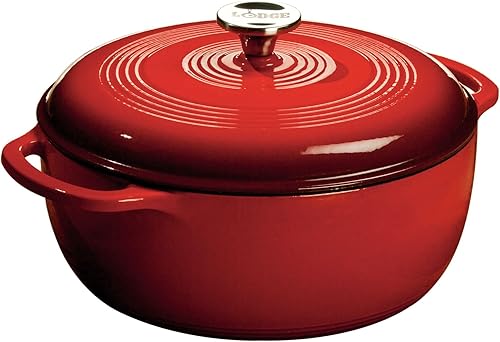 Best for braising and slow cooking
Lodge Essential Enamel Cast Iron Dutch Oven, 6 Quart, Island Spice Red
Cast iron skillet vs dutch oven side by side
The skillet wins for browning and access, and the Dutch oven wins for depth and steam. Use shallow cast iron cookware for food you need to flip, stir or finish fast.
Use deep cast iron cookware for food that simmers, braises or bakes under a lid.
A skillet holds 1.89 liters in the 12-inch model. The Dutch oven holds 6 quarts, which is about three times as much by volume.
The 12-inch skillet weighs 7.5 pounds. The 10.25-inch skillet weighs 5.4 pounds.
The Dutch ovens weigh 13.5 pounds and 14.9 pounds.
Both shapes use heavy cast iron that holds heat and cooks evenly. The skillets are pre-seasoned with natural vegetable oil.
The Dutch ovens use an enamel coating over cast iron.
That surface choice matters for care. Seasoned iron needs drying and oil after washing.
Enameled iron does not need seasoning and resists rust.
Both can move between stovetop and oven. The Dutch ovens are oven safe up to 500 degrees Fahrenheit.
The skillets are also oven safe and suit grills and campfires.
For a broader look at pan shapes, compare oven safe cookware before you decide. That guide helps you match material and shape to the meals you cook most.
Which shape fits your daily meals?
Pick a skillet if most dinners are quick, browned or fried, and pick a Dutch oven if most dinners are slow, soupy or baked. A cast iron dutch oven skillet search often mixes two jobs.
Separate them by how much liquid your meals have.
Skillets suit searing, sautéing, frying and baking. Lodge says the 12-inch skillet is a multipurpose everyday pan for those jobs.
It also suits campfire meals.
Dutch ovens suit braising, roasting, baking and simmering. Lodge says the 6-quart Dutch oven is ideal for bread baking, braising, marinating and slow cooking.
Its deep walls hold liquid without spilling.
Think of a week of dinners. Steak, eggs, corn bread and roasted vegetables point to a skillet.
Pot roast, soup, stew and sourdough point to a Dutch oven.
Think of weekends too. A deep pot earns its space when you cook batch meals.
A skillet earns its space when you cook weeknight meals fast.
If your menu has little liquid, a skillet gives you more use per meal. If your menu has stews, sauces or beans, a Dutch oven gives you more use.
Searing and browning: skillet vs dutch oven
A skillet browns more foods at once because its surface is wide and open. The 12-inch skillet gives you room to space meat, vegetables or potatoes.
Space helps food brown instead of steam.
A Dutch oven can sear too. Its heavy cast iron base holds heat and cooks evenly.
Deep walls can crowd the surface, so you may need smaller batches.
The 10.25-inch skillet suits one or two servings. It has an assist handle and a silicone hot handle holder.
Lodge says cast iron provides superior heat retention and even cooking.
Both skillets are pre-seasoned with 100% vegetable oil and no synthetic coatings. Lodge says the seasoning improves with use.
Food releases more easily as the layer builds.
The Dutch ovens are PFAS free and enameled. That enamel surface stands up to acidic ingredients and will not react with food.
It suits marinades and tomato based dishes.
For a skillet with ridges for grill marks, see the best cast iron skillet with ridges. Ridges change browning patterns, so choose them only if you want those marks.
Braising and slow cooking: where the Dutch oven wins
A Dutch oven braises better because it is deep, lidded and holds 6 quarts. A skillet can cook a sauce, but it cannot hold a braise with the same ease.
The Dutch oven lid seals in moisture. That trapped steam helps tough cuts soften during long cooking.
It also helps bread bake with a crisp crust.
Dual handles help you move a full pot. That matters when a braise weighs more than the empty 13.5 or 14.9 pounds listed here.
The enamel coating resists stains and rust. Lodge says the pot can marinate, cook, refrigerate and serve in one piece.
That helps when a meal rests before serving.
A skillet has no lid in these listings. You can still simmer a small amount of liquid, but splashes and evaporation are harder to control.
If you want a lower, wider braising pan, read what is a braiser pan used for. A braiser sits between a skillet and a Dutch oven in depth.
Oven use and bread baking
Both shapes can go in the oven, but only the Dutch oven traps steam for bread. A skillet can bake cornbread, a frittata or roasted vegetables.
A Dutch oven can bake bread and braise in the same vessel.
The Dutch ovens are oven safe up to 500 degrees Fahrenheit. They work on gas, electric, ceramic and induction cooktops.
The skillets work on gas, electric, induction and grills.
The 12-inch skillet is safe for oven and stovetop use. Its maximum temperature is 260 degrees Celsius.
The 10.25-inch skillet has a maximum temperature of 550 degrees Fahrenheit.
Those limits differ by model, so check the exact pan before you heat it. Do not assume one Lodge pan shares another pan's limit.
For bread, the lid is the key. It holds moisture around the dough during the first part of baking.
A skillet leaves that steam free to escape.
If you bake often, depth and a lid matter more than a wide flat surface. If you bake skillets of cornbread or frittatas, a skillet matters more.
Explore the Best Dutch Oven Enameled Cast Iron if enamel is your priority. Enameled cast iron dutch oven models suit acidic foods and easy wiping.
Shallow or deep cast iron cookware for different meals
Choose shallow cookware for dry heat and deep cookware for wet heat. This one rule clears up most of the skillet and Dutch oven choice.
Dry heat meals include searing, frying, sautéing and baking. These meals need space, access and fast evaporation.
A skillet gives you all three.
Wet heat meals include braising, simmering, stewing and soup. These meals need volume, a lid and steady low heat.
A Dutch oven gives you all three.
Depth also changes stirring. A skillet lets you stir and flip with less risk of hitting a wall.
A Dutch oven keeps liquid in, but tools work in a narrower space.
Depth changes storage too. A skillet stacks or hangs more easily in many kitchens.
A 6-quart Dutch oven takes shelf space and careful lifting.
Depth changes serving. The Dutch oven can leave the oven and go to the table.
The skillet can also serve, but it holds less liquid and spills more easily.
If you often cook for one or two people, the 10.25-inch skillet may fit your portions. If you cook for a family, the 12-inch skillet or the 6-quart Dutch oven may fit better.
Weight, handling and daily ease
Skillets are lighter and easier to move, while Dutch ovens need two hands and planned lifting. Weight is a real buying factor with cast iron.
The 10.25-inch skillet weighs 5.4 pounds. It has an assist handle and a teardrop style main handle.
That helps with control on the stovetop.
The 12-inch skillet weighs 7.5 pounds. It includes a silicone heat-resistant handle holder for transport after cooking.
That holder protects your hand from the hot handle.
The Dutch ovens weigh 13.5 pounds and 14.9 pounds before food. A full pot of soup or stew will weigh much more.
Dual handles help, but you still need a firm grip.
Empty weight also affects storage. A heavy Dutch oven on a high shelf can be hard to lift down safely.
A skillet is easier to store in a cabinet or on a rack.
Heat retention cuts both ways. Cast iron holds heat for even cooking, but it stays hot after burners turn off.
Silicone holders help, but they do not make handles cool.
If lifting is a concern, test your comfort with a heavy pot first. Choose the lighter skillet only if it still holds your meals.
Choosing depth should not create a safety problem.
Seasoning, enamel and care
Choose seasoned cast iron for simple care and enameled cast iron for low maintenance and no rust worry. Each surface asks for a different routine.
The skillets arrive pre-seasoned with natural vegetable oil. Lodge says they are PFAS free and made without PFOA or PTFE.
The seasoning gives a natural nonstick finish.
After cooking, hand wash, dry and rub with cooking oil. Lodge gives that simple routine for the 10.25-inch skillet.
This step helps protect seasoned iron from rust.
You can learn more from how to season a new cast iron skillet. Good seasoning builds with use, not with one heavy coat.
The Dutch ovens use enamel over cast iron. Lodge says they are dishwasher safe, but hand washing with warm soapy water and a nylon scrub brush is recommended.
That care helps keep the enamel in good shape.
Enamel resists acidic ingredients and stains. That makes it useful for marinades, tomatoes and wine based braises.
It also gives you color for serving.
Seasoned iron can react with acidic foods in some cases, while enamel does not. If you cook many acidic meals, enamel may suit your routine better.
Which should you buy first?
Buy a skillet first if you cook daily and own no cast iron, and buy a Dutch oven first if you braise or bake bread weekly. The first pan should match your most common meals.
A new cook often starts with a skillet. It sears, fries, sautés and bakes with one pan.
The 12-inch model gives you more room for family meals.
A soup and stew cook often starts with a Dutch oven. It simmers, braises and bakes with one lidded pot.
The 6-quart size suits many family meals.
If you already own a large stock pot, a Dutch oven adds less new value for soup. It still adds value for braising and bread baking under a lid.
If you already own a nonstick skillet, a cast iron skillet adds browning power and oven use. It also adds weight and hand washing.
If you compare a casserole dish vs dutch oven, note that a casserole dish is not cast iron. It will not sear or hold heat in the same way.
If you compare a le creuset braiser vs dutch oven, note that a braiser is shallower. It suits some braises but holds less liquid than a 6-quart Dutch oven.
For a wide braising pan, see the best enameled cast iron braiser. That shape may sit between these two choices.
Who should buy which
Buy the 12-inch skillet for daily searing, the 10.25-inch skillet for small batches, and a 6-quart Dutch oven for slow cooking and bread. Match the pan to the person and the meal.
Buy the Lodge 12-inch skillet if you sear meat, fry eggs and bake cornbread often. Its wide surface and silicone holder help with daily use.
Its 1.89 liter capacity suits many skillet meals.
Buy the Lodge 10.25-inch skillet if you cook for one or two. It is lighter at 5.4 pounds and easier to store.
It still works in the oven, on the stove, on the grill or over a campfire.
Buy the Lodge 6-quart Dutch oven in Island Spice Red if you braise, simmer and bake bread. Its enamel resists rust and acidic foods.
Its lid seals in moisture for slow meals.
Buy the Lodge 6-quart Dutch oven in Oyster White if you want the same function with a lighter color. It suits bread baking, braising, marinating and slow cooking.
It also moves from cooktop to oven to table.
Skip a skillet if your meals are mostly soups and stews. Skip a Dutch oven if you rarely cook with liquid and need fast browning.
The wrong shape will sit unused.
Verdict: cast iron skillet vs dutch oven
Pick a cast iron skillet for searing and daily frying, and pick a Dutch oven for braising, bread and slow cooking. This cast iron skillet vs dutch oven choice comes down to depth, lids and liquid.
Choose shallow cast iron cookware when meals are dry, fast and need flipping. Choose deep cast iron cookware when meals are wet, slow and need steam.
If you can buy only one pan now, buy the shape that fits your weekly menu. Add the other shape later when a recipe calls for it.
Our top pick here is the 12-inch Lodge skillet at 9.7 for everyday use. The 6-quart Lodge Dutch ovens follow at 9.6 and 9.5 for deep cooking.
Start with the pan you will use most, then fill the gap. That simple rule will serve your kitchen better than chasing every shape at once.
Frequently asked questions
Is a cast iron skillet or a Dutch oven more versatile?
A skillet is more versatile for daily searing, frying, sautéing and baking, while a Dutch oven suits braising, simmering, bread baking and meals with liquid. Many cooks use a skillet most days, then add a Dutch oven for deep, slow recipes that need a lid.
Can a Dutch oven sear food like a skillet?
Yes, a cast iron Dutch oven can sear with its heavy base and even heat, but its deep sides make flipping and browning less open than a skillet. A skillet gives faster access and more room to space food, while the Dutch oven adds steam and liquid control with a lid.
Can a cast iron skillet braise like a Dutch oven?
A skillet can braise in small amounts, but its shallow sides hold less liquid and a lid is not part of the skillets here. A Dutch oven holds 6 quarts, seals in moisture with its lid and moves from stovetop to oven for long, slow cooking.
Which is easier to clean after cooking?
The pre-seasoned skillets need hand washing, drying and a light rub of cooking oil, while the enameled Dutch ovens are dishwasher safe but hand washing with warm soapy water is recommended. Enamel resists rust, and seasoned cast iron improves with use when cared for correctly.


