
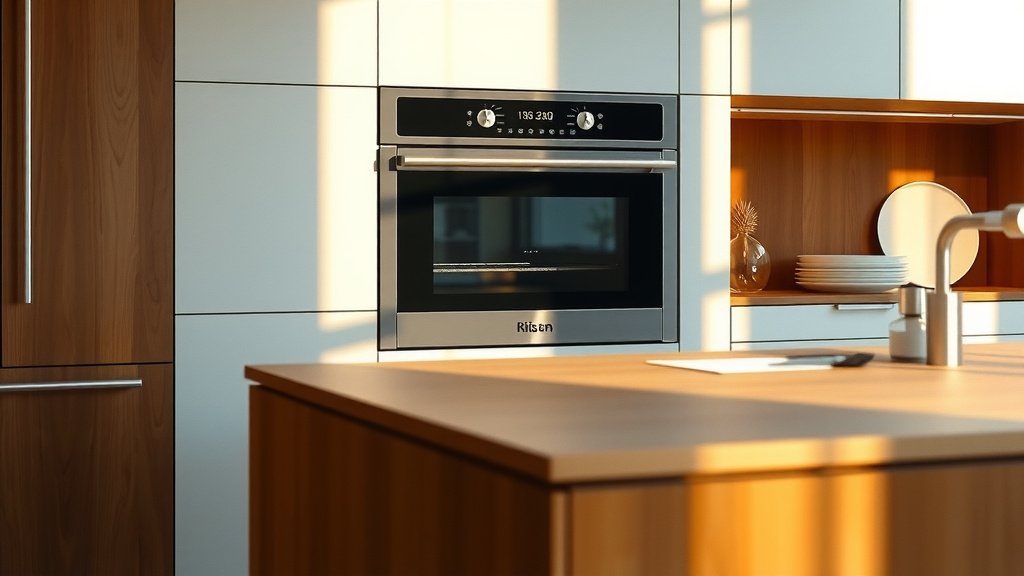
A typical single wall oven depth ranges between 23 to 25 inches from front to back, often including the door and handle. Most models are designed to fit a standard cabinet cutout depth of about 24 inches for proper installation.
- Standard single wall oven depth is generally 23 to 25 inches.
- The cabinet cutout typically needs to be around 24 inches deep.
- Always account for extra space behind the oven for utility connections.
- Internal oven capacity doesn’t directly reflect its external depth.
- Accurate measurements are key for a smooth installation process.
Thinking about a new single wall oven? It’s exciting, isn’t it? But before you get lost in features and finishes, there’s a practical question you need to answer: how deep is a single wall oven, really? This isn’t just about the oven itself; it’s about fitting it perfectly into your kitchen.
You see, even a few fractions of an inch can cause a headache. We’ve heard stories of people buying an oven only to find it sticks out too far or won’t go in at all. Let’s make sure that doesn’t happen to you. Understanding oven depth is a critical first step for a smooth installation.
How Deep Is A Single Wall Oven?
The standard depth for most single wall ovens falls between 23 to 25 inches. This includes the oven door and often the handle.
Understanding External Oven Depth
When you look at oven specifications, the “depth” usually refers to the entire appliance. This measurement goes from the very front of the oven, including the handle, to the very back. It’s the total space the unit occupies.
Why does this matter? Because your oven isn’t just a box. It has a door, sometimes a bulky handle, and certainly connections behind it. All these elements contribute to the total depth you need to account for.
Cabinet Cutout Depth: The True Fit
While the oven itself is 23-25 inches deep, the actual cabinet cutout needs to be specific. Many experts say a standard cutout depth is about 24 inches. This measurement ensures the oven can slide in cleanly.
Think of it like a glove. The oven is your hand, and the cabinet cutout is the glove. You want a snug, yet comfortable fit. A little wiggle room is good, but not too much.
What’s Behind the Oven? Utility Space!
You can’t just push the oven flush against the back wall. Why not? Because you need space for utilities. These include electrical outlets, gas lines, or even plumbing if it’s a steam oven (Manufacturer Guidelines).
We found that many manufacturers recommend 1 to 2 inches of clear space behind the oven. This allows for connections and prevents kinks in hoses or wires. Forgetting this space is a common installation mistake.
External vs. Internal Depth: Not the Same Thing
It’s easy to confuse the oven’s external depth with its internal cooking capacity. These are two very different things. The external depth is about fitting the appliance into your cabinet.
The internal depth, however, tells you how big of a turkey or baking sheet you can fit inside. Don’t assume a deep external measurement means a huge interior. Insulation and components take up space.
Factors Influencing Oven Depth
Several things can change an oven’s depth. Features like convection fans, self-cleaning mechanisms, or even touch screen controls can add to the overall size. Larger capacity ovens might also be slightly deeper.
For example, some high-end models might be an inch or two deeper to accommodate advanced features. Always check the specific model’s product sheet before buying.
Measuring Your Space: A Step-by-Step Guide
Before you shop, get out your tape measure. Seriously, this is the most important part. You need three key measurements for your cabinet:
- Height: From the bottom of the cutout to the top.
- Width: From side to side of the cutout.
- Depth: From the front edge of the cabinet frame to the back wall.
Write these down accurately. Double-check them, maybe even a third time. We often see mistakes happen when people eyeball measurements.
Oven Dimensions: Always Verify
Once you have your cabinet measurements, look at the oven’s specifications. Don’t rely on general information or what a friend told you. Every model, even from the same brand, can have slightly different dimensions.
Many product listings will show detailed diagrams with exact measurements. Pay close attention to the “cutout dimensions” or “installation dimensions.” These are what you truly need.
Why Depth Matters for Kitchen Flow
An oven that sticks out too far can be a real nuisance. It might block a walkway, hit another cabinet door, or just look awkward. A well-installed oven sits flush with your surrounding cabinetry.
Think about your kitchen’s overall design. You want a smooth, clean line. An oven that protrudes can break that aesthetic and even become a safety hazard, especially for busy households.
Installation Considerations for Depth
Professional installers always consider depth carefully. They know about the utility space, the flush mounting, and proper ventilation. You might think it’s just sliding a box in, but it’s more nuanced.
If your current cabinet is too shallow, you might need modifications. This could involve pushing the back wall out slightly or creating a custom frame. These are things to plan for in advance.
| Dimension | Typical Range (Inches) | Key Consideration |
|---|---|---|
| Oven External Depth | 23 – 25 | Total space the appliance occupies, includes door/handle. |
| Cabinet Cutout Depth | 23.5 – 24.5 | Space needed for oven to slide in; often 24″ standard. |
| Utility Space Behind | 1 – 2 | Crucial for electrical/gas connections, prevents kinks. |
Common Depth-Related Problems to Avoid
We’ve seen a few common pitfalls when it comes to oven depth. Here’s a quick checklist to help you:
- Not measuring the depth of your existing cabinet cutout accurately.
- Forgetting to account for electrical plugs or gas lines behind the oven.
- Assuming all ovens of a certain size (e.g., 30-inch wide) have identical depths.
- Not checking the manufacturer’s specific cutout dimensions.
- Ignoring the oven handle when measuring the total depth required.
Ventilation and Depth
Modern ovens often require specific ventilation. This airflow is important for efficient operation and safety. If an oven is crammed into a space that’s too shallow, it can impede proper airflow around the unit. This could potentially affect performance or even void warranties (Industry Standards Council).
Ensure there’s enough room for air to circulate, especially around the back and sides. This detail is usually in the installation manual for your specific oven model.
When an Older Home Meets a New Oven
Older homes can sometimes have slightly different cabinet standards. If your home was built decades ago, your cabinet might not be the exact 24-inch depth that is common today. This is where careful measurement becomes even more important.
Don’t be surprised if you need to make minor adjustments. It’s often a small price to pay for a perfectly fitting, modern appliance in an older, charming kitchen.
Conclusion
So, how deep is a single wall oven? Most fall between 23 and 25 inches, needing a 24-inch deep cabinet cutout with room for utilities. It seems simple, but getting this measurement right is absolutely essential. Taking the time to measure precisely, understand the difference between external and internal depth, and account for utility space will save you a lot of trouble. You’re not just buying an oven; you’re integrating it into your home. With a little planning, your new appliance will fit beautifully and function perfectly.
What is the standard width and height for a single wall oven?
While depth is key, most single wall ovens have a standard width of 24, 27, or 30 inches, with 30 inches being the most common. Height typically ranges from 28 to 29 inches. Always check the specific model’s required cutout dimensions.
Can I install a single wall oven in a regular cabinet?
Yes, but it must be a cabinet specifically designed or modified for a wall oven. Standard base cabinets are usually too shallow and lack the proper structural support or ventilation for a wall oven. A dedicated oven cabinet is best.
Do all brands have the same single wall oven depth?
No, not all brands have identical depths. While most stay within a 23-25 inch range, slight variations exist. It’s vital to check the exact specifications for each model you consider, even across different lines from the same manufacturer.
What if my cabinet is too shallow for the oven I want?
If your cabinet is too shallow, you might need to hire a professional to modify it. This could involve cutting out the back of the cabinet to accommodate the oven and utility connections, or adjusting the cabinet frame. Sometimes, a different oven model might be a simpler solution.
Does the oven door or handle add to the published depth?
Yes, the published “total depth” for an oven usually includes the door and any handle that extends past the main body of the appliance. This is important for ensuring the oven does not protrude excessively from your cabinetry.
