
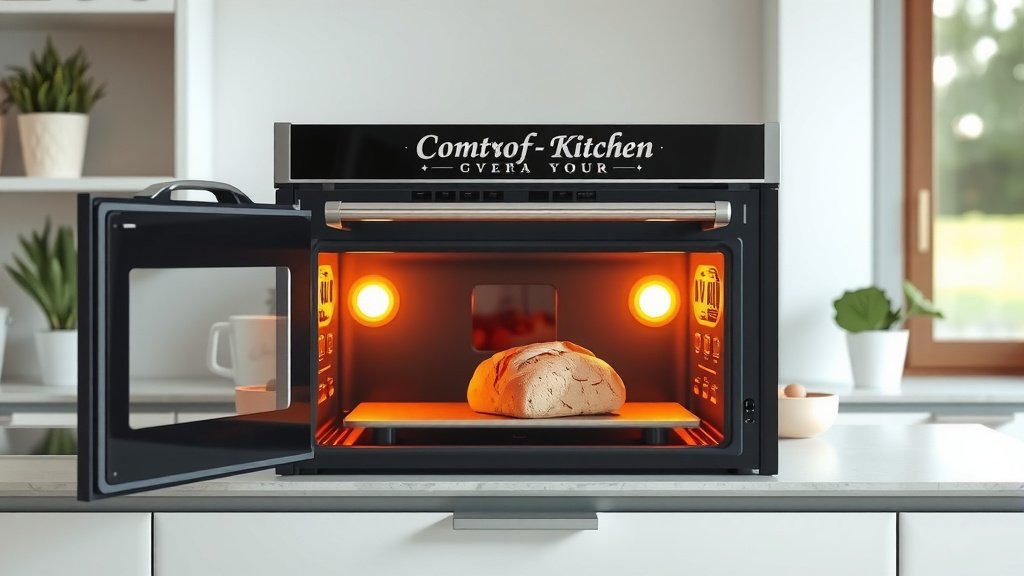
A countertop oven heats food using electric heating elements, often found at the top and bottom of its compact cooking chamber.
This process bakes, broils, or toasts your meals efficiently by radiating heat directly onto the food, making it a versatile kitchen tool.
Here’s a quick look at what we’ll cover:
- Countertop ovens rely on electric heating elements to cook food.
- They offer great versatility, handling tasks from baking to toasting.
- Some models include convection fans for quicker, more even heating.
- These ovens are perfect for saving space and can be energy efficient.
- Picking the right one means considering size, features, and your cooking needs.
How Does A Countertop Oven Work?
So, you’re curious about the magic inside that compact appliance sitting on your kitchen counter? A countertop oven is essentially a smaller version of your traditional oven, but with a few clever design choices that make it perfect for quick meals or smaller households.
It cooks your food primarily by heating air around it, just like a big oven does. Think of it as a cozy, warm cave for your dinner!
Heating Elements Explained
At the heart of every countertop oven are its heating elements. These are typically metal coils that glow red when electricity passes through them, generating radiant heat. You’ll usually find one element at the top and another at the bottom of the cooking chamber.
When you set a temperature, these elements turn on, get hot, and then turn off to maintain that heat. It’s a simple yet effective system for making sure your food gets cooked through.
The Role of Insulation
You might wonder why your counter doesn’t get scorching hot. Good question! We found that efficient insulation plays a big part here. The oven’s walls have layers that trap the heat inside the cooking chamber, keeping the exterior cooler and directing all that precious heat toward your meal.
This design helps your oven heat up faster and maintain a steady temperature without wasting energy.
Understanding Temperature Controls
Every countertop oven comes with controls, usually knobs or digital buttons, to set the temperature and cooking time. When you select, say, 350°F, you’re telling the oven to keep the internal air at that heat level.
A built-in thermostat constantly monitors the temperature. When it drops, the heating elements kick back on. When it’s too hot, they pause. This on-off cycle is how your oven achieves consistent cooking results.
The Power Behind the Heat
It’s all about electricity! Plug your oven into a standard outlet, and it draws power to energize those heating elements. This electrical energy converts directly into thermal energy, which then radiates to your food.
Many appliance experts note that this direct conversion makes them quite efficient for their size, particularly when you’re cooking smaller portions.
Beyond Basic Baking: Convection Technology
Not all countertop ovens are created equal. Some models feature a fantastic upgrade: convection technology. Have you ever wished your food would cook faster and more evenly?
A convection oven might be your answer. It takes the basic heating process and gives it a boost.
What is Convection, Exactly?
Imagine a tiny fan tucked inside your oven. That’s the key to convection! We found that convection ovens have a fan that circulates the hot air around the food. Instead of just relying on stagnant, rising heat, this fan actively moves the warmth.
It means every part of your dish is exposed to the same temperature, leading to more uniform cooking.
Benefits of Convection Cooking
The perks of convection are pretty sweet. For starters, your food often cooks faster because of the constant hot air movement. Research often connects convection with more even browning and crisping (Cook’s Illustrated). This means perfectly golden cookies or delightfully crispy chicken.
Plus, because heat distributes better, you might even be able to cook at slightly lower temperatures, saving a little energy.
Why Pick a Countertop Oven?
Why would someone choose a smaller oven when a full-sized one exists? Well, there are several compelling reasons. They’re not just for tiny kitchens; they offer a lot of practical advantages for everyday cooking.
Think about how often you truly need to fire up a massive appliance for a single meal.
Size and Space Saving
This is probably the most obvious benefit. Countertop ovens are compact and portable. If you live in an apartment, a dorm, or just have limited kitchen space, these ovens are a lifesaver. They can handle most cooking tasks without hogging valuable real estate.
They’re also easy to store away if you only use them occasionally.
Energy Efficiency
Many experts say that for smaller meals, a countertop oven uses less energy than a full-sized oven. Why? Because you’re heating a much smaller space. It reaches the desired temperature quicker and doesn’t need to maintain heat in such a large cavity.
This can lead to noticeable savings on your energy bill, especially if you cook smaller batches frequently.
Cooking Versatility
Don’t let their size fool you. Countertop ovens can be incredibly versatile. Many models can bake cookies, roast vegetables, broil salmon, or even toast bread. Some are true multi-taskers, even offering air frying or dehydrating functions.
It’s like having a miniature culinary assistant ready for almost anything.
Maintenance Tips for Your Mini Marvel
Like any kitchen appliance, a little care goes a long way. Keeping your countertop oven clean and running well ensures it lasts longer and performs its best.
A well-maintained oven is a happy oven, and it makes your cooking experience much smoother!
Cleaning Your Oven
Regular cleaning is key. After each use, wipe down the inside with a damp cloth once it’s cool. For tougher spills, a mix of baking soda and water can work wonders. Avoid harsh chemicals, which can damage the interior finish.
Remember to clean the crumb tray regularly to prevent smoke and odors.
Safety First
Always place your countertop oven on a stable, heat-resistant surface. Give it plenty of clearance from walls and cabinets for proper ventilation. Never cover the vents, as this can lead to overheating. And of course, always unplug it before cleaning!
These simple steps keep you and your kitchen safe.
Choosing the Right Countertop Oven For You
Ready to bring one home? With so many options, picking the perfect countertop oven can feel like a quest. But don’t worry, we’re here to guide you. Consider what you cook most often and how much space you have.
Here’s a small checklist to get you started:
- How much counter space do you have?
- What types of dishes will you cook?
- Do you need convection for faster cooking?
- Are digital controls or knobs better for you?
- What is your budget for this appliance?
- How easy is it to clean this specific model?
Capacity Considerations
Oven capacity is measured in liters or by how many slices of toast it can hold. Think about your household size. Do you need to toast four slices of bread at once? Or roast a small chicken?
Match the oven’s capacity to your typical cooking needs to avoid frustrations.
Feature Focus
Some ovens come packed with features: air frying, slow cooking, dehydrating, rotisserie, or even smart connectivity. Others keep it simple with just toast, bake, and broil settings. Consider which features you’ll actually use.
Extra features often mean a higher price tag, so choose wisely.
Budgeting for Your Oven
Countertop ovens range widely in price. Basic models can be quite affordable, while advanced convection or multi-function ovens can cost more. Set a budget before you start shopping to help narrow down your choices.
Remember, sometimes spending a little more upfront can mean better durability and features you’ll truly appreciate.
Here’s a quick comparison of two common types you might find:
| Feature | Basic Countertop Oven | Convection Countertop Oven |
|---|---|---|
| Heating Method | Radiant heat from elements | Radiant heat + circulating fan |
| Cooking Speed | Standard | Faster (often 20-30% quicker) |
| Evenness | Good, but can have hot spots | Superior, very uniform cooking |
| Crisping/Browning | Standard | Enhanced, crispier results |
| Best For | Toast, simple baking, reheating | Baking, roasting, air frying, dehydrating |
Conclusion
Countertop ovens are truly kitchen workhorses, bringing convenience and versatility to your daily cooking. Understanding how they heat, whether through simple elements or with the added power of convection, helps you make the most of your appliance.
They’re fantastic for saving space, cutting down on energy for smaller meals, and opening up a world of cooking possibilities. Choosing the right model means considering your needs, space, and desired features.
Happy cooking!
What are the main components of a countertop oven?
The main components include electric heating elements (top and bottom), an insulated cooking chamber, a thermostat for temperature control, and a timer. Convection models also include a fan for air circulation.
Can a countertop oven replace a full-sized oven?
For individuals or small households, a countertop oven can often replace a full-sized oven for everyday tasks like baking, broiling, and toasting. However, its smaller capacity might limit cooking for large gatherings or very big dishes.
Do all countertop ovens have a convection setting?
No, not all countertop ovens include a convection setting. Many basic models rely solely on radiant heat from the elements. Convection ovens typically feature a fan for circulating hot air, which is usually highlighted as a key feature.
How do I prevent my countertop oven from overheating?
To prevent overheating, always place your oven on a heat-resistant surface, ensure adequate clearance around the sides and back for ventilation, and never block the air vents. Following the manufacturer’s usage guidelines is also important.
Are countertop ovens energy efficient?
Yes, for cooking smaller meals or single dishes, countertop ovens are generally more energy efficient than full-sized ovens because they heat a much smaller space. This quicker preheating and smaller volume to maintain temperature can lead to lower energy consumption.
