
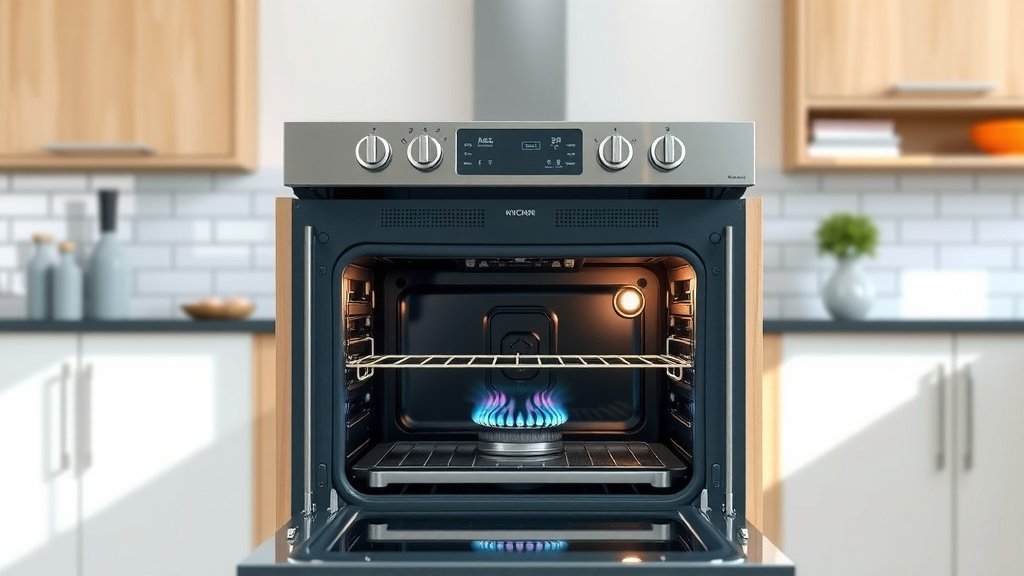
A gas oven operates by igniting natural gas or propane from a fuel line, which then heats a burner to cook your food. This process relies on a thermostat to regulate the flame, ensuring your cooking temperature remains stable and precise.
Understanding how your gas oven works can truly change your cooking experience, making you more confident in the kitchen.
- Gas ovens use a fuel source like natural gas or propane.
- An igniter starts the flame at the main burner.
- A thermostat constantly adjusts the gas flow to keep the heat steady.
- The heat spreads through the oven cavity to cook food.
- They often heat quickly and provide a moist cooking setting.
How Does A Gas Oven Work?
A gas oven operates by delivering fuel to a burner, where an igniter sparks it to create a flame. This flame then heats the air inside the oven to your desired cooking temperature.
The Path of the Gas: From Line to Flame
Imagine your oven as a cozy campfire for your food. For this fire to start, it needs fuel. A gas oven draws either natural gas or propane from a supply line, much like how water comes from a tap. This fuel is what provides the energy for heating.
Once the gas enters your oven, it travels through a valve. This valve is important because it controls how much gas reaches the burner. When you set a temperature, the oven signals this valve to open, allowing the gas to flow. This simple flow is the start of your cooking.
Meet Your Igniter
After the gas flows, something needs to light it. That’s where the igniter comes in, acting like a tiny spark plug. When you turn on your oven, the igniter heats up or sparks to ignite the gas. It’s a key part of getting the cooking process going.
This little device ensures that when gas is present, it catches fire safely. Without a working igniter, the gas won’t light, and your oven won’t heat up. We found this component is often the first thing to check if your oven isn’t heating (Many appliance repair guides).
The Burner: Where the Magic Happens
The burner is essentially a long tube with small holes, usually located at the bottom of the oven. When the igniter lights the gas, it burns along this tube, creating a consistent flame. This flame is the primary source of heat inside your oven.
This controlled flame then radiates heat upwards and around the oven cavity. The burner’s design helps distribute this warmth, making sure no single spot gets too hot too fast. It’s truly the heart of your oven’s warmth.
Controlling the Heat: Your Oven’s Thermostat
Ever wonder how your oven stays at exactly 350°F? Thank the thermostat! This smart sensor constantly monitors the oven’s internal temperature. When the oven gets too cool, it tells the gas valve to open more, letting more gas reach the burner to boost the flame. Temperature regulation is key.
Conversely, if the oven gets too hot, the thermostat signals the valve to reduce the gas flow. This lessens the flame, cooling things down. This constant dance of heating and cooling keeps your oven within a narrow temperature range, ensuring your food cooks evenly. Many experts agree that a reliable thermostat is essential for precise baking and roasting.
Igniter Types: Glow-Bar and Spark
Not all igniters are created equal, though they serve the same purpose. The two main types are glow-bar igniters and spark igniters. Glow-bar igniters get hot, glowing orange to ignite the gas. They also act as a safety sensor, letting gas flow only when hot enough (research suggests this system is very reliable).
Spark igniters, often found in newer models, create a series of rapid sparks, much like a gas grill or stovetop burner. You’ll hear a “clicking” sound as they work to ignite the gas. Both methods work well, but they operate with different mechanisms for starting the heating cycle.
How Heat Spreads Inside Your Oven
Once the flame is going, how does that heat get to your casserole? Gas ovens primarily use radiant heat, meaning the warmth directly from the burner and heated oven walls warms your food. Air currents also play a part, gently moving hot air around the cavity. This combination ensures thorough and even cooking.
Some gas ovens also include a convection fan. This fan actively circulates the hot air, leading to faster and more even cooking. If your oven has one, you’ll likely see a “convection bake” setting. This feature can be great for roasting and baking multiple dishes at once, offering a uniform cooking environment.
Radiant Heat Explained
Think of sitting by a warm fireplace; you feel the heat directly, right? That’s radiant heat. In your gas oven, the hot burner and walls radiate heat directly to your food. This method is often praised for keeping foods like roasts and baked goods moist. It’s a direct and effective way to transfer energy.
This direct heat transfer helps create a good crust on breads and a nice sear on meats. It’s one of the defining characteristics of gas oven cooking. Many home chefs appreciate this aspect for certain types of dishes, finding it creates a specific culinary quality.
Essential Safety Measures in Gas Ovens
Safety is built into modern gas ovens. A common feature is the flame sensor, which works hand-in-hand with the igniter. If the igniter attempts to light the gas but no flame appears, the sensor detects this. It then immediately shuts off the gas supply. This prevents any dangerous gas buildup, keeping your home safe. We found that this is a standard safety protocol.
Another safety feature involves automatic re-ignition. If the flame goes out accidentally during cooking, the igniter will often try to relight it. If it fails after a few attempts, the gas supply will be cut off. These systems are designed to protect you and your home, giving you peace of mind while cooking.
The Preheating Process: A Quick Guide
Before you pop in that cookie dough, your oven needs to preheat. When you set a temperature, the burner stays on high until the oven reaches that mark. The thermostat then takes over, cycling the flame on and off to maintain the heat. This warm-up ensures your food starts cooking at the correct and stable temperature.
Preheating is vital for most recipes to prevent undercooked or unevenly cooked food. It allows the oven cavity and racks to absorb heat fully, creating a consistent baking environment. Don’t rush this step; your delicious results will thank you for waiting for the preheat cycle.
Why People Choose Gas Ovens
Many cooks prefer gas ovens for several reasons. They often heat up faster than electric models, saving you a little time in the kitchen. We found this quick response to be a significant advantage for busy households. The flame also provides a moist cooking environment, which can be great for certain baked goods and roasts. This helps prevent food from drying out, leading to juicier and more tender dishes.
Gas ovens also have a unique visual feedback loop: you can see the flame. This allows some cooks to intuitively understand how much heat is being generated. Plus, they still work during power outages, as long as the igniter doesn’t require electricity. This can be a major benefit, ensuring you can still prepare meals even when the power goes out. These practical benefits make gas ovens a popular choice for many kitchens.
Gas Oven Maintenance for a Longer Life
Keeping your gas oven in top shape is simpler than you might think. A little routine care goes a long way. Regularly wiping down spills inside the oven prevents baked-on grime, which can affect heating. This helps keep the interior clean, ensuring efficient heat distribution.
Here are some simple maintenance steps:
- Wipe up spills as they happen.
- Clean the oven interior regularly.
- Check the oven door seal for tears.
- Ensure burner ports are clear of debris.
- Have a professional inspect gas lines periodically.
Troubleshooting Common Gas Oven Issues
Sometimes your oven might act a little finicky. Don’t worry; many issues have straightforward solutions. If your oven isn’t heating, first check the gas supply. Is the gas turned on? It sounds basic, but it’s a common oversight. A simple check can save you time and frustration. We found that the gas supply is a frequent first check.
If the gas is on but no heat, listen for the igniter. Do you hear a clicking sound (spark igniter) or see a red glow (glow-bar igniter)? If not, the igniter might need professional attention. Uneven cooking can sometimes be fixed by ensuring your oven is level. Here’s a quick checklist:
- Is the gas supply valve open?
- Did you hear the igniter click or see it glow?
- Is your oven level on the floor?
- Are the oven vents blocked?
- Is the oven door sealing properly?
- Is the internal thermostat accurate?
Gas Oven vs. Electric: Key Differences
When choosing an oven, you might wonder about the big differences between gas and electric. Both cook food wonderfully, but they use different methods. Here’s a quick comparison to help you understand the core distinctions. Think about how each method might affect your cooking style and results.
| Feature | Gas Oven | Electric Oven |
|---|---|---|
| Heat Source | Natural gas or propane flame | Electric heating elements |
| Heat Type | Radiant heat, often moist | Dry heat, sometimes more even |
| Preheat Time | Generally faster | Can be slower to heat up |
| Power Outages | Usually still works (if igniter is manual) | Does not work |
| Installation | Needs gas line and ventilation | Needs high-voltage electrical outlet |
Conclusion
Understanding how your gas oven works demystifies the cooking process and can even make you a better home chef. From the initial gas flow and the igniter’s spark to the thermostat’s precise control, each part plays a vital role in heating your food to perfection. These reliable systems are why so many homes choose gas for their cooking needs. Knowing these basics empowers you to handle minor issues and appreciate the thoughtful engineering behind your appliance. So, the next time you bake, remember the smart system at work, making your meals possible. Enjoy your cooking adventures!
Is a gas oven faster than electric?
Gas ovens often heat up faster than electric ovens. This is because the gas flame can quickly generate intense heat. Electric heating elements typically take a bit longer to reach the desired temperature. We found that many users appreciate this quick response from gas models.
Why does my gas oven smell like gas?
A faint gas smell upon initial startup is often normal, as gas is briefly released before ignition. However, a strong, persistent gas smell is a serious concern. Immediately turn off the oven, open windows, and contact a professional or your gas company. Do not use the oven until it’s inspected (Many safety guidelines emphasize this point).
How often should I clean my gas oven?
The frequency depends on how often you use it and how messy your cooking gets. For light use, cleaning every 3-6 months might be enough. If you cook frequently or have spills, weekly spot cleaning and a deeper clean every 1-2 months is recommended. Regular cleaning helps maintain efficiency and prevents lingering odors.
Can I convert an electric oven to gas?
No, you cannot convert an electric oven to a gas oven, or vice-versa. The underlying technology, fuel source, and structural requirements are entirely different. Converting would require extensive and expensive modifications, making it impractical and unsafe. It’s always best to purchase an oven designed for the fuel type you have available.
What causes uneven baking in a gas oven?
Uneven baking in a gas oven can stem from several factors. These include a faulty igniter, a miscalibrated thermostat, or blocked burner ports. Also, an unlevel oven, blocked vents, or a worn door seal can contribute. Sometimes, simply rotating your food halfway through baking can help. Checking these components often helps diagnose the problem (Appliance repair experts frequently point to these causes).
