
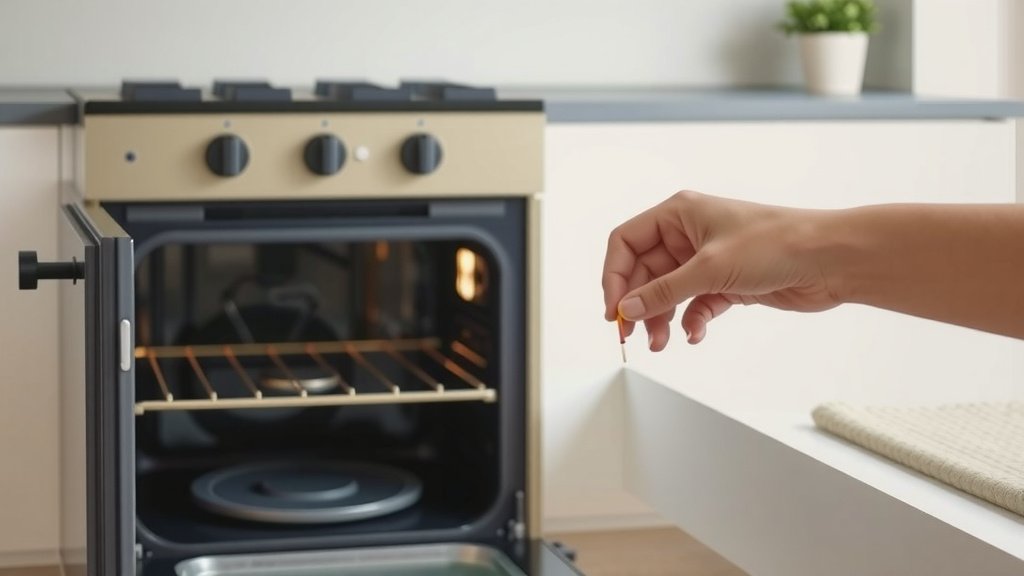
To light a gas oven manually, you will need a long-stem lighter or match. Carefully open the oven door, locate the small opening for the pilot light or burner port, and hold the flame there while slowly turning the oven knob to ‘Lite’ or its lowest setting until you see the burner ignite.
Always prioritize your safety and read your oven’s manual before attempting manual ignition.
TL;DR: How to manually light your gas oven:
- Always prioritize your safety first.
- Gather your essential tools: a long-stem lighter or kitchen matches.
- Locate the oven’s pilot light or gas burner opening inside.
- Turn the oven knob to the “Lite” or “On” position, then apply the flame.
- If it doesn’t light quickly, stop and wait before trying again.
How To Light A Gas Oven Manually?
If your gas oven isn’t lighting up automatically, don’t worry, you can often light it by hand. Just turn the oven knob to “Lite” or its lowest setting, then carefully bring a flame to the pilot opening or burner port until you see the gas ignite.
Why Manual Ignition Might Be Needed
Have you ever turned your oven knob and heard nothing, or perhaps just a faint click without the satisfying whoosh of ignition? It happens more often than you might think. Many factors can lead to your gas oven needing a little human intervention to get started.
Sometimes, it’s a simple hiccup. Other times, it signals a specific issue with your oven’s system. Understanding these reasons can help you decide your next steps.
Understanding Your Oven’s Ignition System
Most modern gas ovens use an electronic igniter, which creates a spark to light the gas. Older models, though, often rely on a standing pilot light that burns continuously. If either of these systems fails, manual lighting becomes your handy workaround.
We found that problems with either system are common reasons for needing to light the oven manually. Knowing your oven type helps you know where to look for the flame (Consumer Reports).
Your Safety Checklist Before You Start
Before you even think about lighting your oven manually, safety is paramount. Gas can be dangerous if mishandled, so taking a moment to prepare properly is crucial. Think of this as your personal safety briefing before starting the mission.
- Check for Gas Odor: First, take a deep sniff. Do you smell gas? If the odor is strong, evacuate immediately and call your gas company. Do not attempt to light the oven.
- Clear the Area: Remove anything flammable from near the oven. This includes towels, paper products, or plastic containers. You want a clear workspace.
- Gather Your Tools: Have a long-stem lighter or kitchen matches ready. A standard match can be too short and put your fingers too close to the burner.
- Read Your Oven Manual: If you still have it, give your oven’s manual a quick glance. Many experts say that manufacturers often include specific manual lighting instructions for your model.
Step-by-Step: The Manual Lighting Process
Alright, you’ve done your safety checks, and you’re ready to get that oven working. Let’s walk through the steps together. This process might feel a bit like a secret handshake with your oven, but it’s quite straightforward once you know how.
Locating the Pilot or Burner Port
First, open your oven door and peer inside. You’re looking for the main burner tube, which typically runs along the bottom or back of the oven. If your oven has a standing pilot, you’ll see a tiny, perpetually burning flame near the burner. For electronic igniters, you’ll simply find the small gas ports where the flame normally comes out when it lights.
Many ovens have a small, almost hidden opening where the gas initially flows before igniting. This is your target for the flame.
Turning the Oven Knob Correctly
This step is important: turn your oven knob to the “Lite” or “Pilot” setting. If your oven doesn’t have a specific “Lite” option, turn it to the lowest temperature setting. You should hear a faint hiss as gas starts to flow. Listen carefully for this sound, but don’t hold your ear too close.
This flow of gas is what you’re aiming to ignite. You want a steady, but not overwhelming, stream of gas.
Applying the Flame Safely
Now, with your long-stem lighter or match, bring the flame close to the pilot light opening or the burner port. Hold the flame steadily against the opening. You’ll likely see the gas ignite with a soft “poof” or a gradual bloom of blue flame. Many sources, including general home safety guides, emphasize keeping your face a safe distance away during this part.
Keep your hand steady and be patient. It might take a few seconds for the gas to catch. Think of it like lighting a tricky candle.
Verifying Successful Ignition
Once the flame is visible, keep holding the lighter there for another 5-10 seconds. This helps ensure the pilot or burner stays lit. Then, slowly remove your lighter. Close the oven door gently and observe the burner for a minute to confirm it’s burning steadily. You’ll want to see a consistent blue flame.
If the flame goes out, wait a few minutes for any lingering gas to dissipate before attempting to light it again. Never try immediately after a failed attempt.
Troubleshooting Tips: When It Won’t Light
Sometimes, despite your best efforts, the oven just won’t cooperate. Don’t throw in the towel just yet! There are a few common issues and simple solutions we’ve found that might help.
| Problem | Possible Reason | What You Can Do |
|---|---|---|
| No flame after several tries. | Not enough gas flow, or a blockage. | Double-check the gas valve to the oven is fully open. Wait a few minutes for gas to build up, then try again. |
| Flame lights, then immediately goes out. | The safety mechanism (thermocouple) isn’t heating up. | Hold the flame on the pilot longer, perhaps 15-20 seconds, to fully heat the thermocouple. |
| Smell of gas lingers after attempts. | Gas is escaping but not igniting. | Stop all attempts. Turn off the oven knob and the main gas supply valve. Ventilate the room immediately. This is a red flag. |
When It’s Time to Call an Expert
While manually lighting your oven can be a temporary fix, it’s not always the best long-term solution. Sometimes, the problem points to a bigger issue that needs professional attention. Knowing when to call in the cavalry can save you time, stress, and potentially prevent more serious problems down the line.
We found that delaying professional help can sometimes turn a minor issue into a larger repair (Consumer Product Safety Commission).
Consider reaching out to a certified appliance technician if you experience any of these situations:
- Persistent Gas Odor: If you consistently smell gas even when the oven is off, or if the smell is strong during lighting attempts, this is a serious safety concern.
- No Pilot Light Visible: If your oven is an older model designed for a standing pilot, and you simply cannot find a pilot flame or the opening, it might need service.
- Repeated Igniter Problems: If your electronic igniter clicks but never sparks, or if the oven struggles to light every time, the igniter itself might be failing.
- Burner Doesn’t Stay Lit: Even after manual lighting, if the burner flame goes out frequently, there might be an issue with gas pressure or a faulty safety valve.
Conclusion
Manually lighting your gas oven can certainly feel a bit intimidating at first, but with a clear head and these step-by-step instructions, it’s a skill you can master. Remember, safety always comes first; never ignore the smell of gas. By understanding your oven’s mechanics and taking careful precautions, you can keep your kitchen running smoothly.
Think of it as gaining a new skill for your home. While it’s great to know how, if issues persist, calling a professional is always the smartest move for your peace of mind and safety. Happy cooking!
Is it safe to light a gas oven manually?
Yes, it can be safe if done correctly and cautiously. Always ensure there is no strong gas odor, you use a long-stem lighter or match, and you follow your oven’s specific manual lighting instructions. Prioritizing safety steps makes it much safer (National Fire Protection Association).
How long should I hold the flame to the pilot?
Generally, you should hold the flame to the pilot opening for about 5-10 seconds after ignition. This allows the thermocouple, a safety device, to heat up and keep the gas valve open, ensuring the pilot stays lit.
What if my oven doesn’t have a visible pilot light?
Most modern ovens use an electronic igniter instead of a standing pilot light. If your oven doesn’t have a visible pilot, you’ll aim the flame at the main burner port where the gas comes out, usually accompanied by an igniter that sparks when working.
Can I use a regular match to light my oven?
We don’t recommend using a regular match because it’s very short. This brings your hand too close to the gas and potential flame. A long-stem lighter or long kitchen matches are much safer options, keeping your hand at a comfortable distance.
How often should I have my gas oven serviced?
Many experts recommend having your gas oven serviced by a qualified technician every one to two years. Regular maintenance helps ensure it operates safely and efficiently, catching potential issues before they become problems (HVAC and appliance service guidelines).
