
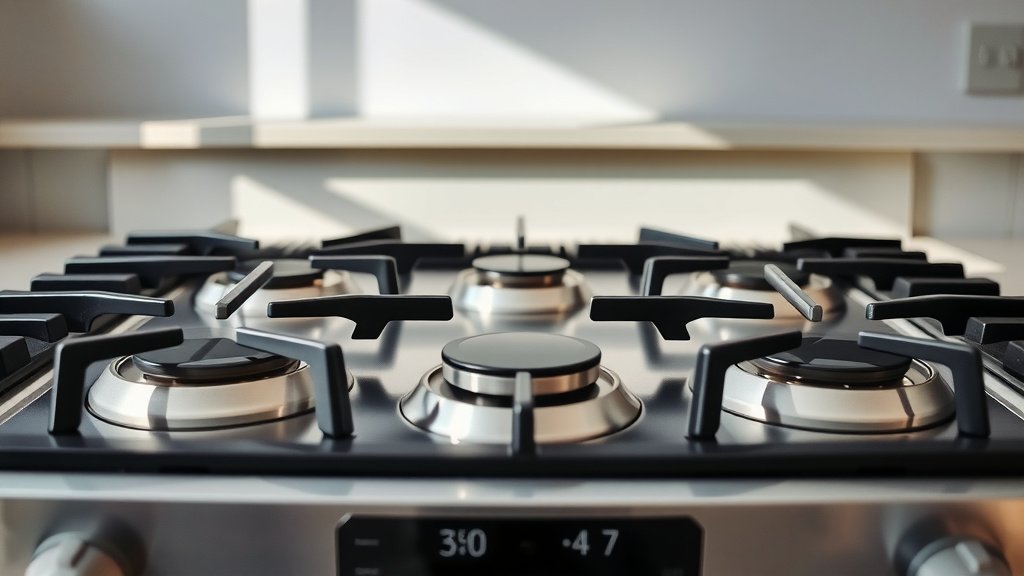
To clean burners on a gas oven, first ensure the gas supply and electrical power are completely disconnected, then carefully remove the burner grates, caps, and burner heads.
Soak the removable burner components in warm, soapy water, gently scrub away food debris and grease, and use a thin wire or needle to clear any clogged burner ports before drying everything thoroughly and reassembling.
- Always disconnect gas and power before starting any cleaning.
- Carefully remove burner grates, caps, and heads from your gas oven.
- Soak removable parts in a warm, soapy solution for easier cleaning.
- Use a small wire or paper clip to gently clear clogged burner holes.
- Ensure all oven parts are completely dry before reassembling to prevent ignition issues.
Picture this: you’re cooking up a storm, and suddenly, your gas burner isn’t lighting right or heating unevenly. Frustrating, isn’t it? Over time, spills and food particles can build up, clogging those tiny holes that deliver gas to your flames. But don’t worry, you can tackle this yourself!
Cleaning your gas oven burners isn’t just about making them look nice; it’s about keeping your kitchen safe and your cooking efficient. Think of it as giving your oven a little spa treatment it deserves, helping it work better and last longer.
Before you grab your cleaning supplies, remember that safety is your top priority when dealing with gas appliances. A little caution goes a long way in preventing any potential issues.
First things first, make sure you turn off the gas supply to your oven. You’ll usually find a shut-off valve behind the range. Also, unplug the oven from its electrical outlet. It’s like putting on your seatbelt before a drive; you just don’t skip it.
Gather Your Cleaning Arsenal
You probably already have most of what you need right in your kitchen cabinet. We found that simple household items often work best for this task (Consumer Reports).
- Dish soap
- Warm water
- Soft cloth or sponge
- Non-abrasive scrubber
- Old toothbrush or small brush
- Paper clip or thin wire (like a sewing needle)
- White vinegar (optional, for stubborn stains)
- Baking soda (optional, for making a paste)
- Dry towels
How To Clean Burners On A Gas Oven?
Cleaning your gas oven burners involves a few key steps: prioritizing safety, carefully disassembling the parts, cleaning each component thoroughly, and reassembling correctly.
This process helps maintain efficient cooking and extends your oven’s lifespan, preventing frustrating flare-ups or uneven heating.
Preparing Your Oven for Cleaning
Once the gas and electricity are off, you can start removing the top grates. These lift right off and are often the dirtiest part. Many experts say a good soak makes cleaning easier (Good Housekeeping Institute).
Take them to your sink and give them a good scrub with warm, soapy water. If they’re really greasy, a little degreaser can work wonders.
Removing the Burner Caps and Heads
Next up are the burner caps. These are the flat, circular disks that sit on top of the burner. They usually just lift straight off. Underneath, you’ll find the burner heads themselves.
The burner heads are typically larger, round pieces with holes. These often lift off too, but sometimes they might be a little stuck due to grime. Be gentle as you remove them; you don’t want to bend or damage anything.
Cleaning Detachable Burner Parts
Now that you have the caps and heads removed, it’s time for the real cleaning. Grab a basin or your sink and fill it with warm, soapy water. Let these parts soak for at least 20-30 minutes.
This soaking time helps loosen up baked-on food and grease, making scrubbing much easier. It’s like giving them a warm bath to relax before their deep clean.
Addressing Stubborn Grime
After soaking, use your soft cloth or non-abrasive scrubber to wipe away loosened gunk. For those really stubborn spots, a paste made from baking soda and a little water works wonders.
Apply the paste, let it sit for 10-15 minutes, then scrub gently. You might be surprised at how much comes off! White vinegar can also help cut through grease when sprayed on after the baking soda (HGTV).
Tackling the Fixed Burner Base
The actual burner base, where the gas comes out, usually stays attached to the oven. Do NOT submerge these parts in water.
Instead, use a damp cloth with a little dish soap to wipe down the surface. Be careful not to let water get into the gas lines or ignition ports.
Unclogging Burner Ports
This is a critical step for even flames. Look closely at the small holes around the burner head. These are the burner ports. If they’re clogged, your flame will be weak or uneven.
Take your paper clip or thin wire and gently poke through each hole. Be careful not to widen the holes or scratch the metal. You’re just trying to clear out any debris, like a tiny doctor performing surgery on your burner.
Reassembling Your Gas Burners
Once everything is clean, it’s super important that all parts are completely dry before you put them back. Any moisture can interfere with the gas flow or even cause rust.
Use a dry towel to wipe everything down, and then let the parts air dry for a bit, maybe even an hour. Once dry, place the burner heads back on, followed by the caps, and then the grates. Make sure everything sits securely and correctly.
Daily Habits for a Cleaner Oven
A little bit of maintenance each day can save you a big cleaning job later. We found that wiping up spills immediately is one of the best ways to keep your burners clean (Consumer Reports).
Keep a damp cloth handy and give the grates and burner caps a quick wipe after they cool down. This prevents food from hardening into stubborn, unmovable gunk.
When to Call a Pro
Sometimes, cleaning isn’t enough. If you notice a persistent gas smell, very weak flames even after cleaning, or issues with your pilot light, it’s time to call a qualified appliance technician. Your safety comes first.
Common Burner Cleaning Mistakes to Avoid
Knowing what not to do is just as important as knowing what to do. Many experts agree that improper cleaning can actually cause more harm than good.
| Mistake to Avoid | Why It’s Bad |
|---|---|
| Using abrasive cleaners or scrubbers | Can scratch burner surfaces and damage finishes. |
| Getting water into the ignition or gas lines | Can cause electrical shorts, rust, or block gas flow. |
| Reassembling wet parts | Leads to rust, corrosion, and ignition problems. |
| Forcing parts back into place | Can bend or damage delicate burner components. |
| Ignoring gas smells or persistent issues | Indicates a potentially serious safety hazard. |
Why Keeping Your Gas Oven Burners Clean Matters
A clean burner isn’t just about aesthetics; it’s about performance and safety. Imagine a race car with a clogged fuel line – it just won’t run right. Your oven is similar.
When burner ports are clear, gas flows smoothly, creating an even, efficient flame. This means your food cooks better, and your oven uses less energy.
Benefits of Regular Cleaning
Regular cleaning prevents clogged burners, which can lead to inefficient cooking and wasted gas. Research often connects routine maintenance with longer appliance life (Appliance Repair Handbook).
It also reduces the risk of flare-ups caused by grease buildup and ensures a consistent flame, making your cooking experience more predictable and enjoyable.
Conclusion
Cleaning your gas oven burners might seem like a chore, but it’s a straightforward process that makes a huge difference in your kitchen’s safety and your oven’s performance. By following these simple steps – always prioritizing safety first – you can keep your burners sparkling and your meals cooking perfectly.
Think of it as a small investment of your time that pays off in big ways: a safer home, tastier food, and an oven that works like new for years to come. So go ahead, give your gas burners the attention they deserve, and enjoy the peace of mind that comes with a well-maintained appliance.
What should I do if my gas burner still won’t light after cleaning?
If your gas burner still refuses to light after a thorough cleaning, double-check that all parts are correctly reassembled and completely dry. If the issue persists, it could indicate a problem with the ignition system or gas supply, and you should contact a professional appliance technician for diagnosis and repair.
Can I put gas oven grates in the dishwasher?
Most gas oven grates are made of cast iron or enamel-coated steel. While some modern grates might be dishwasher-safe, many oven manufacturers recommend hand washing to prevent damage to the finish or premature rusting, especially for cast iron grates. Always check your oven’s user manual first.
Is it safe to use oven cleaner on gas burners?
No, it is generally not recommended to use harsh chemical oven cleaners directly on gas burners or their components. These cleaners can be too strong, potentially damaging the burner material, clogging ports with residue, or leaving chemical fumes that are unsafe when the burner is lit. Stick to gentle soap and water, or baking soda paste.
How often should I clean my gas oven burners?
The frequency depends on your cooking habits. For average use, a light wipe-down after each major spill and a deep clean of the removable burner parts every 1-3 months is a good guideline. The fixed burner base and ports can be addressed every 3-6 months or as needed if you notice performance issues.
What causes gas burner ports to get clogged?
Gas burner ports typically get clogged by food particles, grease, and spilled liquids that burn and harden over time. Over-boiling pots, splattering oil, or even dust can contribute to buildup. Regular cleaning prevents these small openings from becoming blocked, which ensures an even flame.
