
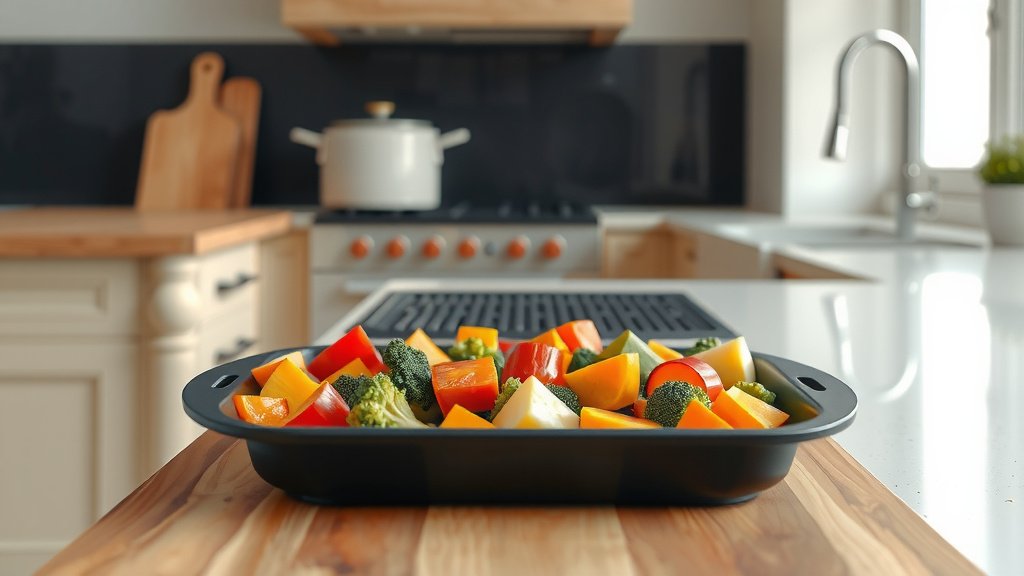
Cooking vegetables in a countertop oven is straightforward and efficient, often giving you perfectly cooked, tender-crisp results with less energy than a full-size oven.
To cook vegetables in a countertop oven, you typically preheat the oven, toss your prepped veggies with oil and seasonings, then roast or bake them on a sheet pan until tender and lightly browned.
- You can cook vegetables quickly and easily in a countertop oven.
- The best methods are roasting, baking, or even steaming.
- Always prepare your vegetables properly by washing and cutting them.
- Seasoning with oil and spices adds amazing flavor.
- Keep an eye on cooking times, as countertop ovens can cook faster.
How To Cook Vegetables In A Countertop Oven?
Cooking vegetables in a countertop oven is simpler than you might think, offering a great way to get delicious, healthy sides or main dishes onto your table quickly.
You’ll find these smaller ovens are fantastic for producing tender-crisp textures and vibrant flavors.
Why a Countertop Oven is a Veggie Game Changer
Countertop ovens are perfect for cooking vegetables. They heat up much faster than traditional ovens, saving you time and energy.
Their compact size means heat surrounds your food more efficiently, leading to even cooking and browning (Department of Energy).
They are ideal when you’re cooking for one or two people, or when your main oven is already busy.
Preparing Your Vegetables for Success
Great cooking starts with great preparation. Taking a few minutes here ensures your vegetables turn out beautifully.
Think of this step as laying the foundation for a delicious meal, where every detail counts for the best outcome.
Choosing and Cleaning Your Produce
Always start with fresh, high-quality vegetables. Look for crisp textures and bright colors at the store.
Before cooking, make sure to wash all your vegetables thoroughly under cold running water to remove any dirt or residues.
Drying them well is also key, especially for roasting, as excess moisture can prevent browning.
The Art of Cutting and Seasoning
Cut your vegetables into uniform sizes. This helps them cook evenly, so some pieces aren’t burnt while others are still raw.
Toss them with a little oil, like olive or avocado oil, and your favorite seasonings. Don’t be shy with salt, pepper, and herbs.
Garlic powder, onion powder, paprika, or Italian seasoning can elevate the flavor profiles significantly.
Mastering Different Cooking Styles
Your countertop oven is versatile. You can roast, bake, or even steam vegetables, each method bringing out different qualities.
Knowing which method to pick lets you create a wide array of dishes, from crispy delights to tender, juicy sides.
Roasting Vegetables to Perfection
Roasting is arguably the most popular method for vegetables in a countertop oven. It brings out natural sweetness and creates delicious caramelization.
Spread your oiled and seasoned veggies in a single layer on a baking sheet. Don’t overcrowd the pan, or they’ll steam instead of roast.
Quick Guide to Roasting Times
These times are general; always check for tenderness. Your specific oven may vary slightly in temperature output.
Using a higher temperature helps achieve that coveted crispy exterior while keeping the inside tender (Cook’s Illustrated).
| Vegetable Type | Temperature (Fahrenheit) | Cooking Time (Minutes) |
|---|---|---|
| Broccoli, Cauliflower | 400-425 | 15-20 |
| Asparagus, Green Beans | 375-400 | 10-15 |
| Carrots, Potatoes (cubed) | 400-425 | 20-30 |
| Bell Peppers, Zucchini | 375-400 | 15-20 |
Steaming for Health and Flavor
Steaming in a countertop oven is possible with the right setup. This method locks in nutrients and keeps vegetables wonderfully tender.
You’ll need a heat-proof dish with a lid or foil, and a little water. Place vegetables inside, add a splash of water, and cover.
Set your oven to about 350°F (175°C) and cook until tender, often 10-20 minutes depending on the veggie.
Baking Delicate Vegetables Easily
For more delicate vegetables, or when you want a softer texture without browning, baking is a gentle option. This method often uses lower temperatures.
Think about baking sweet potatoes, squash, or even certain root vegetables wrapped in foil. It creates a moist and tender result.
Baking generally occurs at temperatures between 350-375°F (175-190°C).
Understanding Your Oven’s Controls
Every countertop oven is a bit different. Take a moment to understand your specific model’s settings.
Most have bake, toast, broil, and sometimes convection settings. Convection can speed up cooking and improve browning.
Experimentation helps you learn what works best for your machine and your desired outcome.
Essential Tips for Delicious Results
Here are some quick pointers to make your vegetable cooking experience even better.
These little habits can truly make a difference in the final taste and texture of your dishes.
- Always preheat your oven fully.
- Don’t overcrowd the baking sheet.
- Flip or stir vegetables halfway through cooking.
- Use a meat thermometer for thicker root vegetables to check doneness.
- Taste and adjust seasonings before serving.
Common Mistakes to Avoid
Even seasoned cooks make errors. Avoiding a few common pitfalls ensures your vegetables come out perfectly.
Are your veggies soggy? Did they burn? Let’s fix those issues for future cooking adventures.
The most common issues are not drying vegetables enough, overcrowding the pan, or not preheating the oven properly.
Countertop Ovens and Energy Use
Many experts say that countertop ovens are more energy-efficient for smaller tasks than a full-size oven.
They use less power and heat a smaller space, meaning less energy is wasted. This can save on your utility bills (Energy Star).
Think of it as choosing the right tool for the job: smaller tasks get smaller ovens.
Conclusion
Cooking vegetables in a countertop oven is an accessible and rewarding experience. From crispy roasted broccoli to tender steamed asparagus, the possibilities are vast.
With just a little preparation and understanding of your oven, you can consistently produce flavorful, healthy dishes that your whole family will love.
So, go ahead, grab your favorite veggies, and let your countertop oven do the work!
Can you cook all types of vegetables in a countertop oven?
Yes, you can cook almost any type of vegetable in a countertop oven. Root vegetables like potatoes and carrots, leafy greens, and cruciferous vegetables like broccoli all cook well. The key is choosing the right cooking method and temperature for each.
What makes vegetables crispy when roasted?
Crispiness comes from a combination of high heat, proper oiling, and not overcrowding the pan. High heat causes moisture to evaporate quickly, while oil helps with browning and crisping. Ensuring a single layer on the pan prevents steaming.
How do I know when my vegetables are done?
Vegetables are generally done when they are tender enough to be easily pierced with a fork. For roasted vegetables, you’ll also look for a slight caramelization or browning on the edges, indicating a flavorful finish.
Is it better to cook vegetables covered or uncovered?
For roasting and crisping, cook vegetables uncovered to allow moisture to escape and browning to occur. If you want to steam vegetables or keep them very tender, covering them with foil or a lid helps trap moisture.
Do countertop ovens cook faster than regular ovens?
Yes, countertop ovens often cook faster than regular ovens, especially for smaller batches. They have less space to heat, which means they preheat quicker and reach cooking temperatures more efficiently. Always keep an eye on your food to prevent overcooking.
