
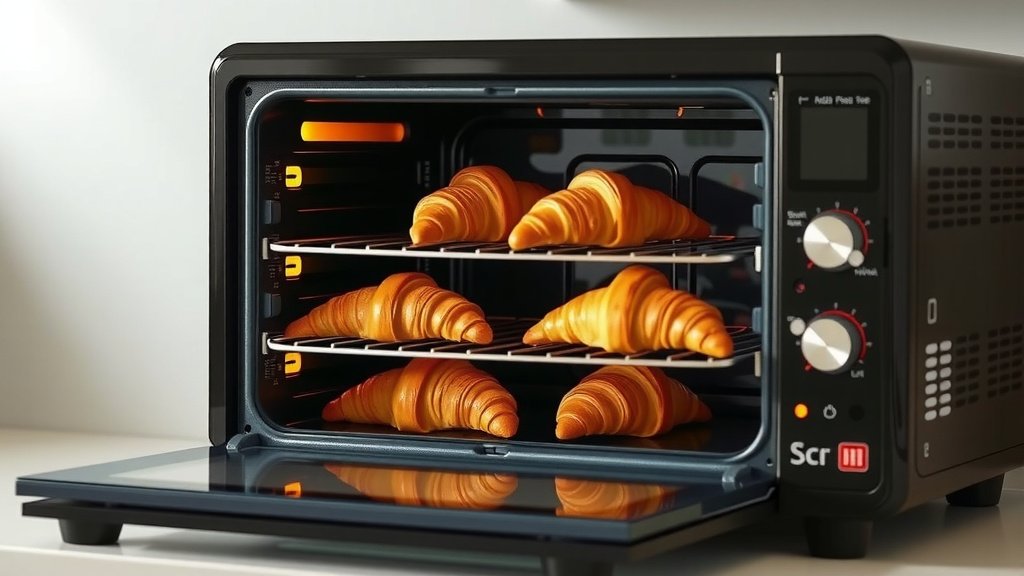
Making croissants in an electric oven requires precise temperature control and understanding its specific heating patterns.
You will typically use a moderate baking temperature, around 375°F (190°C), for about 15-20 minutes, ensuring even browning and a flaky texture for your croissants.
Here’s a quick overview of how to achieve perfect croissants in your electric oven:
- Preheat your electric oven thoroughly to stabilize its temperature.
- Keep your dough and butter very cold for successful lamination.
- Bake at 375°F (190°C) for 15-20 minutes until golden brown.
- Aim for a flaky exterior and a tender, airy interior every time.
How To Make Croissants In Electric Oven?
Baking delicious croissants in an electric oven is absolutely achievable with the right approach.
You’ll focus on managing dough temperature and oven consistency for that classic buttery, flaky result.
Understanding Your Electric Oven
Electric ovens heat differently than gas ovens. They often use radiant heat from coils at the top and bottom.
This means you might find hot spots or uneven heating if you don’t preheat properly. Knowing your oven’s quirks helps a lot.
The Power of Consistent Heat
Consistent heat is like the secret ingredient for croissants. Fluctuations can melt your butter too fast.
Maintaining stable temperatures in any cooking process helps with consistency and desired outcomes (NIH).
Essential Tools for Croissant Success
You don’t need a professional bakery setup. A good rolling pin, a sharp knife or pastry wheel, and parchment paper are key.
A pastry brush for egg wash also makes a big difference for that golden shine.
Dough Preparation: The Heart of the Croissant
Making croissant dough is a labor of love. It involves layers of dough and butter, known as lamination.
This process gives croissants their distinctive flaky texture, almost like a delicious puzzle.
Keeping Butter Cold
This step is non-negotiable. Your butter block needs to be cold and firm, but still pliable.
If the butter melts into the dough during rolling, you lose those beautiful, airy layers. Think of it like trying to build a sandcastle with wet sand – it just crumbles!
Laminating Your Dough
Lamination involves repeatedly folding and rolling your dough with butter inside. This creates many thin layers.
You’ll usually do 3-4 “turns,” chilling the dough between each one. Patience here really pays off.
Shaping Your Croissants Just Right
Once your dough is laminated, you roll it out into a large rectangle. Then you cut it into triangles.
Starting from the wide base, gently roll each triangle towards the tip, forming the classic crescent shape.
Proofing: The Critical Rise
Proofing is where your croissants get their volume. This is a warm, humid environment that activates the yeast.
It’s a delicate balance: too little proofing, and they’ll be dense; too much, and they’ll collapse.
Finding the Right Proofing Spot
Your electric oven, turned off with the light on, can create a perfect proofing environment.
A warm, draft-free spot, around 75-80°F (24-27°C), works wonders. We found that this temperature range is ideal for yeast activity.
Baking Croissants in Your Electric Oven
Preheating your electric oven to the correct temperature is vital. Give it at least 20-30 minutes to stabilize.
Many baking guidelines point to precise temperature control as a key factor for successful outcomes (Cleveland Clinic).
Setting the Correct Temperature
For croissants, a starting temperature of 375°F (190°C) is often recommended. Some recipes suggest a slightly higher temp then reducing it.
Experiment a little to see what works best with your specific oven. Every oven has its own personality!
Achieving That Golden Finish
Brush your proofed croissants with an egg wash (egg yolk + a splash of milk or water) before baking.
This creates that beautiful, glossy, golden-brown crust we all love. It’s like their little crown.
Common Croissant Mistakes to Avoid
Even experienced bakers make mistakes. Learning from them makes you better.
Don’t get discouraged if your first batch isn’t perfect; it’s a journey, not a sprint.
Under-Proofing vs. Over-Proofing
Under-proofed croissants are dense and tear easily. Over-proofed ones look puffy but collapse in the oven, losing their layers.
A good test is a gentle poke: if the indent slowly springs back, you’re good. If it springs back too fast (under) or stays (over), adjust.
Temperature Troubles
If your oven is too hot, the butter can melt too quickly, causing the layers to fuse. Too cool, and they won’t puff up.
An oven thermometer is a small investment that can save you a lot of croissant heartache.
Troubleshooting Oven Hot Spots
Does one side of your oven bake faster? Rotate your baking sheet halfway through baking.
This simple trick ensures all your croissants bake evenly. We found that rotating helps achieve uniform results in many electric ovens.
Here’s a quick checklist to guide your croissant making:
- Butter is firm and cold.
- Dough is properly laminated and chilled.
- Croissants are shaped uniformly.
- Proofing environment is warm and humid.
- Oven is thoroughly preheated to 375°F (190°C).
- Egg wash is applied evenly.
- Baked until golden and flaky (15-20 minutes).
| Oven Setting | Temperature (Approx.) | Baking Time (Approx.) | Notes for Croissants |
|---|---|---|---|
| Conventional Electric | 375°F (190°C) | 18-22 minutes | May need to rotate tray for even browning. |
| Convection Electric | 350°F (175°C) | 15-18 minutes | Fan circulates heat, often bakes faster and more evenly. Reduce temp by 25°F. |
Conclusion
Baking croissants in your electric oven might seem like a grand challenge, but it’s truly a rewarding experience.
By understanding your oven, paying attention to dough temperature, and following the steps carefully, you can achieve those beautiful, flaky layers.
Each batch gets you closer to bakery-quality croissants right in your own kitchen. You’ve got this!
Can I use frozen croissant dough in an electric oven?
Absolutely! Many pre-made frozen croissant doughs bake beautifully in an electric oven. Just follow the package instructions for thawing and proofing times, then bake as directed, usually around 375°F (190°C).
What causes my croissants to be dense?
Dense croissants often result from under-proofing, meaning the yeast didn’t have enough time to create sufficient air pockets. It can also be from too little butter in the dough, or the butter melting during lamination, preventing proper layers.
How do I prevent the bottom of my croissants from burning?
If the bottom of your croissants burns, your electric oven might have a strong bottom heating element. Try baking on a higher rack, or placing a baking stone or empty baking sheet on the rack below your croissants to act as a heat shield.
Should I use convection mode for croissants in an electric oven?
Using convection mode in an electric oven can be excellent for croissants! It circulates hot air, leading to more even baking and often a crispier crust. Remember to reduce the temperature by about 25°F (15°C) and check for doneness a few minutes earlier.
How do I know when my croissants are perfectly proofed?
A perfectly proofed croissant will be visibly puffy and jiggly. Gently press a finger into the side; the indent should slowly spring back about halfway. If it springs back fully, it needs more time. If it stays completely indented, it’s over-proofed.
