
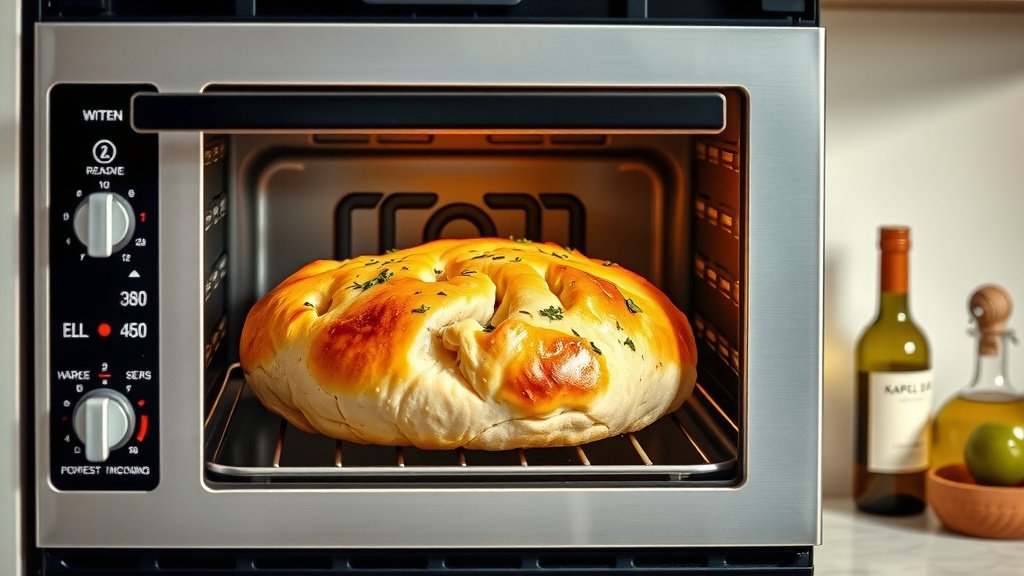
To make focaccia in a gas oven, you’ll want to prioritize thorough preheating and often use an oven thermometer to ensure a stable, consistent temperature. Gas ovens can have hot spots, so rotating your focaccia pan halfway through baking helps achieve an even golden crust and perfect texture.
- Achieve your best focaccia in a gas oven with extra preheating time.
- Always use an oven thermometer to verify your oven’s true temperature.
- Combat uneven baking and hot spots by rotating the pan for uniform browning.
- Consider a baking steel or stone to get a wonderfully crispy bottom crust.
- Don’t forget proper dough hydration and generous olive oil for that signature focaccia flavor.
How To Make Focaccia In A Gas Oven?
Making focaccia in a gas oven is absolutely achievable, and it can result in a truly magnificent loaf. The key is understanding how gas ovens operate and making small adjustments to your baking process.
You can create a focaccia that is both light and airy on the inside, with that desirable golden-brown, slightly crispy exterior, even with the unique characteristics of a gas oven.
Understanding Your Gas Oven’s Quirks
Gas ovens are fantastic for many things, but they do have their own personality when it comes to baking. You might notice they heat up quickly, but often cool down just as fast when the door opens.
Unlike electric ovens that use a constant heating element, gas ovens cycle on and off to maintain temperature. This cycling can sometimes lead to temperature fluctuations.
The Hot Spot Riddle
Have you ever baked something and noticed one side browns faster than the other? That’s likely a hot spot. Gas ovens often have these uneven temperature zones.
The heat source, usually at the bottom, can create hotter areas near the back or sides. Knowing this helps you adapt your baking strategy for better results.
Moisture Management Matters
Gas ovens tend to be a bit drier than electric ovens. This is because the combustion process releases some moisture, but the venting often removes it.
For focaccia, which loves a moist environment during its initial bake, this dryness means you might need to adjust your dough’s hydration or baking time slightly.
Essential Focaccia Ingredients: The Foundation
Every great focaccia starts with quality ingredients. Think of them as the building blocks for your delicious bread.
Using fresh, reliable ingredients ensures your dough has the best chance to rise and develop amazing flavor and texture.
Yeast: The Living Engine
Yeast is what makes your focaccia light and airy. We found that active dry yeast or instant yeast works perfectly.
Make sure your yeast is fresh; old yeast won’t activate properly, and your dough won’t rise. A quick test in warm water can confirm its vitality.
Flour: The Structural Backbone
All-purpose flour is a great choice for focaccia, offering a good balance of protein. Some bakers prefer bread flour for a chewier texture.
We found that a good quality unbleached all-purpose flour consistently yields excellent results. It provides the necessary gluten structure for that characteristic chew.
Crafting the Perfect Focaccia Dough
The dough-making process is where the magic truly begins. Don’t rush it; patience is a key ingredient for a superior focaccia.
Developing the gluten properly and allowing sufficient proofing time are steps you won’t want to skip.
Mixing and Kneading Techniques
Focaccia dough is often quite wet and sticky. Don’t worry, that’s normal. Gentle mixing, followed by a series of stretch and folds, builds strength.
Instead of traditional kneading, you can simply mix the ingredients, then perform sets of stretch and folds over an hour or two. This develops gluten without too much effort.
First Proofing: The Rise to Glory
This is where your yeast gets to work, creating air bubbles that make the focaccia light. A slow, cold proof in the refrigerator (8-24 hours) develops deeper flavors.
If time is short, a room temperature proof will work, but aim for the dough to at least double in size. A warm, draft-free spot is ideal for this rise.
Preparing Your Pan and Oven Environment
Setting up your baking environment correctly is half the battle, especially with a gas oven. A little preparation goes a long way.
The right pan and a properly preheated oven will make a significant difference to your focaccia’s crust and texture.
Choosing the Right Baking Pan
A metal baking pan, like a rimmed baking sheet or a cast iron pan, is excellent for focaccia. Metal conducts heat well, helping to create a crispy bottom.
Many experts recommend a 9×13 inch pan for a thicker focaccia or a larger pan for a thinner version. Make sure to grease it generously with olive oil.
The Power of Proper Preheating
This is arguably the most crucial step for gas ovens. Gas ovens need more time to preheat than they indicate. Give it an extra 15-20 minutes past the “ready” signal.
A fully preheated oven ensures a stable temperature when your focaccia goes in, leading to a much better oven spring and consistent baking.
Using an Oven Thermometer: Your Secret Weapon
We found that many oven thermostats are inaccurate by as much as 50 degrees Fahrenheit (Cook’s Illustrated). An inexpensive oven thermometer placed inside will tell you the real temperature.
This simple tool helps you know precisely when your oven is truly at the desired temperature, taking the guesswork out of baking.
| Gas Oven Focaccia Tips | Why It Helps | Outcome for Focaccia |
|---|---|---|
| Preheat 20 min longer | Stabilizes internal oven temperature. | Even rise, consistent browning. |
| Use Oven Thermometer | Reveals true oven temp vs. dial setting. | Avoids under/overbaking due to inaccurate readings. |
| Rotate Pan Halfway | Combats hot spots for uniform cooking. | Prevents one side from burning, even crust. |
| Baking Stone/Steel | Provides direct, intense bottom heat. | Super crispy, golden bottom crust. |
Baking Focaccia in a Gas Oven: Step-by-Step
You’ve done all the prep, and now it’s time for the grand finale: baking. Here’s how to handle it in your gas oven.
These steps focus on maximizing your gas oven’s strengths and mitigating its challenges.
Dimpling and Topping Your Dough
Once your dough has had its final proof in the pan, generously drizzle olive oil over it. Then, use your fingertips to create those signature dimples.
These dimples hold olive oil and seasonings, adding incredible flavor. Don’t be shy with the coarse sea salt or your chosen toppings like rosemary or olives.
Baking Time and Temperature Adjustments
Most focaccia recipes suggest around 400-425°F (200-220°C). With a gas oven, starting at the higher end of the range can be beneficial for a good initial spring.
Bake until golden brown, typically 20-30 minutes. Remember to rotate your pan halfway through baking to ensure even browning across the entire surface.
Here’s a quick checklist for gas oven baking success:
- Confirm oven temperature with a thermometer.
- Ensure dough is at room temperature before baking.
- Generously oil the pan and dough surface.
- Place focaccia on the middle rack.
- Rotate the pan 180 degrees halfway through baking.
- Bake until deeply golden brown.
Cooling for Crispiness and Flavor
Once your focaccia emerges from the oven, resist the urge to cut into it immediately. Let it cool on a wire rack for at least 15-20 minutes.
This cooling period allows the steam to escape and the crust to firm up, giving you that delightful crunch we all love. It also helps the flavors meld and settle.
Conclusion
Making focaccia in a gas oven truly is a rewarding experience. By understanding the unique characteristics of your oven and applying a few simple tricks, you can consistently bake a focaccia that rivals any bakery.
Remember to prioritize proper preheating, use an oven thermometer, and embrace pan rotation. With a little practice, your gas oven will become your best friend in the world of bread baking, producing perfect focaccia every time.
What makes focaccia different from pizza dough?
Focaccia dough generally has a higher hydration level and more olive oil than traditional pizza dough, giving it a much softer, airier texture and a richer flavor. It’s often thicker, baked in a pan, and characterized by its dimpled surface.
Can I use any type of flour for focaccia?
While all-purpose flour works well, some bakers prefer bread flour for a chewier texture due to its higher protein content. You could also experiment with a blend of whole wheat and all-purpose for a heartier focaccia. We found all-purpose flour to be the most accessible and consistent for home bakers.
How do I prevent my focaccia from sticking to the pan?
The best way to prevent sticking is to generously grease your baking pan with olive oil, even if it’s non-stick. Some research indicates using parchment paper, cut to fit, can also provide an extra layer of non-stick security, especially for very wet doughs.
Is it okay to open the oven door during baking?
Try to avoid opening the oven door too frequently, especially during the first 10-15 minutes of baking. Each time you open the door, the oven temperature drops significantly, which can affect your focaccia’s rise and overall texture. Only open it when necessary, like for rotating the pan.
What are some classic focaccia toppings?
Classic focaccia toppings include flaky sea salt and fresh rosemary, which provide a simple yet incredibly flavorful combination. Other popular options are thinly sliced red onion, olives, cherry tomatoes, garlic, or even a sprinkle of Parmesan cheese. Feel free to get creative with your favorite herbs and vegetables.
